

























































WASHINGTON D.C. – The debate over the future of American healthcare is not just a national conversation; it’s a profound fissure within the Democratic Party, playing out vividly in Minnesota’s crucial congressional and senatorial contests. From the moderate pragmatism of the public option to the ambitious vision of Medicare for All, candidates are navigating complex ideological terrain, reflecting a broader struggle for the party’s soul and its electoral strategy.
At the heart of this internal conflict is the question of how best to tackle the nation’s escalating healthcare costs and the persistent problem of the uninsured. While the Democratic Party universally agrees on the need for reform, the methods diverge sharply, creating distinct camps that define candidates’ platforms and appeal to different segments of the electorate.
The Moderate Stance: A Public Option for Competition
In southern Minnesota’s 1st Congressional District, Jake Johnson, a Democrat challenging incumbent Rep. Brad Finstad, R-1st, epitomizes the more moderate approach. At a recent town hall in New Richland, Johnson carefully sidestepped a direct endorsement of "Medicare for All," instead emphasizing his support for "a strong public option to the health insurers we have now." This proposal envisions a government-offered healthcare plan that would compete directly with private insurers, aiming to drive down costs and expand access through market-based pressure.
Johnson’s position reflects a strategy common among Democrats in swing districts or those leaning Republican. The 1st District, for instance, gave former President Donald Trump 55% of the vote in 2024, making a more incremental approach to healthcare reform politically expedient. Johnson articulated sympathy for those burdened by medical expenses and insurance premiums, positioning the public option as a tangible, less radical solution to immediate affordability issues. The rationale is that by introducing a robust government competitor, private insurers would be forced to offer more competitive rates and better coverage, thereby benefiting consumers without completely overhauling the existing system.
The Progressive Push: Medicare for All as a Human Right
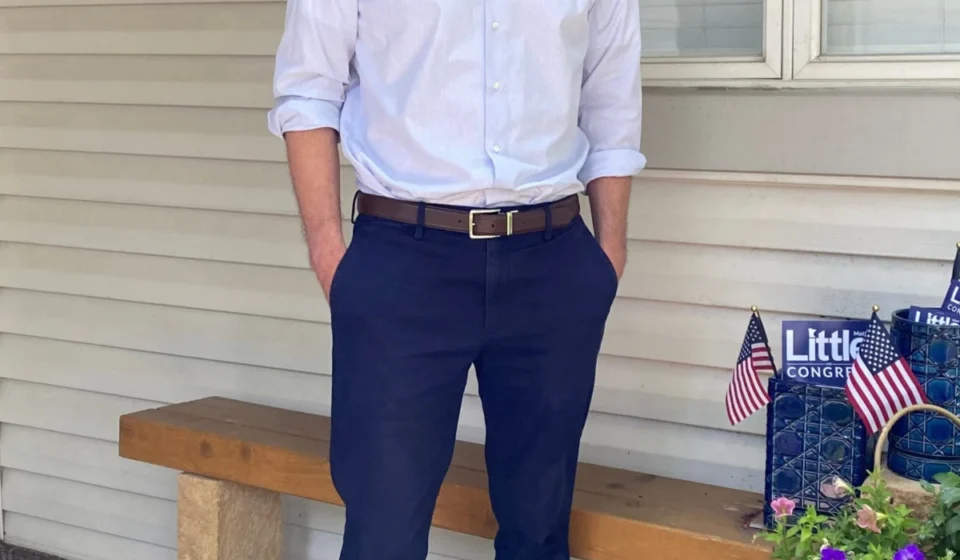
In stark contrast, the neighboring 2nd Congressional District, which saw former Vice President Kamala Harris win with 52% of the vote, is home to candidates who champion a far more sweeping reform: Medicare for All. Matt Little, the DFL-endorsed candidate for the 2nd District, is a vigorous proponent of this single-payer system. Little, a former state senator and mayor of Lakeville, speaks from personal experience, citing his mother’s struggles to access specialized care despite having insurance, as a driving force behind his advocacy.
Little passionately argues that healthcare is a human right, not a privilege, and that the current "patchwork" system of private insurers and government programs like Medicaid and Medicare is fundamentally broken. He supports the "Medicare for All Act," sponsored by Rep. Pramila Jayapal, D-Wash., and Sen. Bernie Sanders, I-Vt. This legislation proposes guaranteeing comprehensive healthcare to every U.S. resident, eliminating premiums, deductibles, and co-payments. While private insurers could still offer supplemental plans, their dominant role in providing primary coverage would effectively end. Proponents argue that the elimination of out-of-pocket costs and premiums would offset the higher federal income taxes required to fund the plan, leading to overall savings for most working Americans and businesses.
Little views the public option as an insufficient measure, calling it "just another handout to private insurance companies" and describing other proposed reforms as merely "nibbling around the edges" of a systemic problem. He believes the political climate, especially in the wake of the Trump administration’s attempts to cut Medicaid and the expiration of enhanced Affordable Care Act (ACA) subsidies, makes the time ripe for a bold, transformative change.
A Deeper Dive into the Proposals: Public Option vs. Medicare for All
To fully grasp the implications of this debate, it’s essential to understand the core tenets and historical context of both proposals.
The Public Option:
The concept of a public option gained significant traction during the crafting of the Affordable Care Act (ACA) under President Barack Obama. The initial vision for the ACA included a government-run insurance plan to compete within the newly established state-based marketplaces (like MNsure). The idea was to create a benchmark for affordability and quality, pushing private insurers to improve their offerings. However, intense lobbying from powerful health insurance companies and pharmaceutical interests, coupled with opposition from some centrist Democrats, ultimately led to the public option being stripped from the final legislation.
Today, proponents like Rep. Angie Craig, who recently introduced the "Medicare-X Choice Act," argue that a public option would inject much-needed competition into the market, leading to lower premiums and better coverage. They envision a scenario where individuals and small businesses could choose between private plans and a government plan, with the latter serving as a check on the pricing and practices of the former. This approach is seen as a pragmatic step that leverages existing market structures while addressing some of the system’s most glaring deficiencies, such as rising costs and limited choices in certain areas. It maintains a role for private insurance, which many Americans currently rely on and are accustomed to, making it a less disruptive transition.
Medicare for All (Single-Payer System):
The idea of a national, government-run healthcare system modeled on Medicare has been a progressive rallying cry for decades, championed prominently by Senator Bernie Sanders. The modern iteration, as embodied by the Jayapal-Sanders bill, proposes a comprehensive federal program that covers all medically necessary services, including primary care, specialist care, prescription drugs, mental health, dental, and vision, with no co-pays, deductibles, or premiums. The system would be financed through progressive taxation, shifting the burden from individuals and employers to the federal government.
Advocates argue that a single-payer system would drastically simplify the administrative overhead currently consumed by thousands of private insurers, leading to massive cost savings. They point to other industrialized nations—such as Canada, the UK, and most of Western Europe—that operate successful universal healthcare systems, often with better health outcomes and lower per capita spending than the U.S. By eliminating the profit motive from healthcare provision, they contend, resources could be redirected to patient care, preventative medicine, and negotiating lower drug prices. The core argument is that healthcare is a right, and a single-payer system is the most equitable and efficient way to ensure that right for all citizens.

Official Responses and Internal Party Divisions
The deep chasm within the Democratic Party on healthcare extends beyond individual candidates, reaching professional organizations and even organized labor.
Candidate Stances Across Minnesota:
- Jake Johnson (MN-1, DFL): Supports a "strong public option," sympathizing with those struggling with costs but wary of a complete system overhaul in a conservative-leaning district.
- Matt Little (MN-2, DFL): A staunch advocate for "Medicare for All," driven by personal experience and a belief in healthcare as a human right. He views the public option as inadequate.
- Kaela Berg (MN-2, DFL): Another progressive running for the 2nd District, Berg shows more flexibility. While supporting Medicare for All as a long-term goal, she also backs the public option and "anything that gives people more health coverage now…while we continue to fight for Medicare for All." Her stance reflects a pragmatic progressive approach, acknowledging the immediate need for relief while maintaining ideological commitment.
- State Sen. Matt Klein (MN-2, DFL): A physician by profession (internist at Mayo Clinic), Klein is a "firm believer that we need to get to universal healthcare" and would "support whatever bill advances that." However, he expresses a preference for implementing the public option, echoing concerns about the feasibility and disruption of a rapid shift to Medicare for All. His professional background likely informs a more cautious, incremental approach to systemic change.
- Lt. Gov. Peggy Flanagan (U.S. Senate, DFL): A strong proponent of Medicare for All, Flanagan argues that the current system is "broken" and that "people are ready" for a fundamental change. She rejects the idea of starting with a public option, fearing it would lead to "even less" in terms of comprehensive reform. Her position aligns with the progressive wing that believes in pushing for the maximalist position from the outset.
- Rep. Angie Craig (U.S. Senate, DFL): Currently serving in the House and running for Senate, Craig champions the "Medicare-X Choice Act," which would create a public option in ACA exchanges. She believes this would introduce "some competition" to insurance companies, leading to lower premiums and better coverage. Craig also advocates for other reforms, such as holding insurance companies accountable for high denial rates and legislation to lower prescription drug costs, indicating a multi-pronged approach to healthcare affordability within the existing framework.
Organizational and Union Perspectives:
The divide is also evident among powerful lobbying groups and labor unions:
- American Medical Association (AMA) and American Hospital Association (AHA): These influential medical groups are "firmly opposed to Medicare for All." Their concerns typically revolve around potential limitations on patient choice, physician autonomy, and the capacity of the healthcare system to absorb such a massive shift without compromising quality or access. They often advocate for reforms that strengthen the existing multi-payer system, such as expanding the ACA and implementing price transparency measures.
- Organized Labor: The union movement is split. Some unions, including the United Auto Workers and the Association of Flight Attendants (which Kaela Berg belongs to), endorse Medicare for All. They see it as a way to liberate workers from employer-tied healthcare, providing stable benefits regardless of employment status. However, many other unions strongly oppose it. For these unions, employer-provided healthcare benefits have been a hard-won bargaining chip, a significant part of their collective bargaining agreements. Moving to a government-run system, they fear, could erode their power at the negotiating table and potentially lead to a less comprehensive or flexible benefit package than they have secured through years of struggle.
Congressional Co-Sponsorship:
The split is even visible within Minnesota’s current congressional delegation. Reps. Ilhan Omar, D-5th District, and Betty McCollum, D-4th District, are co-sponsors of the Jayapal Medicare for All bill, reflecting their progressive alignment. Senator Tina Smith has co-sponsored Sanders’ Senate version. However, Rep. Kelly Morrison, D-3rd District, a physician like Matt Klein, has not co-sponsored Medicare for All legislation, indicating a more cautious or nuanced approach to the issue, possibly aligning with the AMA’s concerns.
Implications for the Election and Beyond
The internal Democratic debate over healthcare has profound implications for the upcoming election cycles and the long-term prospects of healthcare reform in the United States.
Electoral Strategy:
In electorally competitive states like Minnesota, the approach to healthcare can be a defining factor. Candidates in more moderate or swing districts often gravitate towards the public option, believing it to be a more palatable and electable proposal for a broader electorate, including independent voters and some Republicans who may be dissatisfied with the current system but wary of "socialized medicine." They argue that a gradual, market-based approach is less likely to alienate voters or face insurmountable political opposition.
Conversely, candidates in reliably blue districts or those seeking to energize the progressive base often embrace Medicare for All. They believe that the urgency of the healthcare crisis demands bold action and that a clear, aspirational vision can mobilize voters. This strategy often targets primary voters and younger demographics who are increasingly frustrated with the status quo and open to more radical solutions. The challenge for the party is to unite these factions, as a fragmented message could undermine overall electoral success.
Legislative Feasibility:
Regardless of which faction gains dominance, the path to significant healthcare reform remains steep. Proponents of Medicare for All acknowledge that its implementation is "impossible unless Democrats hold the White House and both chambers of Congress." Even then, the political will to overcome entrenched opposition from powerful industries and conservative forces would be immense. The experience of the ACA, which faced fierce resistance despite being a more incremental reform, serves as a cautionary tale.
A Democratic takeover of the U.S. House and/or U.S. Senate, coupled with a Democratic president, would likely lead to a "rush of Democratic healthcare legislation." This might not immediately result in a single-payer system, but it would almost certainly ignite a vigorous debate over how to reverse the increase in uninsured Americans and curb escalating costs. This could include expanding ACA subsidies, strengthening the public option, negotiating prescription drug prices, and enhancing existing Medicare and Medicaid programs. The ultimate shape of any reform would likely be a product of compromise and political realities.
Public Opinion and Shifting Tides:
While Medicare for All has faced an uphill battle in the past, progressive activists believe public opinion is shifting. The COVID-19 pandemic highlighted the vulnerabilities of employer-tied insurance and the disparities in access to care, potentially increasing receptiveness to universal healthcare solutions. Rising costs and the threat of medical debt remain persistent concerns for many American families, fueling a demand for substantial change.
The debate in Minnesota, therefore, is not merely a regional political skirmish but a microcosm of a larger national reckoning. It reflects the Democratic Party’s internal struggle to define its vision for healthcare, balance ideological purity with political pragmatism, and ultimately deliver on its promise of affordable, accessible care for all Americans. The outcome of these local races will offer clues about the direction of the party and the future of healthcare policy in the United States.