



























































In a move that marks what the company calls its “biggest model improvement to Search yet,” Google has officially unveiled Gemini 4 Hydrogen. This new addition to the Gemini 4 family is engineered to bridge the gap between high-level reasoning and rapid, agentic execution. By optimizing for speed, accuracy, and nuanced intent, Google is fundamentally altering how its flagship Search product handles the increasingly complex queries of the modern digital landscape.
As AI integration becomes the standard for information retrieval, the deployment of Hydrogen represents a strategic pivot: moving away from the "one-size-fits-all" model approach toward a specialized, tiered ecosystem where performance is matched precisely to the complexity of the user’s intent.
The Core Innovation: Understanding the "Hydrogen" Philosophy
For years, the industry has chased the goal of the "largest" model, assuming that parameter count and raw compute power were the sole arbiters of intelligence. With the release of Gemini 4 Hydrogen, Google is challenging that assumption. The company posits that users do not always require the heavy-duty, energy-intensive reasoning of "frontier" models like Gemini 4 Carbon or Argon for every query.
Instead, Hydrogen is built for speed and efficiency. It is designed to act as an "agentic" engine—a system capable of executing multi-step workflows autonomously without the latency typically associated with massive language models. By balancing "reasonable" intelligence with exceptional speed, Hydrogen completes tasks 2.5 times faster than its predecessor, Gemini 3.8 Flash, while maintaining a level of sophistication that has, in some benchmarks, outperformed the more robust Argon model.

Key Technical Advancements
- Enhanced Intent Recognition: Hydrogen excels at deciphering "messy" user inputs, including multi-part questions and queries laden with typos.
- Agentic Workflows: The model can independently navigate codebases, run tests, and verify changes, making it a dual-purpose tool for both consumers and developers.
- Adaptive Thinking Levels: Users can now select from four distinct "thinking tiers"—low, medium, high (the default), and a new "xhigh" setting—allowing for dynamic control over response quality and compute consumption.
Chronology: The Evolution of Gemini 4
The path to Hydrogen did not happen in a vacuum. It is the latest chapter in Google’s rapid acceleration of its AI roadmap.
- Foundation (Early 2024): Google establishes the Gemini 4 framework, prioritizing modularity and cross-platform integration.
- Frontier Development: The introduction of Gemini 4 Carbon and Argon sets the stage for deep reasoning capabilities, specifically designed for complex scientific and mathematical problem-solving.
- Optimization Phase (Mid-2024): Google recognizes that the "frontier" models are overkill for day-to-day web search, leading to the internal development of a lighter, faster iteration.
- The Hydrogen Launch (November 2026): Google announces the global rollout of Hydrogen across Search, AI Studio, and the Gemini API, marking the first time a specialized "fast-model" is deeply integrated into the core Search architecture.
Supporting Data: Why Speed Matters
The shift toward Hydrogen is backed by significant performance data. According to the Artificial Analysis Intelligence Index, Hydrogen has reached a milestone by beating the much larger Gemini 4 Argon on broad intelligence benchmarks when set to its "high" thinking level. This performance is critical for Search, where latency directly impacts user retention.
Furthermore, in the competitive landscape of AI performance, Hydrogen has secured a No. 5 ranking on the Agent Arena benchmarks. This ranking is particularly telling; it measures a model’s ability to perform in "real-world" scenarios, such as deep research, data analysis, and technical navigation. By placing in the top five, Google has demonstrated that Hydrogen is not just a "lightweight" version of a larger model, but a potent, highly optimized agent capable of executing sophisticated tasks.
Efficiency Metrics
- Latency: A 150% improvement in task completion speed compared to Gemini 3.8 Flash.
- Token Efficiency: Each of the four thinking levels is specifically tuned to generate fewer, higher-quality output tokens, reducing the environmental and monetary cost of AI-driven search.
Official Responses and Strategic Intent
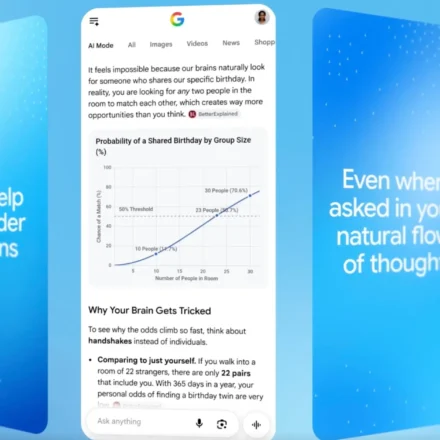
In the official announcement, Google emphasized that the "biggest improvement" is not necessarily the model’s raw power, but its ability to handle the "fan-out" technique—a process where the AI breaks a single, complex user prompt into multiple subqueries. This allows the search engine to aggregate information from diverse sources, ensuring that the user receives comprehensive, verified, and structured responses.

Google’s developers noted that the inclusion of Hydrogen into the Search ecosystem will immediately manifest in more visual-heavy responses. Users can expect to see an increase in:
- Comparison Tables: Real-time data synthesis that contrasts products, services, or data points.
- Structured Data Responses: Direct, formatted answers rather than just links.
- Integrated Media: More relevant imagery and interactive content generated on-the-fly to clarify complex answers.
Implications: The Future of Search
The introduction of Hydrogen is set to ripple across several sectors, from SEO and digital marketing to software development and consumer behavior.
For the Average User
The most immediate change will be the "conversational" quality of Search. Users who are accustomed to typing keywords—often in a fragmented, "search-engine-friendly" syntax—will find that they can speak to Google as they would a human. The AI’s ability to parse complex, multi-layered questions means that "follow-up" queries are handled with more context, reducing the need for repetitive searching.
For Developers and Industry
By bringing Hydrogen to the Gemini API and AI Studio, Google is inviting the developer community to build on the same engine that powers its own search. The "xhigh" thinking tier, in particular, offers a unique opportunity for developers working on high-stakes applications (like automated code review or financial analysis) to leverage high-level reasoning without the prohibitive costs of enterprise-grade frontier models.

The Competitive Landscape
This move places Google in a dominant position regarding "Agentic AI." While competitors continue to struggle with balancing the speed-versus-intelligence trade-off, Google has created a modular ecosystem. If a user needs a quick answer, Hydrogen fires; if the user presents a problem requiring heavy logic, the system can seamlessly shift or "pair" Hydrogen with Carbon or Argon. This fluid switching capability is the "holy grail" of current AI architecture.
Conclusion
Gemini 4 Hydrogen is a testament to the maturation of generative AI. By focusing on the "middle-ground" of performance—a model that is fast, smart, and highly capable of autonomous execution—Google is effectively democratizing access to complex AI reasoning.
As this update rolls out to all Search users globally, it marks a definitive end to the era of simple keyword matching. We are entering an era of "Intent-Based Search," where the engine does not just look for documents, but understands the logic behind the request, breaks it down into actionable steps, and delivers a synthesised, structured, and accurate response in a fraction of a second.
The "Hydrogen" era is not just about faster search; it is about smarter, more reliable, and more intuitive interaction between humans and the vast, unorganized information of the web. As AI continues to evolve, the success of Google’s latest model serves as a clear indicator that the future of technology lies in precision and efficiency rather than just raw, unchecked power.