


























MINNEAPOLIS — The American legal landscape and the multi-billion-dollar juggernaut of the National Football League lost one of its most consequential figures this past weekend. U.S. District Judge David Doty, a jurist whose steady hand in a Minneapolis courtroom fundamentally reshaped the structure of professional sports in the United States, passed away on Saturday at the age of 96.
His death, confirmed by officials in the District of Minnesota, marks the end of a nearly four-decade tenure on the federal bench—a career defined by a rare blend of judicial rigor, down-to-earth humility, and an uncanny ability to navigate the complex, high-stakes intersection of labor law and professional athletics.
A Legacy of Service and Jurisprudence
Born in 1929, David Doty’s life was defined by a commitment to public service. Before he ever donned the black robe, he served six years in the United States Marine Corps, an experience that instilled in him a disciplined, no-nonsense approach to problem-solving. After earning his law degree from the University of Minnesota in 1961, he spent 26 years in private practice, honing the skills that would eventually make him one of the most respected federal judges in the country.
In 1987, President Ronald Reagan appointed Doty to the U.S. District Court for the District of Minnesota. It was an appointment that would soon thrust him into the spotlight of the sports world. In 1998, he took senior status, a move that allowed him to continue his judicial work for decades, presiding over thousands of cases until just a few months before his passing.
To his colleagues, he was more than a judge; he was a mentor and a pillar of integrity. Chief U.S. District Judge Patrick Schiltz captured the sentiment of the local legal community in a statement following Doty’s death: "Judge Doty devoted his entire professional life to serving others. Despite his remarkable accomplishments, he was a genuinely humble man. He treated everyone—from the guy who shined his shoes to Justices of the U.S. Supreme Court—the same way: with kindness and compassion."
Chronology: From "Plan B" to Modern Parity
To understand the modern NFL, one must understand the courtroom of David Doty. His impact on the league was not merely administrative; it was foundational.
The 1987 Strike and the Road to Free Agency
The mid-1980s were a tumultuous time for professional football. The 1987 players’ strike had left the league fractured, and the relationship between the NFL Players Association (NFLPA) and the team owners was at an all-time low. When the NFLPA filed suit challenging the league’s restrictive rules regarding player movement, the case landed on Judge Doty’s desk.
Doty initially exercised caution, urging both sides to seek a collective bargaining solution. However, as the legal battle wore on, he began dismantling the league’s restrictive "Plan B" system. This system allowed teams to protect 37 players from free agency, effectively suppressing player movement and salary growth.
The 1992 Ruling
In 1992, the battle reached a crescendo. A jury of eight women, presided over by Doty, ultimately struck down the league’s "Plan B" restrictions. Following this, Doty ruled in favor of players seeking unrestricted free agency. This legal breakthrough paved the way for the historic 1993 class-action lawsuit led by legendary defensive end Reggie White.
The subsequent settlement was a watershed moment for the league. It established the modern salary cap, created a structure for free agency, and ended years of labor uncertainty. This agreement, which remained the bedrock of the NFL’s labor policy for nearly two decades, transformed the league into the competitive, high-revenue entity it is today.
Decades of Oversight
Even after the 1993 agreement, Doty remained the league’s "referee" in the courtroom. For over 30 years, he maintained jurisdiction over labor disputes that could not be settled through the NFL’s internal arbitration. His court became the final arbiter for everything from player discipline to complex financial disagreements.
Notable Rulings and High-Profile Interventions
Judge Doty’s courtroom was the stage for some of the most significant moments in recent NFL history. His rulings often balanced the immense power of the league office against the individual rights of its employees.
- The Michael Vick Case (2008): Following the disgraced quarterback’s guilty plea in a federal dogfighting case, the Atlanta Falcons attempted to recoup over $16 million in bonus money. Doty ruled in favor of Vick, asserting that the team could not reclaim the bonuses under the specific language of the collective bargaining agreement.
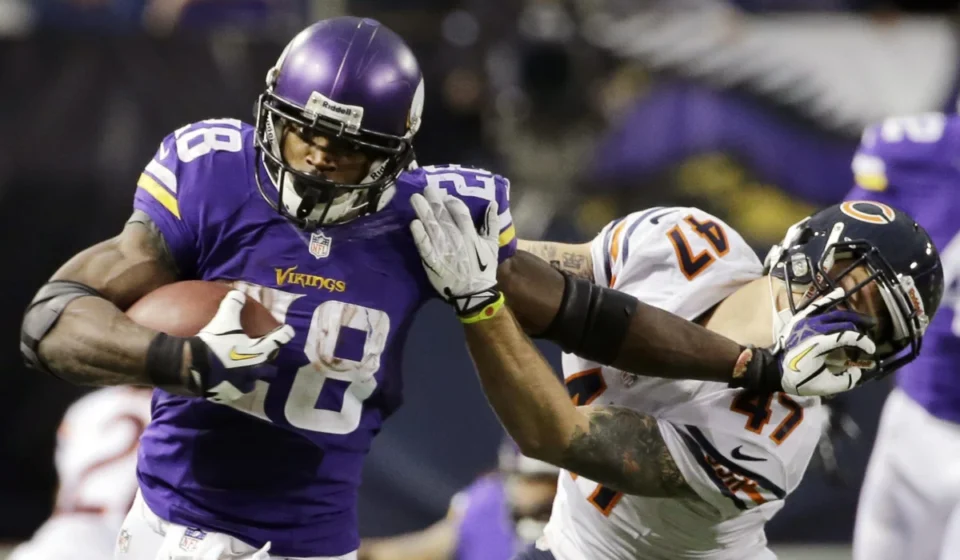
- The Adrian Peterson Appeal (2015): In one of the most high-profile player discipline cases of the era, Doty sided with the NFLPA and Minnesota Vikings star Adrian Peterson. The ruling challenged the league’s authority in the wake of Peterson’s suspension for child abuse charges, highlighting Doty’s role in ensuring the league adhered strictly to the terms of their negotiated labor agreements.
- The Collusion Litigation: Not all rulings favored the union. In 2012, Doty denied a motion to reopen the White agreement in a collusion case. His willingness to rule against the players when the facts demanded it underscored his impartiality, a trait that earned him the begrudging respect of both league executives and union attorneys.
Official Responses and Industry Impact
The NFL issued a formal statement shortly after the news of his death, acknowledging the profound influence he had on the sport. "Judge Doty devoted his life to public service and the law, presiding over NFL-related litigation for many years during his distinguished career. We express our sincere condolences to his family, friends, and colleagues."
The sentiment from the legal community has been equally reflective. Attorneys who practiced before him often remarked on his ability to humanize the most sterile legal proceedings. His courtroom was known for a specific atmosphere: a mix of intense, scholarly focus and a lightheartedness that served as a release valve during high-pressure trials.
"I will particularly miss his sense of humor," Judge Schiltz added. "He always had a smile on his face."
Implications: The End of an Era
The passing of David Doty leaves a vacuum in the legal oversight of professional football. For more than three decades, he provided a level of institutional memory and consistency that few other judges could match. His rulings helped usher in an era of "competitive parity"—a philosophy that ensures that any team, regardless of market size, has a legitimate path to the Super Bowl.
The league’s current popularity is a direct descendant of the labor peace Doty helped facilitate. By forcing the NFL and its players to negotiate in good faith, he prevented the kind of long-term work stoppages that crippled other professional leagues in the late 20th century.
While the NFL has evolved significantly since the early 1990s, the "Doty Era" remains the structural spine of the league. Future labor disputes will likely be handled with different procedures, but the precedent set by his rulings remains a cornerstone of American sports law.
As the NFL continues to reach new heights of global reach and financial success, it stands on the foundation built in a Minneapolis courtroom. David Doty never threw a touchdown pass or sacked a quarterback, but few individuals in the history of the game have had a greater impact on its success than the man in the black robe who made sure the game was played according to the law.
He is survived by his family and a legal legacy that will influence the intersection of labor and sports for generations to come. Memorial services are expected to be announced by the District of Minnesota in the coming days.