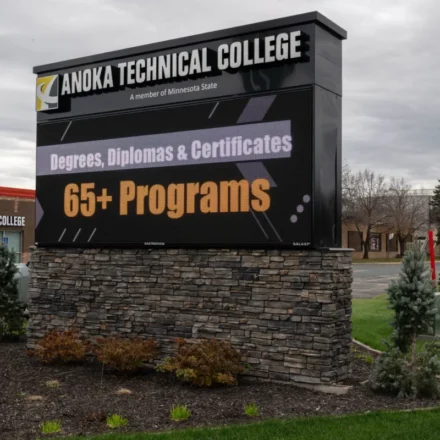
























































For Minnesota State Chancellor Scott Olson, the current trajectory of the state’s largest higher education system is no longer a matter of administrative fine-tuning; it is an emergency. Picturing the 26-college and seven-university system as a massive ocean liner, Olson has delivered a stark warning: the vessel is on a collision course with a nearly $100 million budget iceberg by the summer of 2028.
"We can see it coming," Olson told staff at Century College recently. "If we do nothing, the system will find itself in insolvency."
This is not a sudden squall, but the culmination of a decades-long decline characterized by structural rigidity, shifting demographics, and a consistent shortfall in state investment. As the system weighs the most significant reorganization in thirty years—potentially involving campus closures, mergers, and a massive centralization of services—the mood across Minnesota’s higher education landscape is one of deep, entrenched skepticism.
The Anatomy of the Crisis
The financial instability plaguing Minnesota State is rooted in a trifecta of pressures: a long-term trend of declining enrollment, the relentless weight of inflation, and a diminishing share of state funding. While the system serves 270,000 students—roughly two out of every three resident undergraduates in the state—it is struggling to maintain a physical footprint that remains massive even as student bodies shrink.
The system spans the equivalent of 500 football fields in physical space. Over the last decade, the cost of maintaining this infrastructure—repairing roofs, upgrading HVAC systems, and addressing aging boilers—has ballooned to $2 billion.

"Minnesota fails if Minnesota State fails," Chancellor Olson said in an interview. Yet, the path to survival has become increasingly contentious. The Board of Trustees recently approved an "unprecedented" plan to strip $25 million from the budgets of healthier, largely community-based colleges to provide a lifeline to four-year universities facing the most severe deficits, such as St. Cloud State and Bemidji State.
A Chronology of Warnings
The current crisis feels eerily familiar to those who have tracked the system’s history. The 2026 alarms are merely the latest echoes of a 2016 internal report that accurately predicted the current fiscal cliff. That report, compiled by a workgroup on long-term sustainability, urged immediate action to avoid a multi-million dollar shortfall.
"We cannot and must not wait until 2025 to begin to make changes or we will only compound the challenges of achieving financial sustainability," the 2016 report stated. "We must act now."
That report, however, was largely "put on a shelf," according to current leadership.
Key Milestones in the System’s Financial Struggle:
- 1991: The Legislature creates the Minnesota State system, merging technical colleges, community colleges, and four-year universities.
- 2000: A legislative audit finds that while the merger improved student transfer options, it failed to provide the promised cost savings.
- 2010: An audit highlights outsized administrative spending, leading to pledges of consolidation and staff cuts.
- 2014: Faculty unions issue votes of no confidence in then-Chancellor Steven Rosenstone over a controversial $2 million consulting contract.
- 2016: An internal sustainability report predicts a massive budget shortfall within a decade, recommending physical consolidation and curriculum standardization.
- 2022: The system successfully merges five far-northern community colleges, a rare success in its consolidation efforts.
- 2026: Projections confirm a $100 million deficit by 2028, leading to renewed calls for drastic, systemic reorganization.
Supporting Data: The "Death by a Thousand Cuts"
The evidence of the system’s struggle is found in both the balance sheets and the morale of its workforce. Enrollment, measured by credit hours, has plummeted by nearly 18% over the last ten years. Despite these losses, the physical footprint remains largely unchanged due to a lack of "upfront cash" required to demolish underutilized buildings.

Adding to the friction is the controversial "Workday" technology project. What was intended to modernize the system’s financial and HR operations has become a flashpoint for criticism. According to a 2026 state audit, the project is not only several years behind schedule but has ballooned to $290 million—nearly $48 million over its original budget. Faculty unions have repeatedly questioned why funds are being directed toward such projects while campus-level budgets are being decimated.
"I’ve been in the system for 37 years, and 36 of those years there was a budget crisis," says Kevin Lindstrom, president of the Minnesota State College Faculty union. His sentiment is echoed by Board of Trustees Chair Dawn Erlandson, who noted, "I feel like we’ve been cutting—death by 1,000 cuts—since I joined the board."
Official Responses and Strategic Pivot
Chancellor Olson, who assumed his role in 2023 after two decades within the system, maintains that he is trying to foster a culture of collaboration. "When we give them an opportunity to debate, to challenge, to come up with alternative ideas, we get smarter," he asserts.
However, the administration’s strategy is heavily reliant on legislative support that is far from guaranteed. The Board of Trustees is currently preparing to lobby for:
- $43 million over the next two years to bail out struggling institutions.
- $25 million to fund the demolition of 12 obsolete buildings.
- $15 million to facilitate a massive, systemwide reorganization.
State lawmakers, however, are signaling caution. As the state grapples with its own budgetary priorities—most notably healthcare and K-12 education—the share of the state budget allocated to higher education has dropped from nearly 15% in the 1990s to just 6% in 2026.

The Broader Implications: A System at the Crossroads
The potential for a systemic overhaul raises existential questions for the role of public education in Minnesota. The "creature of the Legislature," as former lawmaker and current Trustee Gene Pelowski calls the system, is caught in a political paradox.
"Once the Legislature is in session, the trustees are not in control. The Legislature and the governor are," Pelowski notes. This leaves the system’s administration vulnerable to shifting political winds and competing state interests.
For the faculty and staff who make the system run, the constant threat of consolidation is more than just a financial exercise; it is an identity crisis. When the 2016 report proposed centralizing services and requiring faculty to travel between campuses, it was met with fierce resistance. Critics argued that the proposals treated educators like "worker bees on an assembly line" rather than partners in higher learning.
As January approaches—the deadline for the first concrete set of reorganization proposals—the tension is palpable. The administration must balance the harsh reality of "right-sizing" a massive, aging system with the need to maintain trust among a faculty whose morale is described as being "in the gutter."
The failure of previous attempts to reform Minnesota State serves as a cautionary tale. If the system is to avoid the "iceberg" that Chancellor Olson fears, it will require more than just technical adjustments or shifting money from one ledger to another. It will require a fundamental, and perhaps painful, reconciliation between the state’s legislative promises and the economic reality of the 21st century.

As it stands, the ship is turning, but the crew remains divided on whether the captain is navigating toward safety or into deeper, more treacherous waters. For the thousands of students who rely on Minnesota State for their path to a career, the outcome of these upcoming legislative sessions and internal debates will determine the accessibility and quality of their education for decades to come.