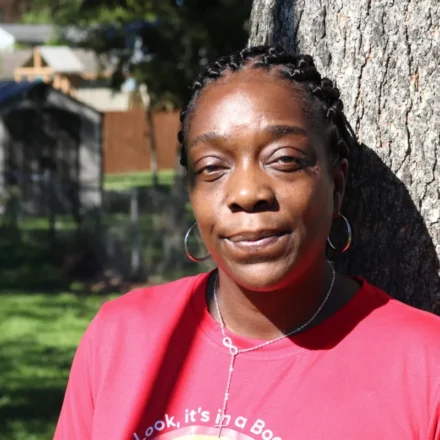
















































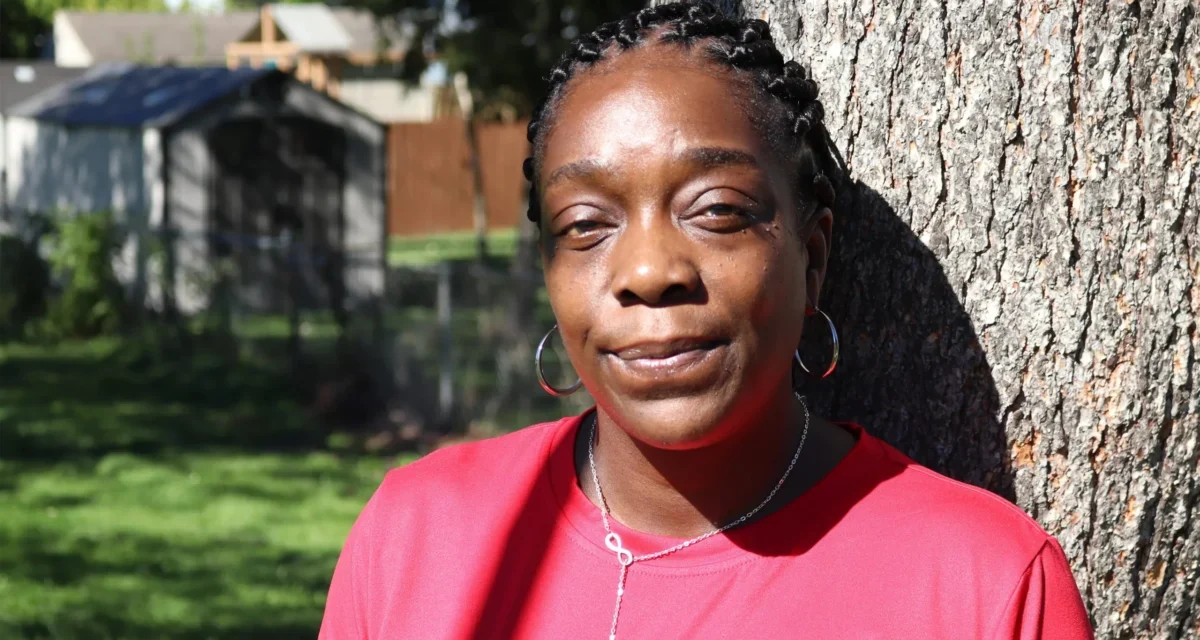

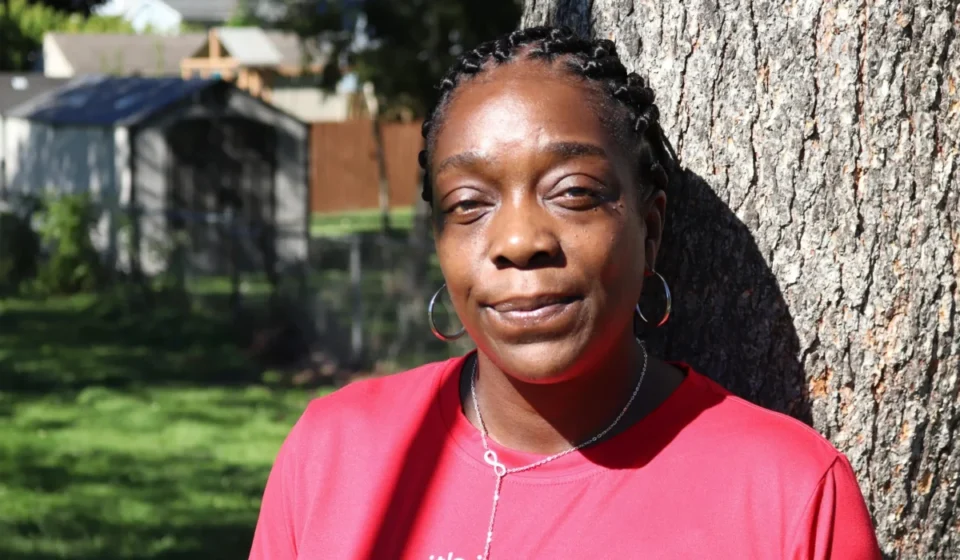

LANSING, Mich. — For Christina Starks-Clay, the math of modern American healthcare is a daily exercise in desperation. An early childhood special education paraprofessional, Starks-Clay stood in the sweltering heat outside a downtown Lansing town hall this September, clutching her smartphone. On the screen was a digital image of a $1,000 cashier’s check—money she had just withdrawn from the bank to cover a portion of her son’s mounting dental bills.
Despite having what is considered "good" dental insurance, she was still staring down a remaining balance of $389. Weeks earlier, she had paid $600 for her own routine cleaning. As she waited to hear U.S. Senate candidate Abdul El-Sayed speak, she recounted the mental gymnastics required to justify the expense. "I’m like, ‘Tina, OK, you were in a position for this moment to do this,’" she said. "A lot of people couldn’t do what I had to do today. But I did it. So I need to hear: How are you going to make this better for everyone?"
Starks-Clay’s experience is not an anomaly; it is a symptom of a systemic crisis. Across Michigan—a critical battleground state—voters are increasingly defining their political loyalties not through traditional party lines, but through their ability to survive the financial burden of staying healthy.
The Pulse of the Electorate: A Crisis of Affordability
The atmosphere at El-Sayed’s town hall was heavy with a shared, palpable anxiety. The line snaked through the city blocks, filled with individuals whose personal histories read like case studies in medical insolvency. One man in line spoke of his brother’s crushing medical debt; a professor emeritus from Michigan State University expressed deep concern for his grandchildren, noting that his adult children were struggling to meet a $9,000 insurance deductible. Healthcare workers in attendance painted an even bleaker picture, describing patients who routinely choose between life-sustaining medication and basic sustenance like groceries.
These voters have latched onto El-Sayed’s rallying cry, a chant that echoed through the crowd: "Money out of politics! Money in your pocket! Medicare for All!"
Support for "Medicare for All"—the proposal to replace the fragmented, private-insurance-based system with a single-payer, government-run program—is currently at its highest level in over a decade. A recent KFF poll indicates that two-thirds of Americans now favor expanding government health coverage. However, the term remains a political Rorschach test. While the polling numbers are high, the actual definition of the policy varies wildly depending on the demographic and the framing of the question. For many, it has become a shorthand for "radical, systemic change" in an era where fewer than half of all Americans report they can comfortably afford their healthcare costs.
Chronology of a Movement: From ACA Progress to Present-Day Regression
The current push for single-payer healthcare is not happening in a vacuum; it is a reaction to a decade of shifting policies and mounting instability.
2010–2016: The ACA Era
The passage of the Affordable Care Act (ACA) in 2010 marked a turning point in American healthcare. In the decade following its implementation, the nation’s uninsured rate was slashed nearly in half. Critical protections were established, most notably the prohibition against insurance companies denying coverage based on preexisting conditions. Furthermore, 40 states and the District of Columbia expanded Medicaid, providing a safety net for millions of low-income and disabled individuals.
2018: The Emergence of El-Sayed
During his 2018 bid for governor, Abdul El-Sayed, a doctor and former Detroit health commissioner, made Medicare for All a cornerstone of his platform. While his bid was unsuccessful, the policy began to gain traction in the mainstream Democratic consciousness, bolstered by the national campaigns of figures like Senator Bernie Sanders.
2024–2025: The Current Retreat
According to health policy experts, the progress made under the ACA is being systematically dismantled. "We are now, in the past two years, in an era where the administration and congressional Republicans have reversed that progress," says Jonathan Oberlander, a professor at the University of North Carolina-Chapel Hill.
Michigan has served as a primary theater for this reversal. Following the expiration of enhanced tax subsidies that helped lower premiums, insurance companies in the state hiked individual marketplace rates by an average of 20%. Simultaneously, the implementation of federal legislative cuts—specifically those found in the "One Big Beautiful Bill Act"—is projected to strip Medicaid coverage from up to 355,000 Michiganders by 2028, according to estimates from the Urban Institute.
Supporting Data: The High Cost of the Status Quo
The human cost of these policy shifts is visible in the labs and clinics of Michigan. Darleana Ash, who works in a medical diagnostics lab, notes that she is seeing a marked increase in patients skipping essential tests. "If you’ve got somebody that’s 75, 80 years old, guess what? They’re going to go without the medication because they’ve got to eat," she said.
The personal toll is perhaps best illustrated by Cindy Lou Coolich, a retiree who once helped the uninsured find coverage. After a bout of sepsis left her disabled, she found herself on the other side of the system, surviving on $900 a month in Social Security and forced to sell her 15-acre horse farm. Her only financial stabilization came through the death of her ex-husband, which allowed her to claim his Social Security benefits. "So now I’m doing quite well!" she laughed, though the irony was not lost on her. The fact that a citizen must rely on the death of a relative to avoid poverty is, to her, the ultimate indictment of the current system.
The Official Opposition: The Republican Counter-Platform
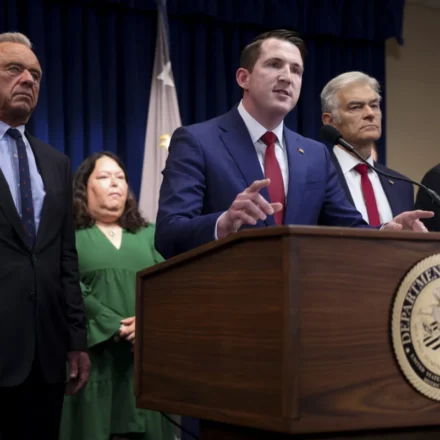
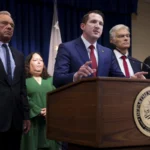
The political debate is far from one-sided. Republican challenger Mike Rogers has launched a direct counter-offensive to the Medicare for All movement. At a recent press conference, Rogers characterized the Democratic proposal as a "government takeover" that would destroy private coverage for millions.
"If the government’s going to give you something, they have to take it away from someone else," Rogers argued, citing the estimated $4 trillion annual cost of a Medicare for All system. While Rogers frames the issue through the lens of fiscal responsibility and tax burdens, the counter-argument—supported by recent research—suggests that the status quo is even more expensive. A preprint study from Yale researchers found that while a universal health system would cost approximately $4.2 trillion, it would simultaneously save the economy $1 trillion in healthcare spending annually while potentially saving 114,000 lives per year.
Implications: A Future in Flux
Despite the passion at rallies and the severity of the crisis, experts remain skeptical about the immediate viability of Medicare for All. "Politically, what matters is if they can scare people," Oberlander notes, highlighting the effectiveness of the GOP’s focus on the disruption of private insurance and the threat of increased taxation.
Furthermore, the structural barriers to reform—including the immense lobbying power of the pharmaceutical and insurance industries, and the deep polarization of Congress—suggest that a massive overhaul is unlikely in the short or medium term.
For activists like Thomas "Jermaine" Carey, the promise of Medicare for All is met with a weary skepticism. Attending an El-Sayed event in Detroit, Carey expressed a sentiment felt by many in the grassroots base: a feeling of being "sold out" by the political establishment. "It’s still America," Carey said, gesturing toward the crowd. "You still have super PACs, the lobbyists that control everything."
As Michigan heads toward the midterms, the debate over healthcare has become a litmus test for the future of the American social contract. For candidates like El-Sayed, the issue is not just a policy proposal, but a fundamental question of whether the United States will prioritize the health of its citizens over the stability of its current market-based system. For voters like Christina Starks-Clay, the answer to that question remains a matter of survival.