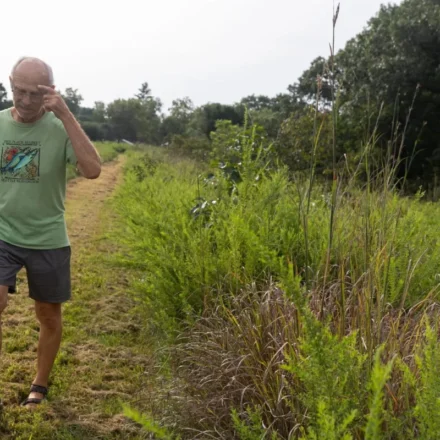







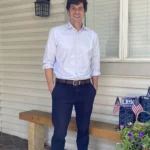





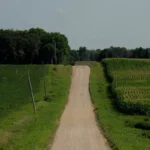




















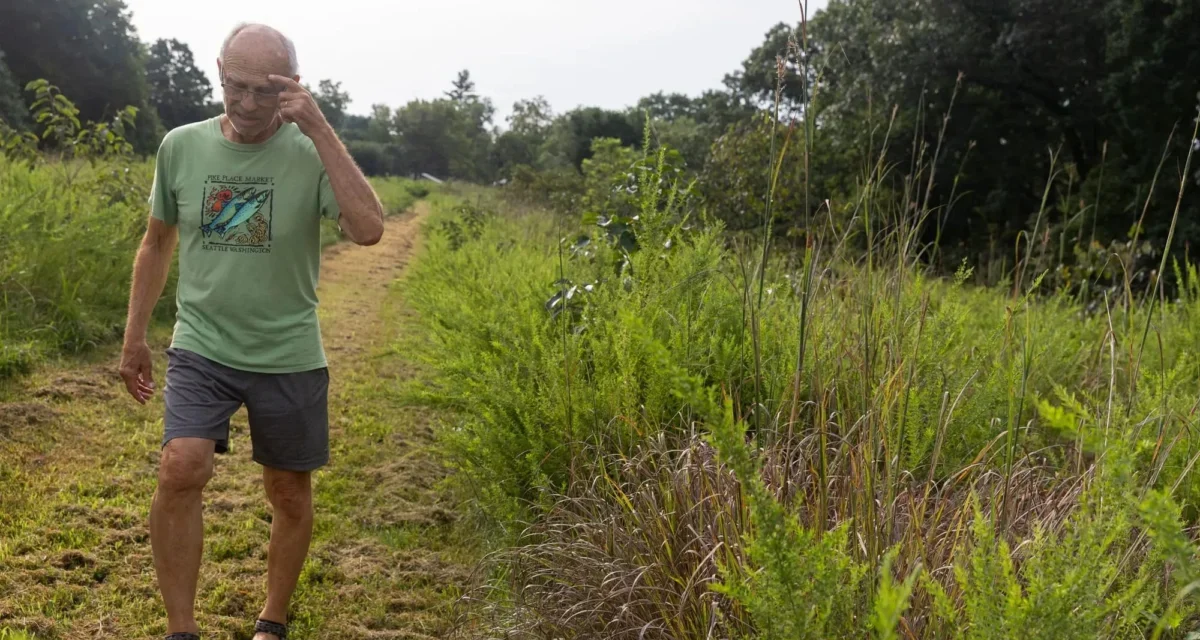




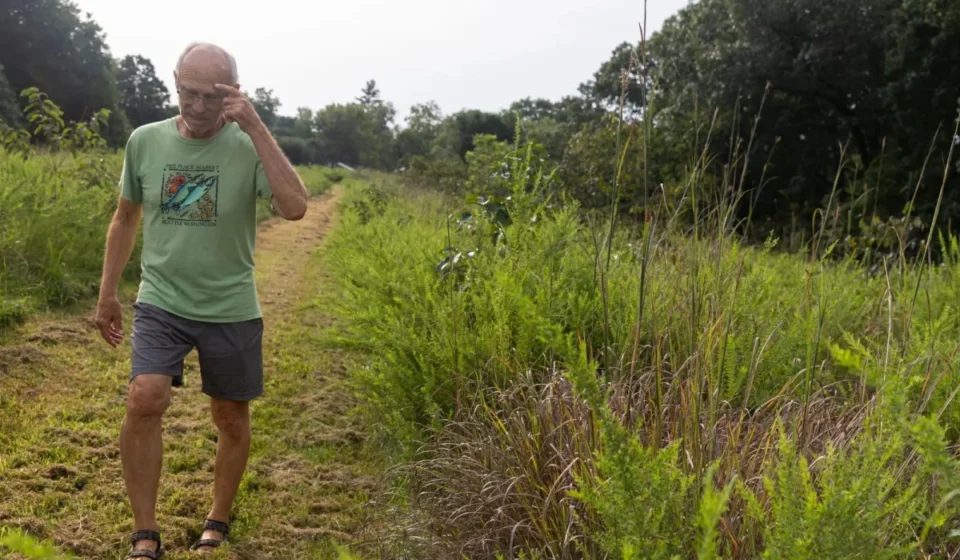

ASHLAND, Mo. — On a sweltering August morning, Dan Kuebler walks the perimeter of what was, for 33 years, his sanctuary. The 30-acre expanse of fruit orchards, vegetable patches, and lush pastures in southern Boone County once fed a significant portion of the Columbia Farmers Market. Today, however, the land belongs to someone else. Yet, as Kuebler stands near a small, weathered cabin on the property, he feels a sense of permanence that most retirees in his position never achieve.
Kuebler has successfully ensured that his land will never be paved over, subdivided, or transformed into a sprawling residential development. He achieved this through a legal mechanism known as an agricultural conservation easement—a tool that is becoming increasingly vital as the American Midwest faces an unprecedented land-use crisis.
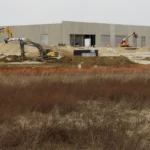
Across the United States, approximately 2,000 acres of farmland are lost every single day to development, according to data from the American Farmland Trust (AFT). As metropolitan areas like Columbia and Jefferson City expand, they swallow the rural landscape, turning fertile soil into asphalt and suburban housing plots. For farmers like Kuebler, the choice to protect their legacy often comes at a staggering personal financial cost.
The Chronology of a Disappearing Landscape
When Dan and his family purchased their Ashland farm in 1977, the town was little more than a sleepy, rural outpost. Kuebler, who began his farming career at age 40 while working a parallel career as an in-home physical therapist, spent over three decades cultivating dozens of vegetable varieties and refining his craft in fermented foods like sauerkraut and kimchi.
By the early 2000s, the tide began to turn. The rapid growth of mid-Missouri meant that once-isolated dead-end roads were suddenly prime real estate for developers. As Kuebler approached retirement, he faced a haunting prospect: his life’s work being sliced into five-acre “ranchettes.”
“I don’t want it split up into five-acre plots and become a development,” Kuebler says, his voice reflecting a deep-seated reverence for the land. “That is just like… that’s sacrilege.”
Determined to prevent this, Kuebler sought out the Greenbelt Land Trust of Mid-Missouri. He engaged in a grueling, years-long process to attach a conservation easement to his property deed. This legal document effectively strips the land of its development rights in perpetuity. Regardless of who holds the title in the future, the land is legally bound to remain an agricultural space.
Supporting Data: A National Crisis in Soil
The pressure on farmland is not merely a local phenomenon in Missouri; it is a national emergency. AFT estimates that another 18.4 million acres—a landmass nearly the size of South Carolina—will be converted to non-agricultural use by 2040.
The threat comes in two distinct forms. The first is traditional urban sprawl, where city limits creep outward. The second, and perhaps more insidious, is “low-density residential development.” Between 2001 and 2016, rural housing developments on large, former agricultural plots consumed roughly 7 million acres of farmland.
Financial realities often stack the deck against preservation. When a farmer prepares to sell, their land is appraised at its “highest and best use.” In the eyes of the real estate industry, “best use” is rarely agriculture; it is usually commercial or residential development. Consequently, placing an easement on a property can reduce its market value by as much as 65%.
For many farmers, the land is their primary retirement fund. Choosing an easement is, in essence, choosing to accept a smaller retirement nest egg to honor the stewardship of the earth.
Official Responses and Federal Intervention
Recognizing the severity of the loss, the federal government has attempted to intervene through the Agricultural Conservation Easement Program (ACEP-ALE). Managed by the Natural Resources Conservation Service (NRCS), this program provides funding to state and local agencies to essentially buy the development rights from farmers, providing a financial cushion for those who choose to protect their land.
Congress, through recent legislative efforts, has boosted this program’s funding to $650 million annually. However, the impact has been uneven. Since the program’s inception in 2014, over 1 million acres have been preserved, but the vast majority of that protection is concentrated in Montana, Wyoming, and Colorado. In states like Missouri, the program remains underutilized.
Eric Gramlich of the Ozark Land Trust explains that the barrier to entry is both cultural and logistical. “I’d like to think that we’ll be gaining more efficiencies in the program now that it’s been established, but it is generally a multiyear process,” Gramlich notes. The bureaucracy involved—appraisals, surveys, and rigorous legal certifications—can be daunting for an aging farmer.
Furthermore, even with government assistance, the payments often fail to bridge the gap between the land’s agricultural value and the astronomical prices offered by developers. “It’s a big challenge for us to rise up and be on some sort of a playing field with the other competing interests for that land,” Gramlich admits.
The Human Implication: The Cost of Legacy
The struggle between financial security and environmental stewardship is best exemplified by the case of Rick Mareske, who operates a 40-acre berry and forest farm in Kansas. Like Kuebler, he values the legacy of his land, but he is acutely aware of the price of preservation.
“The cons are, it’s expensive,” Mareske says. “It’s like 20, 25 thousand dollars just to do it, and then you lose money.” For Mareske, the land is an asset he is counting on for his golden years. He is currently walking a tightrope, trying to find a buyer who shares his vision for the farm while hoping to secure enough capital to retire comfortably.
For Dan Kuebler, the sacrifice was significant. He spent approximately $20,000 on the surveys and legal hurdles required to finalize his easement. By doing so, he saw the value of his 30-acre property drop by roughly $90,000. He did not utilize the federal ACEP-ALE program, opting instead to shoulder the cost and process himself to ensure the land remained in the hands of a local, regenerative farmer.
However, Kuebler negotiated one final, poetic condition: he retains the right to live in the cabin on the property until he passes away. It is his way of ensuring that while he no longer owns the farm, he remains a part of its ongoing story.
The Future of Agricultural Heritage
As the population continues to grow, the demand for housing will not diminish. The challenge for policymakers, land trusts, and farmers is to create a market where conservation is as profitable—or at least as feasible—as development.
Nick Shapiro, executive director of the Greenbelt Land Trust of Mid-Missouri, remains hopeful. He believes that as the average age of American farmers rises, many will be looking for successors who value the land as much as they do. “The older farmers who are looking to get out might be willing to take less than top dollar if they know that there is someone who really wants to take their land and run it and manage it in a way that is consistent with their shared values,” Shapiro says.
For the community in Boone County, the loss of Kuebler’s produce at the market was felt deeply, but his presence remains. Every Saturday, he returns to the market—not as a seller, but as a patron. He talks to his former customers, buys his groceries, and maintains the social fabric he helped build.
His farm, now permanently protected, serves as a quiet rebuke to the encroaching sprawl. It is a reminder that while land can be bought and sold, the culture of farming and the health of the soil are resources that, once lost, cannot be replaced. As the nation faces a turning point in land management, the quiet, persistent efforts of individuals like Dan Kuebler may be the only thing standing between the preservation of our agricultural heritage and the permanent erasure of the rural landscape.