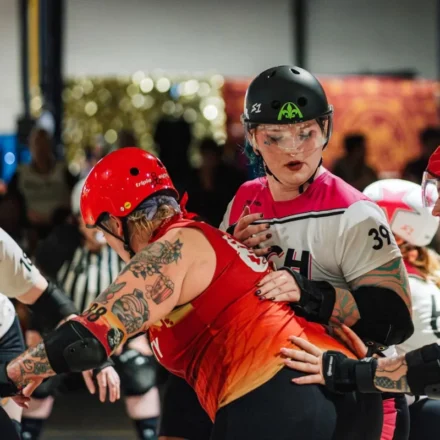









































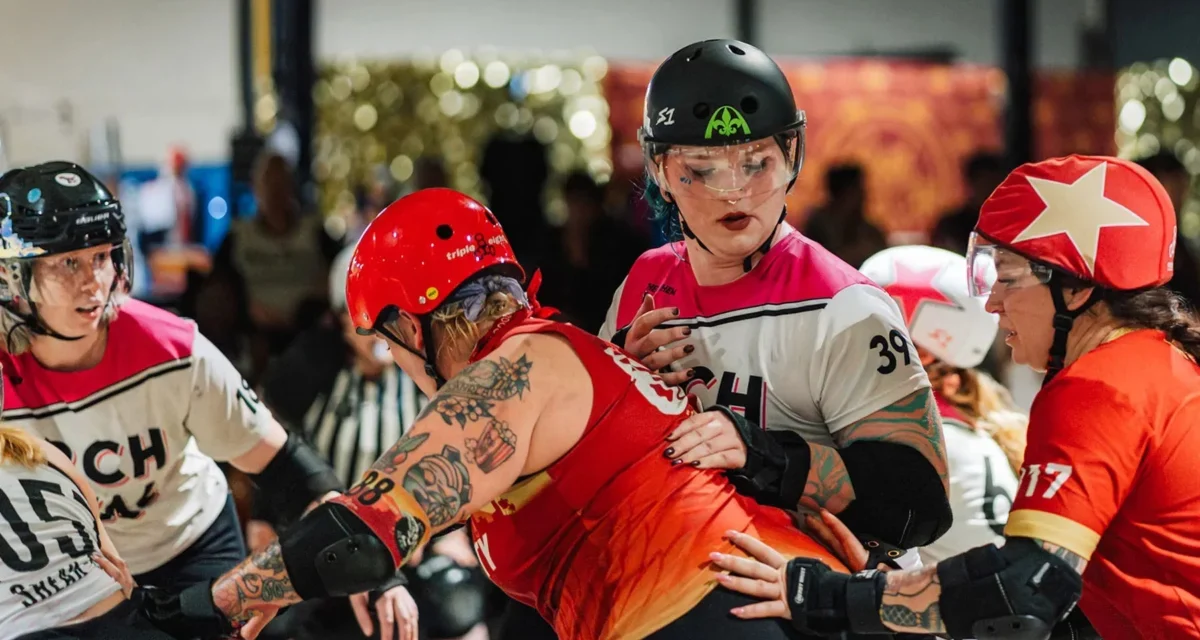



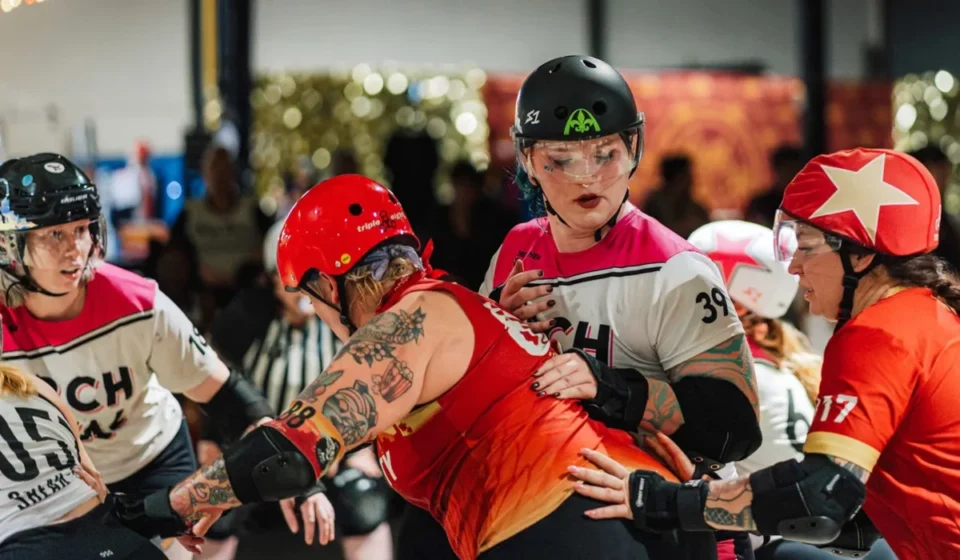

Long before the current national firestorm over transgender athletes in sports reached the fever pitch of legislative debates and cable news segments, a subculture of high-contact, punk-rock-inspired athletes was already wrestling with the complexities of gender, identity, and fairness. For many, roller derby—a sport defined by its blistering speed, strategic intensity, and performative grit—has become a model for radical inclusion in an era increasingly defined by exclusion.
However, as participants like Juniper Simonis and Penelope Nederlander can attest, this journey toward being a truly inclusive space has been neither swift nor seamless. It is a story of trial and error, grassroots activism, and the persistent, often painful, friction between deeply held values and the lived realities of marginalized athletes.
The Genesis of a Counter-Culture
To understand the current state of roller derby, one must look back to its eclectic roots. While the sport traces its lineage to the 1930s as a commercial endurance spectacle promoted by Leo Seltzer, the modern, flat-track iteration that exploded in the early 2000s was born from a very different ethos.
In 2001, a group of women in Austin, Texas, began to reimagine the sport, stripping away the performative theatricality of the past to create a DIY, punk-rock athletic movement. This "freaky feminist" counter-culture was intentionally built as a rebuttal to mainstream sports culture. It was a space where, for the first time, women were the primary architects of the rules, the governing structures, and the cultural narrative.
This was not merely about athleticism; it was about reclaiming autonomy. As Rachel "Rotten" Johnston, a derby veteran and director at Angel City League, explains, the sport’s identity was forged in the spirit of "riot grrrl" defiance. It was a space that prioritized toughness, individuality, and a rejection of traditional femininity. Because the sport was "dreamed into existence" by women for women, it naturally became a sanctuary for the queer community, attracting those who felt alienated by the heteronormative structures of traditional athletics.
Chronology of Inclusion: From Vague Policies to Explicit Equity
For years, the Women’s Flat Track Derby Association (WFTDA) operated without a codified, formal policy regarding trans participation. In the mid-2000s, this ambiguity often meant that inclusion was handled on a case-by-case basis, relying heavily on the cultural politics of individual leagues.
The Early Adopters
In 2010, when Penelope Nederlander (known as "Fifi Nomenon") approached her local league, the LA Derby Dolls, about her transition, the response was surprisingly uncomplicated. After a simple inquiry regarding her gender marker on government-issued identification, she was welcomed. For many trans skaters during this period, the barrier wasn’t necessarily a hostile governing body, but rather the confusion of a community that was still learning the vocabulary of gender identity.
The Turning Point: 2015
The year 2015 marked a watershed moment. Recognizing that "case-by-case" adjudication was insufficient and often discriminatory, the WFTDA overhauled its policies. The new mandate was clear: anyone identifying as a person of a marginalized gender was welcome to participate, regardless of their medical transition status. This policy shift was revolutionary. It did not merely accommodate; it explicitly opened the doors for nonbinary, trans, and gender-diverse athletes who had previously existed in a legal and social gray area within the sport.
Supporting Data and Personal Narratives
The impact of this inclusivity has been profound, providing a home for athletes like Drew Flowers, who transitioned while heavily involved in the sport. Flowers, who skates for the Rose City Rollers, feared that coming out would alienate the community they had built over nearly a decade. Instead, they found that the sport’s commitment to its own values was stronger than the fear of the unknown.
However, these systemic successes do not mask the reality of individual struggle. Juniper Simonis recalls the euphoria of being accepted into the Ithaca League of Women Rollers in 2012, describing it as a moment of integration where her queer identity and athletic ambitions finally aligned. Yet, that same athlete has also endured physical assault on the track motivated by her transgender identity.
These contradictions are at the heart of the sport’s ongoing struggle. While the league-wide policy is progressive, the lived experience at the rink-level can still be marred by bigotry.

The Intersection of Race and Identity
The conversation within roller derby is also evolving to address the intersection of race and gender. Donita Green ("Blaxyl Rose") has been a vocal proponent of the idea that inclusion is not a "one-size-fits-all" concept. Green notes that for Black, transgender, and gender-diverse skaters, the experience is often compounded by systemic bias.
"We talk often about ‘skating while Black,’" Green explains. "The microaggressions, the harsher refereeing, the higher threshold for being considered ‘aggressive’—these things are magnified when you exist at the intersection of being a person of color and a trans person." For the sport to reach its goals, the community acknowledges that it must look beyond just gender policy and interrogate the racial power dynamics that continue to influence how the game is officiated and perceived.
Official Stances and the "Fairness" Debate
Perhaps the most telling aspect of roller derby’s history is its rejection of the Olympic model. For years, the sport was considered for international recognition, yet the governing bodies ultimately declined to pursue it. The primary reason? A refusal to adopt the strict, binary gender testing and exclusionary policies that the International Olympic Committee and various national federations require.
Roller derby leaders, such as Nicole Williams (the "LeBron James" of the sport), argue that the preoccupation with "protecting women’s spaces" by excluding trans women is fundamentally regressive. Williams posits that the perceived threat to "fairness" is often a mask for patriarchal gatekeeping.
"When I see people say, ‘protect women’s spaces,’ that feels so repressive," Williams said. "I don’t want to discount that women’s spaces are important—they are—but I don’t identify with that in the way I used to."
Implications for the Future of Athletics
The implications of the roller derby experience for the broader sports world are significant. The sport serves as a real-world, long-term case study proving that inclusion does not necessitate the destruction of competitive integrity.
Penelope Nederlander suggests that the way forward lies in radical honesty. Instead of pretending that there are no biological differences, or conversely, using those differences as a blunt instrument to ban entire demographics, the community should focus on the reality of the sport. In a full-contact, high-speed environment like roller derby, "fairness" is a fluid concept. Injuries happen, height differences exist, and the nature of the sport is inherently chaotic.
The sport has demonstrated that "fairness" can coexist with inclusivity if the community is willing to prioritize the human element over the rigid, laboratory-style definitions of athletic performance.
Conclusion: A Work in Progress
Roller derby is not a utopia. It is a sport of black eyes, bruised shins, and, at times, difficult social tensions. However, it remains a rare example of a competitive space that has prioritized the dignity of its athletes over the pressure to conform to traditional, exclusionary standards.
As the rest of the world continues to debate the merits of inclusion, the roller derby community stands as a testament to the idea that a sport can evolve. By choosing to embrace the diversity of its participants, the league has not just survived; it has redefined what it means to compete. The journey is far from finished, but for those who lace up their skates every weekend, the track remains one of the few places where the promise of belonging is, and will continue to be, a reality.