

















































The Semantic Shift: OpenAI Rebrands Data Centers as ‘Compute Campuses’ Amid Growing Grid Friction

In the high-stakes arena of artificial intelligence development, language is often as strategic as the hardware itself. OpenAI, the architect behind the ubiquitous ChatGPT, has recently unveiled a subtle but significant linguistic pivot: the formal rebranding of its massive server facilities from the utilitarian "data center" to the more pastoral, inviting moniker of "compute campus."
This shift, revealed alongside the company’s new "Grid Protectors Program," arrives at a time when the tech industry faces unprecedented scrutiny over its ravenous appetite for electricity. As AI models scale to near-mythical levels of complexity, the physical infrastructure required to power them has become a flashpoint for local communities, environmental groups, and utility regulators. By softening the nomenclature, OpenAI is attempting to navigate a "culture war" that pits the promise of technological super-intelligence against the cold, hard reality of local grid capacity.
The Chronology of the Power Crunch
The trajectory of the current energy crisis within the tech sector did not happen overnight. It is the result of a multi-year collision between the exponential growth of generative AI and the slow-moving modernization of national power grids.
- 2022–2023: The rapid proliferation of Large Language Models (LLMs) triggers a "compute arms race." Major tech firms scramble to secure GPU clusters, leading to a surge in data center construction.
- Early 2024: Public backlash gains momentum. In states like Virginia and Arizona, local communities begin organizing against the rezoning of land for industrial-scale server farms, citing concerns over noise, water usage, and—most importantly—the threat to local power reliability.
- Mid-2024: Major utilities issue warnings that transmission delays and capacity constraints are becoming the primary bottlenecks for tech expansion. Gartner releases forecasts suggesting that data center electricity consumption is set to grow by 26% by 2026.
- Late 2024: OpenAI announces its "Grid Protectors Program." In the supporting documentation, the company strategically shifts its terminology, mentioning "compute campuses" four times while referring to "data centers" only twice, signaling an intentional attempt to reframe the public perception of these facilities.
Supporting Data: The Scale of the Consumption
The friction between AI developers and the communities they occupy is fundamentally a mathematical one. AI workloads are significantly more energy-intensive than traditional cloud computing tasks. According to industry analysts, a single query to a generative AI model can consume nearly ten times the electricity of a standard Google search.
As companies race to achieve "super intelligence"—a term now gaining traction in political and corporate circles—the physical footprint of this ambition is ballooning. Data from the International Energy Agency (IEA) suggests that if current trends hold, the energy demand from data centers, AI, and cryptocurrency could double by 2026, reaching levels comparable to the total electricity consumption of entire nations.
This is not merely a matter of total consumption; it is a matter of timing. The grid is most vulnerable during "peak hours"—those times of day when residential and commercial demand for air conditioning and heating is at its zenith. It is during these periods that the presence of a massive, 24/7 power-hungry server farm can trigger brownouts or force utilities to rely on less efficient, more carbon-intensive peaker plants to keep the lights on for local residents.
The ‘Compute Campus’ Rebranding: A Strategic Pivot
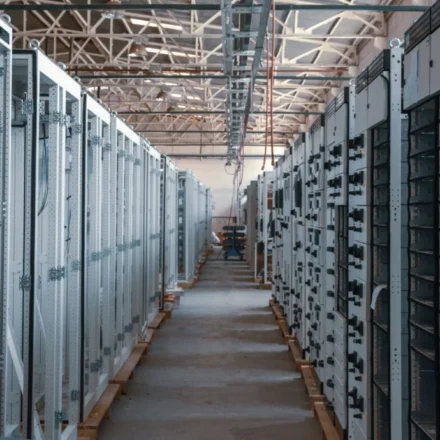
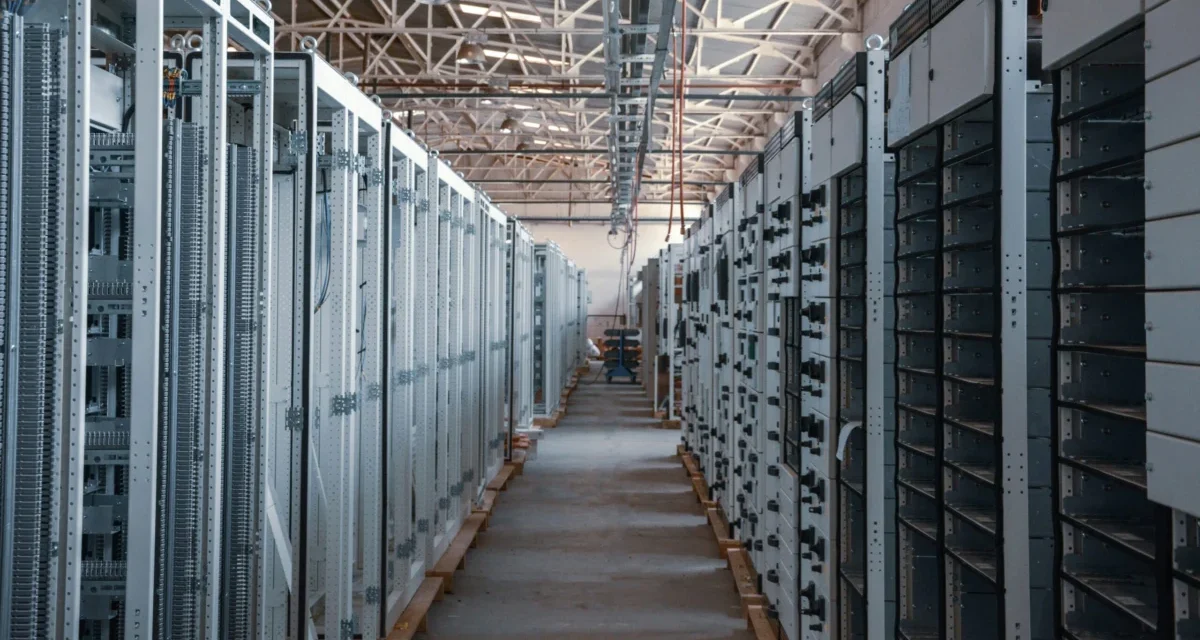
The transition to the term "compute campus" is not an accidental flourish of marketing copy. In corporate communications, words are chosen to minimize friction and maximize social license to operate. "Data center" evokes images of humming, windowless warehouses, concrete walls, and industrial cooling fans—the antithesis of a community asset.
"Compute campus," by contrast, implies a site of innovation, research, and academic rigor. It echoes the branding of Silicon Valley headquarters, suggesting a place where intelligent discourse occurs rather than a resource-draining utility sink. This move follows a broader industry trend of obfuscation and rebranding, such as the recent push to promote the term "super intelligence" in place of the more ambiguous "artificial intelligence," which carries baggage related to job displacement and algorithmic bias.
Critics argue that this rebranding is a superficial bandage on a structural wound. If a facility consumes the energy of a small city, no amount of softening the language will mitigate the heat, noise, and grid stress felt by those living in its shadow.
Official Responses and the Grid Protectors Program
OpenAI’s Grid Protectors Program is the company’s attempt to demonstrate corporate social responsibility. The initiative proposes a flexible power-consumption model: when local grids are under stress, OpenAI’s facilities will voluntarily dial back operations to prioritize the needs of residential consumers.
"We are committed to making power flexibility a key element in our facility design," an OpenAI representative stated. The company claims the program will be tailored to regional requirements, acknowledging that a grid in the Pacific Northwest, powered largely by hydro, faces different challenges than the coal-and-gas-heavy grids of the American Midwest.
However, the efficacy of this program remains to be seen. Critics are quick to point out the inherent conflict of interest: AI training runs are time-sensitive, and delaying them during peak hours could impede the company’s competitive edge. Whether OpenAI can truly prioritize the local community over its own model training schedules is the central question of the initiative.
The Google Contrast
It is worth noting that OpenAI’s approach differs from that of its competitors. Google, for instance, has recently explored a more direct, market-based approach: paying local residents to reduce their electricity usage during peak times. While OpenAI’s strategy focuses on "self-policing" its own consumption, Google’s approach involves incentivizing the broader population to subsidize the company’s power needs. Both strategies illustrate a desperate scramble to justify the continued expansion of AI infrastructure in a world where energy is no longer an abundant, invisible commodity.
Implications: The Future of AI Infrastructure
The tension between AI development and grid stability is poised to define the next decade of infrastructure policy. There are three primary implications for the road ahead:
1. Regulatory Hurdles and Local Resistance
As protests against server farms grow in frequency, we can expect local zoning boards to become much more aggressive. The "not in my backyard" (NIMBY) sentiment is shifting toward "not in my grid." Construction delays, which Google has already flagged as a significant threat to expansion, will likely become the norm rather than the exception.
2. The Rise of Decentralized Energy
To bypass grid constraints, tech giants are increasingly exploring "behind-the-meter" power generation. This includes on-site microgrids, investments in small modular nuclear reactors (SMRs), and massive investments in renewable battery storage. The "compute campus" of the future may well be an energy island, disconnected from the local grid to avoid the very friction OpenAI is currently trying to manage.
3. The Semantic Battleground
Expect the battle over terminology to intensify. As AI companies seek to embed themselves into the fabric of local communities, the language they use will continue to evolve to emphasize "integration" and "sustainability." However, the public is becoming increasingly savvy to these rhetorical shifts. The success of the "compute campus" rebranding will likely depend less on the cleverness of the name and more on whether these facilities can actually prove themselves to be "good neighbors" by keeping the lights on for everyone else.
Conclusion
The renaming of data centers to compute campuses is a microcosm of the current state of the tech industry: an attempt to use the power of narrative to solve the physical constraints of reality. While OpenAI’s Grid Protectors Program offers a promising framework for grid-aware computing, it is merely the first step in a long and difficult transition.
For the AI boom to continue, the industry must move beyond linguistic window dressing. It must address the reality that as its models become more "super intelligent," its physical footprint becomes more cumbersome. Whether through grid-balancing programs, technological breakthroughs in cooling, or a fundamental rethinking of how we power the next generation of computing, the "compute campus" must earn its place in the community—not by changing its name, but by ensuring that its growth does not come at the expense of the basic utilities that power modern life.