





























The High-Octane Culture War: How Transportation Policy Became the New Frontier of American Masculinity

By [Your Name/Journalistic Staff]
"Freedom doesn’t ring, it revs!"
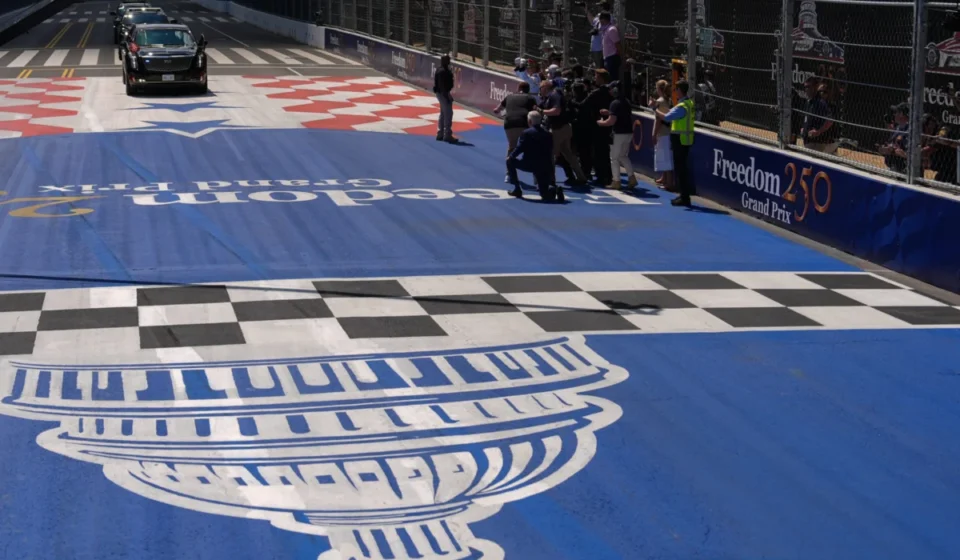
That rallying cry echoed across the National Mall this past weekend, serving as the official tagline for the inaugural Freedom 250 Grand Prix. The event, which saw high-performance race cars tearing through the heart of Washington, D.C., was more than just an exhibition of automotive engineering; it was a high-profile manifestation of a burgeoning political movement that views the internal combustion engine as a sacred symbol of American identity.
In an era where political theater has increasingly migrated toward displays of physical prowess—from UFC fighters trading blows on the White House lawn to Cabinet officials engaging in public "fitness face-offs"—the Freedom 250 serves as the latest chapter in a broader cultural project. It is a movement that links transportation policy directly to a specific, nostalgic vision of American manhood.
The Intersection of Power, Policy, and Petro-Masculinity
At the center of this shift is Transportation Secretary Sean Duffy. A former reality television star turned political operator, Duffy has become the primary architect of a strategy that frames car culture as a bulwark against perceived progressive encroachment. Whether it is transforming the nation’s capital into a temporary raceway or spearheading a federal campaign to defund what he labels "DEI bike lanes," Duffy’s tenure has been defined by a concerted effort to center the automobile in the American experience.
This focus is not accidental. Scholars like Cara Daggett, an affiliate faculty member at Virginia Tech, have long studied the phenomenon of "petro-masculinity." Coined in 2018, the term describes the deep-seated psychological and social link between traditional masculinity, the fossil fuel industry, and a bygone economic era—one where male identity was inextricably tied to the breadwinner-housewife model and the freedom afforded by cheap gasoline.
"This particular division of private and public—housewife and breadwinner—was built on a flow of cheap fossil fuels and car culture," Daggett explains. For the current administration, the defense of this infrastructure is not merely about traffic efficiency; it is a defensive reaction to a changing social landscape.
A Chronology of the Great Roadway Divide
The tension between "car-centric" conservatism and "multi-modal" progressivism has been brewing for years, but it reached a boiling point during the transition from the Biden administration to the current political climate.

- 2021–2024: Under then-Transportation Secretary Pete Buttigieg, the Department of Transportation (DOT) prioritized climate-focused infrastructure. This included massive federal investments in bike lanes, pedestrian safety, and public transit. Buttigieg famously prioritized riding his bicycle to work, a move that became a lightning rod for conservative criticism.
- January 2025: Following his inauguration, President Trump appointed Sean Duffy to lead the DOT. Within weeks, the department issued new guidance prioritizing federal transportation funds for communities with higher-than-average marriage and birth rates—a policy critics argue effectively funnels tax dollars into suburbs at the expense of urban centers.
- Summer 2025: Duffy launched a direct offensive against "DEI bike lanes." The department halted numerous grants for pedestrian safety, citing that such projects were "hostile to vehicles" and impeded traffic flow.
- August 2026: The Freedom 250 Grand Prix is held on the National Mall, signaling the full-scale normalization of high-performance car culture as an instrument of state-sanctioned political messaging.
The Role of Marketing and the Manosphere
The modern car-centric movement draws heavily on decades of advertising tropes. Since the 1960s, automotive manufacturers have leaned into messaging that associates vehicles with dominance, environmental mastery, and speed. Nicole Roach, co-founder of Women in Urbanism, Canada, notes that this branding is rarely neutral.
"They’ve really used the messaging of freedom, domination over the environment, strength, power, and speed to appeal to men," Roach says.
This has evolved into a digital-age aesthetic. Icons of the "manosphere," such as Andrew Tate, curate collections of hyper-expensive, high-speed vehicles as symbols of success. Meanwhile, Elon Musk’s Cybertruck has been marketed—and received—as a "macho and manly" cultural totem. Even the peripheral symbols, such as "truck nuts" (scrotum-shaped accessories for tow hitches), have been adopted by segments of the political base as badges of defiance against perceived "soft" or "woke" cultural norms.
This year, this trend reached the corporate level with Ram’s "In Loud We Trust" advertising campaign. Narrated by UFC President Dana White, the ads weave together imagery of cowboys, rocket ships, and monster trucks, framing the act of driving a large, loud vehicle as a foundational, patriotic American duty.
Supporting Data: Safety and Infrastructure Reality
While the political rhetoric surrounding bike lanes and street design is fierce, the empirical data tells a more nuanced story. According to a YouGov survey from June 2025, 75 percent of U.S. adults support the inclusion of bike lanes in their communities, with one-third of the population expressing a desire for expanded cycling infrastructure.
However, the physical reality of the road is changing. The trend toward larger SUVs and trucks has had deadly consequences. An investigation by The New York Times highlighted that pedestrian and cyclist fatalities have surged by 75 percent since 2009. Researchers like Tara Goddard of Cal Poly argue that the current push to remove bike infrastructure is effectively "punishing care."
"It’s like pathologizing the idea of caring for each other," Goddard says. "Of course it’s considered ‘weak’ to care for the environment."
Despite the rhetoric that bike lanes cause congestion, evidence suggests the opposite. Studies indicate that pedestrian infrastructure often boosts small business revenue and improves safety for all road users, including drivers, by calming traffic and creating predictable flow. As Goddard notes, the financial investment in these projects is a "fraction of a penny on the dollar" compared to highway spending, meaning they are rarely in direct competition for limited resources.

Official Responses and Bureaucratic Shifts
The Department of Transportation has defended its shift in priorities by arguing that past projects failed to properly account for the needs of motorists. A spokesperson for the agency stated that the redirection of funds is a corrective measure aimed at mitigating traffic congestion and addressing accessibility concerns for those who rely on vehicles as their primary mode of transportation.
However, the removal of safety data from the DOT website—specifically reports on crashes involving pedestrians and cyclists—has alarmed urban planners and safety advocates. Without this data, local governments struggle to identify high-risk intersections, effectively blinding them to where road improvements are most needed.
The Broader Implications: A City for Whom?
The clash over bike lanes is ultimately a struggle over the definition of the "American City." Scholars like Leslie Kern, author of The Feminist City, argue that the prioritization of car-centric infrastructure is a physical manifestation of traditional gender hierarchies.
"It’s like saying a woman’s primary role is to have children," Kern says. "The suburbs are the physical manifestation of that, and the infrastructure is designed to keep that model isolated and car-dependent."
The contrast in leadership styles is stark. In New York City, Mayor Zohran Mamdani has taken an opposing path, prioritizing bike boulevards and pedestrian walkways. His public image involves riding bikes with school children, a direct counter-image to the Secretary of Transportation’s recent social media post of himself revving a Ram pickup truck.
As these two visions of American life continue to collide, the debate over a strip of painted pavement on a city street has evolved into a proxy war for the soul of the country. For one side, the bike lane represents progress, equity, and a sustainable future; for the other, it represents an affront to personal liberty and a rejection of the traditional masculine identity that has defined the American highway for the last century.
As the country moves toward its 250th anniversary, the question remains: will the American dream continue to be measured in horsepower, or will it find a new, more inclusive speed?