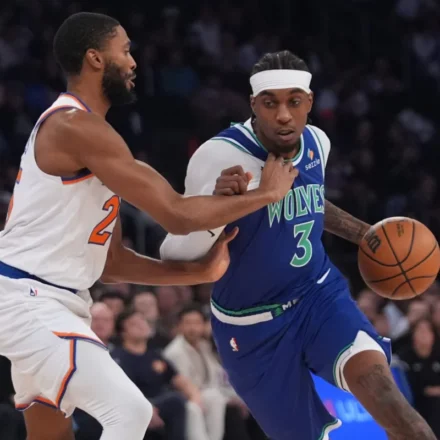













































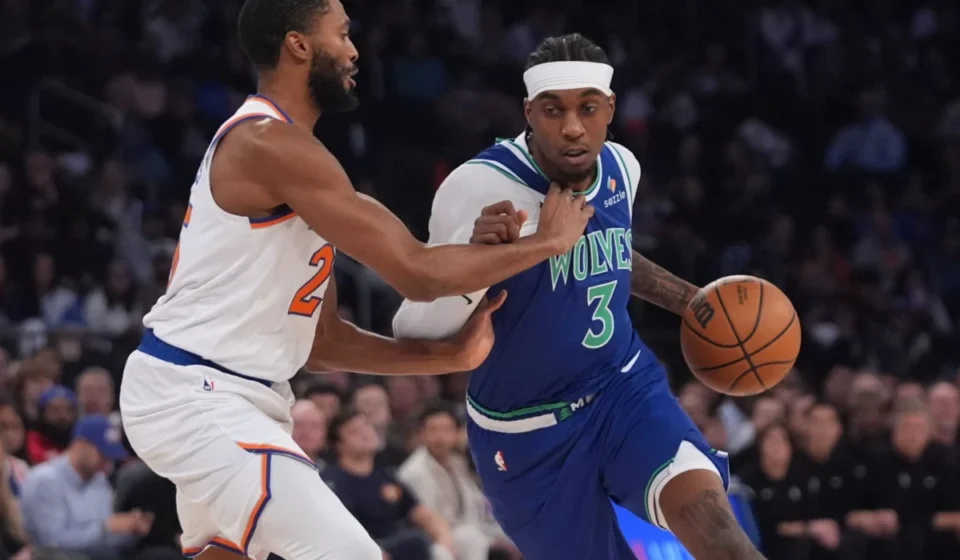

Welcome to a new, exhilarating era of Minnesota Timberwolves basketball. Once the perennial laughingstock of the NBA, the franchise has successfully shed its skin, emerging as a must-watch, daredevil darling of the association. Entering their fifth season under the stewardship of President of Basketball Operations Tim Connelly and head coach Chris Finch—a partnership that has redefined the team’s identity—the Timberwolves are embarking on their most audacious experiment yet.
The Architect’s Blueprint: From Twin Towers to Turbo-Charged Spacing
When Tim Connelly arrived in Minneapolis in May 2022, he inherited a roster he famously described as having an "unbelievably special core," pledging to protect it. Yet, in a move that blindsided the league just 44 days later, he initiated a seismic roster overhaul. By acquiring center Rudy Gobert, Connelly paired a defensive anchor with the team’s long-standing star, Karl-Anthony Towns. At the time, the NBA was obsessed with "space-and-pace" basketball, led by the Golden State Warriors’ dynasty. By committing to two seven-footers, Connelly defied the league’s conventional wisdom. Two years later, that "audacious ride" culminated in a Western Conference Finals appearance.
This past summer, however, Connelly executed a 180-degree turn. In a calculated maneuver, he moved both of his primary power forwards—who had also served as backup centers—to acquire passing maestro LaMelo Ball. In a league currently trending toward massive, unicorn-led lineups, headlined by the 7’5” Victor Wembanyama, the Timberwolves have opted for an aggressive, high-octane backcourt. By pairing Ball with the electrifying Anthony Edwards, the front office is betting that elite speed and playmaking can neutralize the league’s newfound obsession with size.
Chronology of a Transformation
The journey to the current iteration of the Timberwolves is defined by a series of bold, often controversial pivots:

- May 2022: Tim Connelly is appointed President of Basketball Operations, promising stability.
- July 2022: The "Gobert Trade" occurs, signaling the start of the "Twin Towers" experiment and a radical departure from league trends.
- May 2024: The team reaches the Western Conference Finals, validating the defensive-first identity.
- Summer 2025: The organization chooses to stand pat, prioritizing roster continuity. The result is a stagnant playoff exit, exposing the team’s inability to evolve against elite competition.
- Summer 2026: Recognizing that running the same roster back would be a failure of imagination, Connelly pulls the trigger on the LaMelo Ball trade, pivoting from a "grind-it-out" style to a "turbo-charged" offensive philosophy.
The Analytical Case for the Ball-Edwards Backcourt
The primary motivation behind the 2026-27 roster construction is to unlock the next level of superstardom for Anthony Edwards. Statistical analysis of the previous season reveals a jarring discrepancy in Edwards’ efficiency. When operating as a pull-up shooter, Edwards posted a respectable 35.3% from beyond the arc. However, when functioning as a catch-and-shoot threat, that number soared to 49.6%.
Under the old system, Edwards was forced into a high-usage, on-ball role that limited his ability to exploit these catch-and-shoot opportunities. With LaMelo Ball—a pure passer capable of delivering precise feeds in fluid, non-gather motions—the Timberwolves are creating an environment where Edwards can maximize his gravity as a scorer. Ball’s own propensity to launch from deep, effectively spacing the floor, creates a symbiotic relationship that should result in one of the most prolific backcourts in the modern NBA.
Roster Implications and the "X-Factors"
While the ceiling of this team is arguably higher than any previous iteration, the floor is decidedly more precarious. The loss of veteran power forwards Julius Randle and Naz Reid has created a vacuum.
The Interior Conundrum
With Gobert turning 34, the team lacks the physical "beef" they once had to protect the paint. The responsibility now falls on the shoulders of Jonathan Kuminga and rookie Joan Beringer. Kuminga, while immensely talented, has struggled with consistency, and Beringer is still learning the nuances of NBA-level rim protection. Head coach Chris Finch is expected to compensate for this lack of "interior brawn" through complex, active defensive rotations and potentially utilizing zone defenses when Gobert is off the floor.

The Bench Rotation
The success of the second unit rests on the shoulders of Ayo Dosunmu and TJ Shannon, both of whom thrive in a high-tempo environment. Bones Hyland remains a potent offensive spark plug, though his defensive shortcomings may make him a target for opposing wings. The team is also monitoring the status of Donte DiVincenzo; should his recovery from Achilles surgery allow for a spring return, his presence would provide a critical veteran stabilizing force for the playoff push.
The View from the Front Office: Official Sentiments
While the team’s public messaging remains focused on growth and "retooling rather than rebuilding," there is an underlying sense of urgency. The Timberwolves’ postseason exits at the hands of the Oklahoma City Thunder (2025) and the San Antonio Spurs (2026) served as a reality check. Both franchises currently hold an edge in terms of star depth, cohesion, and physical length.
Connelly’s willingness to pivot mid-season—as evidenced by his track record—suggests that if the Kuminga/Beringer experiment fails to yield results by the trade deadline, the front office will not hesitate to strike again. The organization has established a culture where the status quo is never an option if it hinders progress.
Strategic Outlook: Can They Cross the Chasm?
The path to the NBA Finals is undoubtedly treacherous. The consensus among league analysts is that the Thunder and Spurs remain the class of the Western Conference. For the Timberwolves to realistically compete, they must sustain a top-10 defensive rating—a feat that has historically been synonymous with Rudy Gobert’s presence on the court.

However, the team’s optimism is not unfounded. If Jaden McDaniels continues his ascent into a legitimate two-way star, and if Finch can successfully integrate the newcomers into a cohesive defensive scheme, the Timberwolves have a path to success. The goal for the 2026-27 season is to secure a playoff spot and, once again, defy expectations as a lower-seeded team.
The Timberwolves have not won a playoff series as a favorite in recent years, but they have consistently won as the underdog. Under the guidance of the Connelly-Finch regime, the franchise has fundamentally altered its DNA. They are no longer a team that simply plays basketball; they are a team that creates fascinating, high-stakes narratives every time they step onto the hardwood.
As the season unfolds, the focus will remain on the growth of the individual players—Kuminga’s consistency, Beringer’s defensive development, and the chemistry between Ball and Edwards. Whether this "turbo-charged" experiment results in a championship or a mid-season course correction, one thing is certain: the Minnesota Timberwolves have officially entered their era of appointment viewing. The adrenaline, the risk, and the sheer audacity of their strategy promise a season that will keep fans on the edge of their seats until the final buzzer of the playoffs.