












































The 2026-27 NBA season was supposed to be a coronation for the Minnesota Timberwolves. With a reconfigured roster designed to bridge the gap between their perennial playoff success and a legitimate championship run, the Wolves entered the campaign with a clear mandate: overcome the ghosts of the San Antonio Spurs and Oklahoma City Thunder.
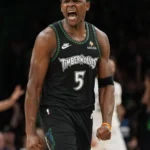
Then came the news that stopped the Target Center in its tracks. Anthony Edwards, the franchise’s electrifying heartbeat, was sidelined for up to two months following knee surgery. Suddenly, the “championship-or-bust” narrative shifted toward a more immediate, existential question: How does a team built around a supernova navigate the vacuum left by his absence?
The answer, it turns out, is a collective improvisation. Led by the kinetic energy of Ayo Dosunmu and a roster of role players embracing expanded responsibilities, the Timberwolves have not only stayed afloat—they have arguably become more dangerous.
The "Dosunmu Dash" and the Art of Transition
In the immediate wake of the Edwards announcement, the team needed a catalyst. They found it in the blur of Ayo Dosunmu.
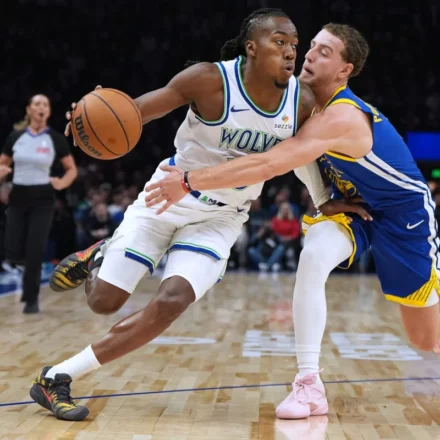
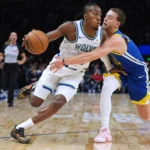
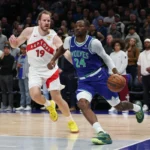
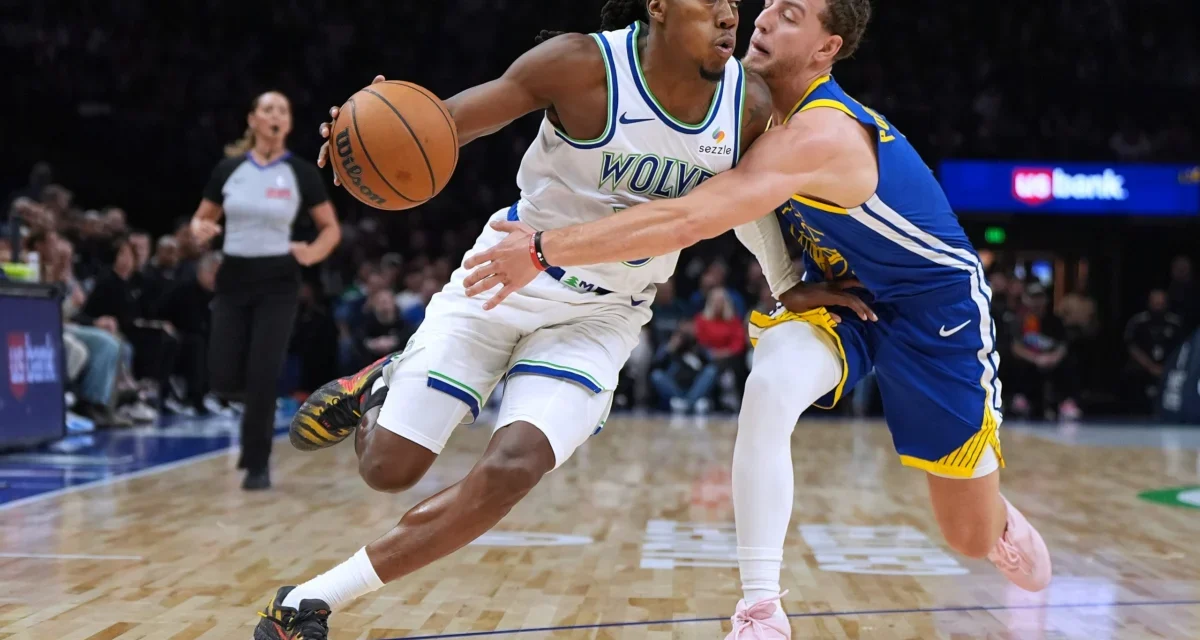
The “Dosunmu Dash” has become the signature rhythm of this Minnesota squad. It is a clinical, high-speed transition game that turns defensive stops into points with ruthless efficiency. Whether he is intercepting a pass in the passing lane or tracking down a loose ball with the desperation of a sprinter chasing a gold medal, Dosunmu’s ability to turn the full length of the court into a scoring opportunity has provided the Wolves with a much-needed offensive lifeline.

When asked about the ethereal quality of his finishing—that rare ability to maintain elite speed while executing a soft, high-arcing layup—Dosunmu remains humble. “I’m not going to lie, that’s just God,” he noted earlier this season.
However, watching him dismantle the Houston Rockets’ top-10 defense on Wednesday night, it is clear that there is more than divine intervention at play. Dosunmu has mastered the “jazz solo” of the modern NBA: a bag of tricks involving staccato changes of pace, ambidextrous crossovers, and an uncanny ability to navigate traffic. By burning defenders with subtle feints and angular drives, Dosunmu accounted for 20 points in the paint against Houston—a staggering statistic for a guard—and led the team in fast-break scoring.
Chronology of a Resilient Stretch
The five games following Edwards’ surgery have been a masterclass in "next man up" mentality. Coach Chris Finch, having challenged his squad to find an “extra gear” prior to the season, has seen that challenge accepted in real-time.
- Game 1-4 (Pre-Surgery): The Timberwolves operated as a traditional title contender, leaning heavily on the gravity created by Edwards and the cohesion of their new roster.
- The Announcement: Following the four-game mark, the medical staff confirmed the surgery. With LaMelo Ball managing a heavy workload and TJ Shannon battling a sore hip, the depth chart was stretched thin.
- The Houston Upset: The pivotal moment of this stretch occurred this past Wednesday. In a hostile road environment, the Wolves found themselves trailing late. Dosunmu carried the scoring burden through the second and third quarters, providing the bridge for a fourth-quarter comeback.
- The Closing Act: In the final eight minutes, with the game hanging in the balance, the Wolves leaned on the veteran presence of LaMelo Ball. Ball, who had struggled with turnovers earlier in the game, emerged in the clutch, hitting back-to-back 26-footers and orchestrating a series of plays that silenced the Rockets’ home crowd.
Statistical Dominance and Supporting Data
The numbers reveal a team that is not merely surviving, but thriving through specialized roles. Over the last five games, Dosunmu has been the team’s statistical engine, leading in points per game (19.8) and steals (10).
Perhaps more impressive is the emergence of the supporting cast:

- Jonathan Kuminga: The unsung hero of the season. Kuminga has embraced the "dirty work" role with such discipline that Coach Finch recently admitted the team would be “lost without him.” His eight-point burst in the final three minutes against Houston—consisting of two corner threes and a putback—encapsulated his growth from a raw talent to a reliable, situational hero.
- Jaylen Clark: A defensive menace who has freed Jaden McDaniels to focus on perimeter threats. Clark’s own offensive development—shooting over 40% from deep—has added a floor-spacing element that has forced opponents to respect the entire Timberwolves rotation.
- The Lyles-Beringer Synergy: In a nod to roster construction, the pairing of veteran Trey Lyles with rookie Joan Beringer has been a revelation. While Beringer offers raw, exuberant talent, Lyles has acted as an on-court mentor. When paired together, the Wolves allow only 100 points per 100 possessions, a massive defensive improvement compared to Beringer’s solo minutes.
Official Perspectives: The Coaching Philosophy
Coach Chris Finch’s strategy during this period has been one of "structured flexibility." He has allowed players like Kuminga and Dosunmu to operate within their strengths while resisting the urge to overhaul the entire system.
"We aren’t looking to replace Ant," a member of the coaching staff suggested. "We are looking to play a style that is sustainable. When Ant returns, we want these habits to be deeply ingrained, not abandoned."
The front office has remained steadfast in its commitment to the roster’s "higher ceiling" philosophy. Despite the temptation to panic or trade assets to cover the injury, the organization has opted to trust the developmental arc of the current group. By utilizing a seven-game homestand to prioritize practice over travel, the staff is ensuring that the team’s cohesion remains high, focusing on defensive principles and ball movement that can survive any individual’s absence.
Implications: Building for the Long Marathon
The 2026-27 season is a marathon, not a sprint. The Timberwolves are playing for May and June, and the current adversity is, in many ways, an accelerated pressure test.
The primary implication of this stretch is the validation of the team’s "plug-and-play" versatility. By forcing LaMelo Ball, Dosunmu, and Kuminga to navigate high-leverage situations without their primary star, the Wolves are building a "trust tree" that will pay dividends in the playoffs. If the team can maintain its current defensive intensity—currently third in the league in points off turnovers—they will be a formidable opponent regardless of who is on the floor.

However, the risk remains. As seen in the Houston game, putting too much weight on one player—like asking LaMelo Ball to dominate exclusively—can lead to turbulence and foul trouble. The goal for the remainder of Edwards’ absence is to continue "sharing the cake." When Ball is a facilitator and Dosunmu is the finisher, the Timberwolves are a symphony. When the ball sticks, they are a collection of individuals.
As the Timberwolves head into a critical homestand, the mood is one of guarded optimism. They have discovered that their identity is not tied to a single player, but to a relentless pace and a commitment to the "Dosunmu Dash." If they can continue to capitalize on turnovers and maintain this collective output, the return of Anthony Edwards will not be a rescue mission—it will be an addition to an already functioning, championship-caliber machine.