





















































Minnesota’s 2nd Congressional District: A Pivotal Primary Shapes the Future of a Crucial Swing Seat

WASHINGTON D.C. – The political landscape of Minnesota’s fiercely contested 2nd Congressional District is undergoing a significant transformation, as incumbent Democratic Representative Angie Craig prepares to vacate her seat for a challenging Senate bid. With voters across the nation increasingly vocal in their demand for change, the race to succeed Craig has ignited a competitive Democratic primary, casting a long and complex shadow over the August 11 contest.
Rep. Craig, a four-term representative lauded for her moderate approach, successfully wrestled control of the 2nd District from Republican hands and maintained it within the Democratic-Farmer-Labor (DFL) Party. Her ability to bridge partisan divides and cultivate broad appeal among a diverse electorate — encompassing the Twin Cities’ southern suburbs and expansive rural farm areas — cemented her reputation as a formidable political force. However, as she sets her sights on retiring Senator Tina Smith’s seat, her decision to remain neutral in the primary race to replace her has introduced a dynamic tension, forcing three hopeful Democrats to navigate a path without the explicit backing of their popular predecessor.
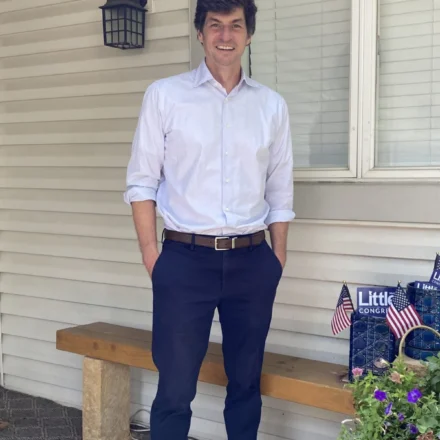
The three candidates vying for the DFL nomination – former state senator and Lakeville mayor Matt Little, state Senator Matt Klein, and state Representative Kaela Berg – represent a spectrum of the Democratic Party’s ideological leanings. Each contender grapples with the legacy of Craig’s moderation, particularly in a year marked by heightened progressive activism and scrutiny over centrist legislative votes. The outcome of this primary will not only determine who carries the DFL banner into the general election but could also redefine the strategic blueprint for winning in one of Minnesota’s most quintessential "purple" districts.
Main Facts: The Battle for the Second
The 2nd Congressional District, often described as Minnesota’s most electorally volatile, presents a unique challenge for any candidate. Its demographic mosaic, stretching from the burgeoning southern suburbs of Minneapolis-St. Paul to the agricultural heartland, demands a nuanced political message capable of resonating with disparate voter blocs. Representative Craig’s success stemmed from her ability to craft a moderate platform that appealed to suburban independents and even some disaffected Republicans, while still energizing the Democratic base.
Now, with Craig stepping aside, the DFL primary has become a proving ground for competing visions of how to best represent and hold this pivotal district.
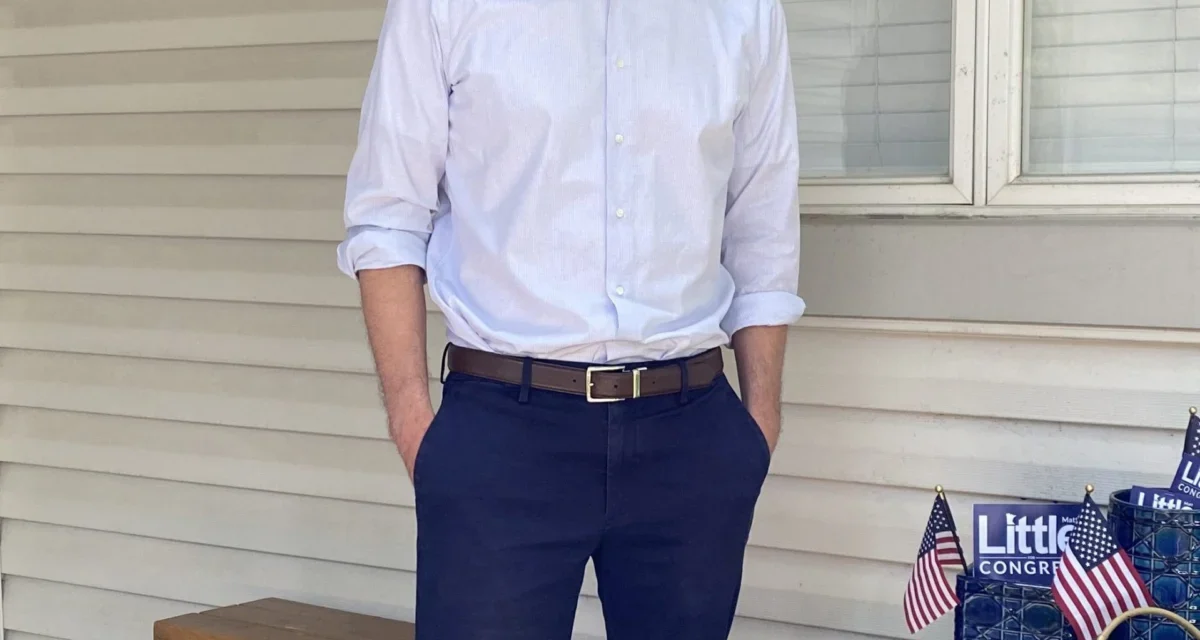
- Matt Little, a former state senator and mayor of Lakeville, emerges as the most progressive candidate in the field. He has secured the coveted DFL Party endorsement, a testament to his appeal within the party’s activist ranks. Little has openly stated he is not seeking Craig’s endorsement, a strategic move that reflects his progressive platform and potentially distances him from some of Craig’s more centrist votes, particularly the controversial Laken Riley Act.
- Matt Klein, a current state senator and physician at the Mayo Clinic in Rochester, positions himself as a moderate, explicitly aligning with Craig’s political mold. He has actively sought Craig’s endorsement, believing that his centrist approach is essential for holding a swing district like CD-2. Klein emphasizes the need for a candidate who can "bridge a partisan divide" to secure consistent victories.
- Kaela Berg, a state representative from Burnsville and a flight attendant, also identifies as a progressive. She, like Klein, has sought Craig’s endorsement, highlighting her close working relationship with the congresswoman on local issues. Berg’s campaign emphasizes her identity as the only woman in the race and her ties to organized labor through the "Blue Collar Brigade," garnering significant backing from groups like Emily’s List, which champions pro-choice women candidates.
The primary on August 11 will be a critical juncture, not just for the candidates, but for the DFL Party’s strategy in navigating a post-Craig era in CD-2.
Chronology of a Shifting Landscape
The narrative of the 2nd Congressional District’s political evolution is intrinsically linked to Angie Craig’s rise and her strategic navigation of its complex electorate.
2018: Craig Breaks Through
Angie Craig first captured national attention in 2018 when she unseated Republican incumbent Jason Lewis, flipping CD-2 blue. This victory was a significant indicator of shifting suburban demographics and a growing Democratic tide in what had traditionally been a Republican-leaning district. Her campaign focused on kitchen-table issues and projected a pragmatic, independent image, appealing to voters weary of partisan gridlock.

2020 & 2022: Solidifying the Hold
Craig successfully defended her seat in 2020 and 2022, consistently outperforming national trends in a district that remained highly competitive. Her victories demonstrated the viability of a moderate Democratic platform in a "purple" environment. She cultivated a reputation as a diligent worker with deep ties to her constituents, focusing on local infrastructure projects, healthcare access, and economic development. This sustained success transformed CD-2 from a perennial Republican stronghold into a reliable, albeit narrowly Democratic, seat. Her 2024 reelection bid, where she defeated Republican Joe Teirab by nearly 14 percentage points, showcased her strong incumbency advantage and broadened appeal.
Late 2025/Early 2026: The Senate Announcement
The political landscape dramatically shifted when Craig announced her intention to run for the U.S. Senate seat currently held by Tina Smith. This decision, while ambitious and a clear indicator of her growing political stature, immediately opened a vacuum in CD-2. The announcement set in motion a scramble among aspiring Democrats to position themselves as her natural successor.
Early 2026: The Race Takes Shape
Following Craig’s Senate announcement, Matt Little, Matt Klein, and Kaela Berg formally declared their candidacies for the 2nd Congressional District. Each brought a distinct political profile and a history of public service in the state legislature or local government. The DFL endorsement process, an early test of grassroots strength, saw Matt Little emerge with the party’s official backing, giving him a crucial organizational advantage heading into the primary.
Mid-2026: Controversies and Ideological Divides
As the primary race intensified, Craig’s past legislative votes came under increased scrutiny, particularly from the progressive wing of the party. Her support for certain GOP-sponsored legislation, notably bills related to police funding and border security, drew criticism. The most significant flashpoint, however, was her vote for the Laken Riley Act. This bill, which allows the Department of Homeland Security to detain and deport noncitizens charged (not just convicted) of certain offenses, became a lightning rod for progressive discontent. Craig later expressed regret for her vote, acknowledging the complexities and potential misinterpretations, but the episode underscored the growing ideological divide within the DFL and the challenges faced by moderate Democrats. The broader context of "Operation Metro Surge," a hypothetical event in the state that created "chaos," further fueled the activism of progressive Democrats, putting additional pressure on centrist politicians.
July 2026: The Endorsement Question
With the August 11 primary rapidly approaching, the question of Craig’s endorsement became a central theme. While Klein and Berg actively sought her backing, Little distanced himself, citing Craig’s clear stance against endorsing. This period saw increased media attention on the candidates’ fundraising efforts and their attempts to define themselves in relation to (or in contrast with) Craig’s legacy.
Supporting Data: A Deep Dive into the District and Campaigns
Understanding the 2nd Congressional District requires a closer look at its composition, electoral history, and the financial muscle behind the campaigns.
The "Purple" Heart of Minnesota:
CD-2 is a true bellwether district, often mirroring national political sentiments. It spans a diverse geography that includes affluent suburban communities like Edina and Lakeville, more working-class suburbs such as Burnsville and Apple Valley, and agricultural areas in counties like Scott and Carver. This mix creates a complex electorate:
- Suburban Independents: A significant bloc of voters who often split their tickets and are swayed by candidate personality and specific issues rather than strict party loyalty. Craig’s moderate stance resonated strongly with this group.
- Rural Conservatives: Predominantly Republican voters in the district’s western and southern reaches, who prioritize fiscal conservatism, agricultural interests, and sometimes social issues.
- Urban-Adjacent Liberals: A growing progressive base in the more densely populated areas closer to the Twin Cities, often concerned with social justice, environmental protection, and government-led social programs.
The interplay of these groups makes CD-2 incredibly sensitive to statewide and national political tides, making it a constant battleground for both parties.
Craig’s Electoral Juggernaut:
Angie Craig’s consistent electoral success in CD-2 is a critical data point. Her 2024 victory by nearly 14 percentage points over Republican Joe Teirab, raising an impressive $8.3 million, highlights her exceptional ability to connect with voters and mobilize resources. This fundraising prowess and broad appeal set a high bar for her successor, underscoring the financial and strategic demands of holding the district. Her ability to fundraise at such a high level indicates a strong network of donors, both local and national, who saw the district as a key investment.

The Laken Riley Act Controversy:
The Laken Riley Act, passed by the House, became a lightning rod for progressive criticism. The bill mandates the detention of noncitizens charged with various crimes, expanding the criteria beyond arrests or convictions. For many progressives, this measure was seen as an overreach, potentially infringing on civil liberties and exacerbating xenophobic sentiments. Craig’s vote in favor, even if later regretted, exposed a fissure between the party’s moderate and progressive wings, complicating her standing with activists and potentially influencing how her implicit or explicit support might be perceived in the primary. The timing of this vote, amidst an increase in progressive activism following "Operation Metro Surge," amplified its impact.
Campaign Finance Snapshot (as of June 30):
Fundraising is a crucial indicator of a campaign’s viability and reach. The latest Federal Election Committee (FEC) filings reveal the financial contours of the primary:
- Matt Klein: Leads the pack with over $1 million raised. This strong showing suggests significant donor confidence in his moderate platform and electability. His ability to tap into established networks, perhaps including those aligned with Craig’s previous donor base, positions him strongly.
- Matt Little: Has raised nearly $900,000, which includes a substantial $155,000 personal loan to his campaign. While impressive, the reliance on a personal loan highlights the need for continued fundraising to match Klein’s financial footprint. His DFL endorsement likely provides an advantage in grassroots fundraising and volunteer mobilization.
- Kaela Berg: Trails her opponents with $355,000 raised. While lower, this figure is augmented by support from national groups like Emily’s List, which not only provides direct financial contributions but also invaluable campaign advice and independent expenditures for advertising. Her affiliation with the "Blue Collar Brigade," a joint fundraising effort with other labor-aligned House candidates nationally, also diversifies her funding streams and amplifies her message.
- Republican Eric Pratt: The likely Republican general election candidate, State Senator Eric Pratt, has raised approximately $462,000. While currently behind Klein and Little, his fundraising will likely accelerate significantly once the DFL nominee is chosen, as national Republican committees focus on flipping this key swing seat.
These fundraising figures illustrate the competitive nature of the primary and the general election, where the ability to communicate a message effectively often correlates with financial resources.
Official Responses: Navigating the Endorsement Minefield
The question of Angie Craig’s endorsement has been a central and delicate issue for all candidates, reflecting the complex political calculus involved.
Angie Craig’s Neutrality:
Rep. Craig has maintained a firm public stance of neutrality, stating, "That choice belongs to 2nd District voters." This position, while seemingly democratic, is deeply strategic. As Hamline University political science professor David Schultz notes, endorsing a candidate in such a competitive primary carries inherent risks for Craig’s own Senate campaign. Backing a progressive like Little or Berg could alienate moderate voters she needs for her statewide race, while endorsing Klein could alienate the energized progressive base that she also needs to mobilize. University of Minnesota political science professor Larry Jacobs adds that it’s not unusual for incumbents to avoid endorsing successors, preferring to "let the voters decide." This approach allows Craig to preserve party unity and avoid entangling her statewide aspirations with the local dynamics of a potentially bruising primary.
Matt Little’s Calculated Distance:
Matt Little, despite securing the DFL Party endorsement, has adopted a pragmatic approach to Craig’s non-endorsement. "It’s not something we’ve sought because she’s made it very clear she will not endorse," Little stated. This stance allows Little, the most progressive candidate, to maintain ideological purity and appeal directly to the district’s progressive surge without being weighed down by Craig’s more centrist legislative record, particularly her controversial vote on the Laken Riley Act. Professor Schultz explains that Little is "concerned that because of (Craig’s) support for the Laken Riley Act, progressives may not support him if he has her endorsement." By not seeking it, Little avoids this potential complication.
Matt Klein’s Embrace of Moderation:
In stark contrast, Matt Klein has actively sought Craig’s endorsement, declaring, "I would be honored to have it." Klein openly positions himself as a moderate Democrat, explicitly in Craig’s mold. He believes this ideological alignment is not just a preference but a strategic necessity for holding CD-2. "This is the last swing district in Minnesota," Klein asserts. "To hold it, you have to bridge a (partisan) divide." His strategy is to appeal to the same coalition of suburban independents and moderate voters that propelled Craig to victory, arguing that a moderate candidate is the only one who can consistently win in the general election against a Republican. He also hopes that the presence of two progressive candidates will split the left-leaning vote, creating "a path for Klein" to secure the nomination.
Kaela Berg’s Dual Strategy:
Kaela Berg has also sought Craig’s endorsement, emphasizing their collaborative work on local issues, such as securing funding for a dangerous intersection. Berg strategically leverages her shared gender with Craig, suggesting it could be a boost to her campaign. "I’m the only woman in the Blue Collar Brigade, and the only woman in the race," Berg notes. "That matters right now. I love an ally and a great dude, but women’s voices are needed right now." Professor Schultz concurs that "many voters in the 2nd District view it now as a female seat" because of Craig. While an explicit endorsement from Craig could still be tricky for Berg with progressive voters, Schultz believes that "saying, ‘Let’s keep this seat in a woman’s hand’ won’t hurt her." This gender-focused messaging, combined with her progressive stance and labor ties, has garnered her the backing of Emily’s List, a powerful organization that provides financial and strategic support to pro-choice women candidates.

Implications: What This Race Means for Minnesota and Beyond
The primary election in Minnesota’s 2nd Congressional District is more than just a local contest; its implications ripple through state and national politics, influencing future electoral strategies and party dynamics.
Impact on Craig’s Senate Bid:
Angie Craig’s decision to remain neutral in the CD-2 primary is a calculated risk with significant implications for her Senate campaign. By avoiding an endorsement, she attempts to preserve her broad appeal and prevent alienating any faction of the DFL, which she will need united for her statewide race against Lt. Gov. Peggy Flanagan. However, it also means she isn’t actively shaping the narrative of her successor, leaving her legacy in the hands of the primary voters. The outcome in CD-2 could either reinforce or challenge the moderate brand she has cultivated, potentially impacting voter perception in her higher-stakes Senate contest.
The Future of CD-2: Blue or Back to Purple?
The primary’s outcome will be a litmus test for the district’s political trajectory. If a progressive like Little or Berg wins the nomination, the general election will challenge the long-held belief that only a moderate can consistently hold this "purple" district. Klein explicitly raises this question: "Can a progressive candidate win in parts of the district that are not progressive?" A progressive victory in the primary, followed by a general election win, would signal a significant shift in CD-2’s political identity and potentially encourage more progressive candidates in similar swing districts nationwide. Conversely, a Klein victory would reaffirm the enduring power of moderation in competitive suburban-rural districts.
DFL Party Unity and Strategy:
A highly competitive primary often leaves lingering divisions. The ideological chasm between the DFL’s progressive and moderate wings is evident in this race. If the primary result is close, or if the winning candidate struggled to unite the party, it could lead to disengagement among a segment of the DFL base in the general election. The DFL leadership will face the challenge of rallying around the nominee, regardless of their ideological bent, to prevent the district from falling back into Republican hands. Klein’s emphasis on the need for a Democrat who can "win every cycle" underscores this concern, particularly against a strong Republican challenger like State Sen. Eric Pratt.
National Significance:
The Minnesota 2nd District race is a microcosm of broader national political trends. It highlights the ongoing struggle within the Democratic Party between its progressive and moderate factions, particularly in suburban battleground districts. The district’s ability to elect and retain a Democrat often serves as a bellwether for the party’s performance in similar swing seats across the country. A DFL loss in CD-2, especially if attributed to an inability to bridge ideological divides or appeal to moderate voters, would send a concerning signal to national Democrats about their strategy in competitive districts.
The "Woman’s Seat" Narrative:
Kaela Berg’s campaign has skillfully leveraged the "woman’s seat" narrative, suggesting that voters in CD-2 have come to expect female representation in Congress following Craig’s tenure. This emphasis, bolstered by support from Emily’s List, taps into a powerful sentiment among many voters, particularly in an era where women’s issues, such as reproductive rights, are highly salient. If Berg wins, it would validate this strategy and potentially set a precedent for future female candidates in similar districts.
The General Election Landscape:
Regardless of who wins the DFL primary, the general election against Republican State Sen. Eric Pratt will be fiercely contested. Pratt, representing a district that includes most of Scott County, will undoubtedly seek to capitalize on any perceived divisions within the DFL and paint the Democratic nominee as out of step with the district’s moderate tendencies. His ability to consolidate the Republican base and appeal to disaffected independents will be crucial. The DFL nominee will face the immediate challenge of pivoting from a primary where they appealed to a specific faction of their party to a general election where they must unite a broader coalition to hold the seat.
The August 11 primary in Minnesota’s 2nd Congressional District is not just a contest for a single seat; it’s a critical moment that will shape the future of a key swing district, test the DFL’s ideological cohesion, and offer valuable insights into the evolving dynamics of American politics. The shadow cast by Angie Craig’s departure is long, but the paths forged by her potential successors will ultimately determine the district’s direction.