

















































The Great Return: Target Mandate and the Revitalization of Downtown Minneapolis

The rhythmic hiss of espresso machines and the steady hum of morning conversation have returned to the corner of 9th and Nicollet. At Corner Coffee, a staple of the downtown Minneapolis landscape, the quietude that characterized Monday mornings for nearly four years has been replaced by a familiar, frantic energy. Store manager Mia Pariseau recently found herself at the center of a localized economic surge, managing a line of customers that stretched out the door for over an hour.
“We got just slammed,” Pariseau remarked, noting the stark contrast to the previous months. “And it was just me and one other person here.”
This sudden influx of caffeine-seeking professionals is not a coincidence. It is the tangible result of a significant shift in corporate policy from one of the city’s most influential residents: Target Corporation. As of September 2, 2025, employees within the retail giant’s commercial unit were ordered to return to the office for a minimum of three days a week. Given that Corner Coffee sits just a stone’s throw from Target’s global headquarters, the shop has become a barometer for the city’s post-pandemic recovery.
As Minneapolis grapples with the long-term implications of the remote-work era, the return of thousands of Target employees represents a pivotal moment. While the city’s “vibrancy” is trending upward, the path to a full recovery remains complex, hindered by shifted social habits, altered transit schedules, and a service industry that is still finding its footing in a new economic reality.
Main Facts: The Target Effect and the 75% Threshold
The return-to-office (RTO) mandate at Target is more than just a company policy; it is a major economic driver for the Minneapolis central business district. Target stands as the second-largest employer in the downtown area, trailing only Hennepin Healthcare. When a workforce of that magnitude transitions from home offices back to the skyways, the ripple effect is felt by every dry cleaner, lunch spot, and transit line in the vicinity.
According to Kittie Fahey, the senior director of advancement for the Minneapolis Downtown Council, in-person work across the city has climbed to nearly 75% of pre-pandemic levels. This figure is expected to rise further as the full weight of Target’s new policy—and similar mandates from other corporate titans—is realized in the coming months.
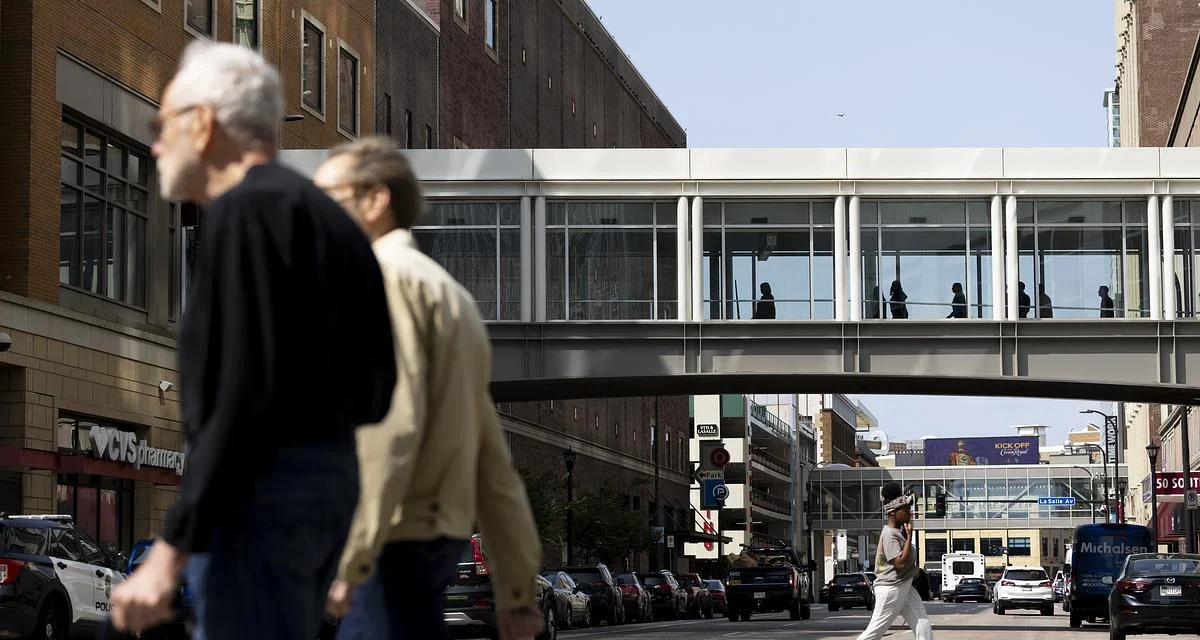
The revitalization is being felt most acutely during the daylight hours. Madelyn Dunn-Lammert, an associate designer for Target who has spent much of her three-year tenure working remotely, noted a palpable shift in the atmosphere. “It’s more vibrant and exciting during the day,” she said. For creative professionals like Dunn-Lammert, the return isn’t just about presence; it’s about the intangible benefits of proximity. The ability to grab a spontaneous lunch with a colleague or troubleshoot a design project in real-time facilitates a level of collaboration that digital platforms often fail to replicate.
However, the "75% recovery" metric masks a more nuanced reality. While the daytime population is booming, the "ghost town" aura of 2020 and 2021 has not been entirely banished. As long-time residents and workers observe, downtown is currently caught in a transitional state—busier than the depths of the pandemic, but still lacking the 24/7 pulse that defined it before March 2020.

Chronology: From Ghost Town to "Back-to-School" Energy
The journey to this current state of revitalization has been a slow and often stuttering process for Minnesota.
- 2020–2021: The Exodus. Following the onset of the COVID-19 pandemic, Minneapolis saw one of the most dramatic shifts toward remote work in the country. In 2021, Minnesota’s share of primarily remote workers stood at 21%, significantly higher than the national average of 17.9%. During this period, legal professionals like Jenny Lissarrague, who has worked downtown since 2012, described the city center as a "ghost town" where the streets were virtually empty.
- 2022: The First Wave. As health concerns began to stabilize, the share of remote workers in Minnesota dropped to 16.9%. Large employers like Wells Fargo and Ameriprise Financial began experimenting with hybrid models, though many offices remained sparsely populated.
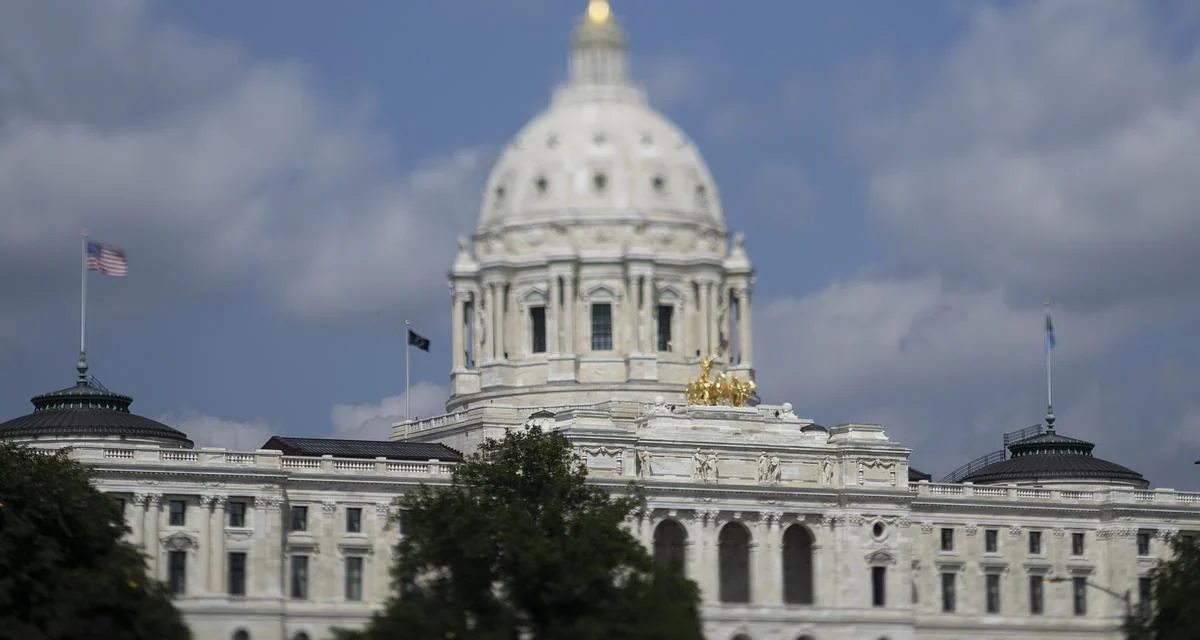
- June 1, 2025: The Public Sector Lead. A major turning point occurred early in the summer of 2025 when the State of Minnesota mandated that government employees spend at least 50% of their workdays in the office. This move was met with significant resistance and even threats of labor strikes, but it served as a precursor to the corporate shifts that would follow in the autumn.
- September 2, 2025: The Target Mandate. The most recent and perhaps most impactful milestone was the September 2 deadline for Target’s commercial unit. This brought a "back-to-school" energy to the skyway system, as thousands of employees returned to their desks simultaneously.
Supporting Data: Mapping the Recovery
The Federal Reserve Bank of Minneapolis has been closely tracking these shifts, providing a data-driven look at how the Ninth District is evolving. Their findings suggest that while Minnesota was initially slower than other states to bring workers back to the office, it is now catching up rapidly.
The concentration of power in downtown Minneapolis is significant. Of the top 15 downtown employers, 12 have now implemented formal back-to-office policies. These include:
- Hennepin Healthcare: Maintaining a consistent in-person presence due to the nature of medical work.
- Target Corporation: Now requiring a three-day hybrid minimum for its commercial unit.
- Wells Fargo & Ameriprise Financial: Both of which have maintained hybrid structures that favor in-office collaboration.
Despite the increase in bodies on the street, the data shows that the "structure" of the workday has fundamentally changed. Kittie Fahey noted that traffic hours are now more "spread out." Rather than the traditional 8:00 AM rush, many employees are choosing to commute around noon or staggered hours, taking advantage of the flexibility that remains within their hybrid schedules.
Official Responses: The Push for a 24-Hour City
For the Minneapolis Downtown Council, the return of office workers is only the first step in a larger strategy to save the city’s core. Kittie Fahey and her colleagues are focused on a concept often referred to as the "sticky" city—a place where people don’t just work, but stay.
“Go out for lunch, stay after and go meet friends, go do some things,” Fahey urged. “Use all the resources we have.”
The official stance of the Downtown Council is that the professional connection and socialization occurring in offices must extend past 5:00 PM to sustain the local economy. There are approximately 60,000 residents living in the downtown area, and the Council is working to ensure that the amenities of the city serve both the daily commuter and the permanent resident.
However, officials acknowledge a "chicken and egg" problem regarding the city’s nightlife. Fahey pointed out that many restaurants in the central business district now close significantly earlier than they did in 2019. “You’d be hard-pressed to find a restaurant open until 11 PM,” she said. “That’s crazy different than pre-pandemic.” This creates a cycle where workers head home because nothing is open, and businesses stay closed because there are no workers to serve.

Implications: Challenges and the "New Normal"
The implications of this mass return are multifaceted, affecting everything from public infrastructure to the social fabric of the city.
The Transit Paradox
One of the most significant hurdles to a full downtown recovery is the state of public transportation. Jenny Lissarrague, the attorney who has witnessed the city’s evolution since 2012, noted that getting downtown is more difficult now than it was a decade ago. As remote work became the norm, transit authorities reduced the frequency of bus routes. Now that workers are being ordered back, the infrastructure hasn’t yet scaled back up to meet the demand, creating a friction point for those who prefer not to drive and pay for downtown parking.
The Evolution of the Skyway Culture
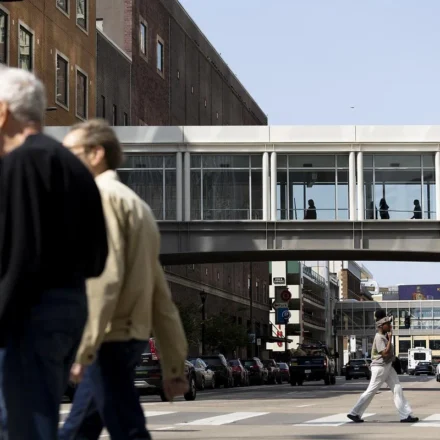
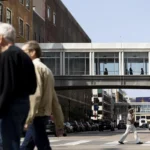
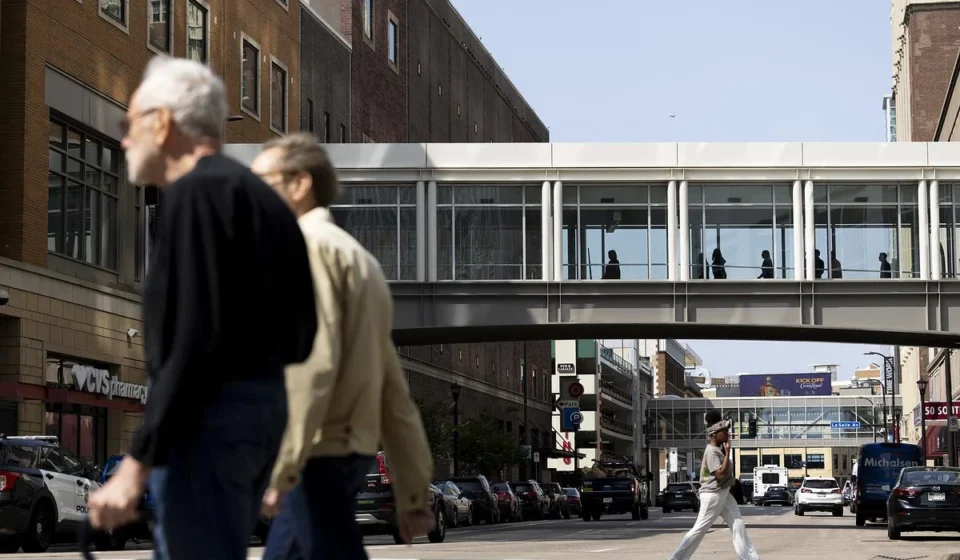
The iconic Minneapolis skyway system, once the bustling artery of the city’s professional life, is seeing a rebirth, but with a different character. The energy is described as "vibrant" but "less isolated" than the pandemic years. However, the retail mix within the skyways is still adjusting. The shops and services that relied on a five-day-a-week, 9-to-5 crowd are having to reinvent themselves to cater to a three-day-a-week hybrid crowd that values experience and collaboration over mere convenience.
The "Bright Future" Sentiment
Despite the logistical headaches and the early closing times of local eateries, the prevailing sentiment among those on the ground is one of cautious optimism. For small business managers like Mia Pariseau, the "slam" of a busy Monday morning is a welcome exhaustion. It represents a return to a version of Minneapolis that feels alive and interconnected.
“The future is bright,” Pariseau concluded, reflecting the hope that the current momentum will eventually bridge the gap between the 75% recovery and the 100% vibrancy the city once knew.
As the leaves begin to turn and the "back-to-school" energy of September settles into a permanent rhythm, Minneapolis stands as a case study for the American city in transition. The Target mandate may have been the catalyst, but the city’s ultimate success will depend on whether these returning workers decide to simply "clock in" or truly reintegrate into the heart of the Twin Cities.