













































A New Reality in Minneapolis: Timberwolves Face Pivotal Stretch Following Anthony Edwards Surgery

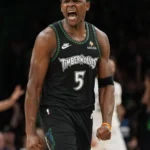
The 2026-27 NBA season has been defined by a jarring juxtaposition: the sheer, unbridled euphoria of a revamped Minnesota Timberwolves roster and the sobering, clinical reality of professional sports. Just as the Timberwolves began to demonstrate that their aggressive off-season restructuring was not merely a gamble but a masterstroke, the franchise was dealt a significant blow. Star guard Anthony Edwards is set to undergo arthroscopic surgery on his right knee, an operation that will sideline the franchise cornerstone for up to two months.
This development fundamentally alters the trajectory of a team that had, until this week, looked like the most cohesive unit in the Western Conference. Yet, as the organization pivots to address this void, the underlying narrative remains one of optimism. The structural integrity of the team—built on a foundation of selfless defense and high-IQ versatility—is being put to the ultimate test.
The Vision Realized: A Summer of Transformation
The early returns on the Timberwolves’ summer facelift were nothing short of revelatory. By moving on from the established presences of Julius Randle and Naz Reid, President of Basketball Operations Tim Connelly and Head Coach Chris Finch sought to engineer a team defined by pace, defensive mobility, and positional fluidity.
The arrival of LaMelo Ball and Jonathan Kuminga was intended to provide a "quicksilver" element to the rotation. Through the first four games of the season, the results exceeded the most optimistic internal projections. The team displayed a level of synergy that usually takes months, if not years, to cultivate. Gone were the visible frustrations and chemistry hiccups that plagued the previous campaign; in their place was a rhythmic, collective commitment to "hard and soft power."
Chronology of a High-Stakes Opening Week
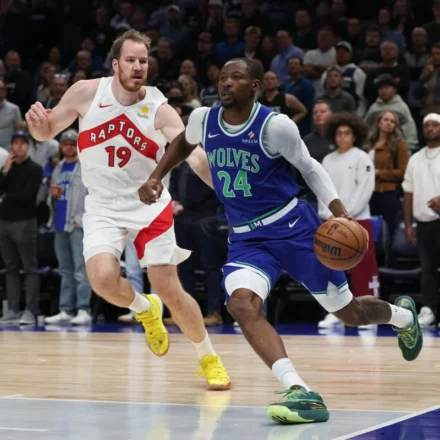
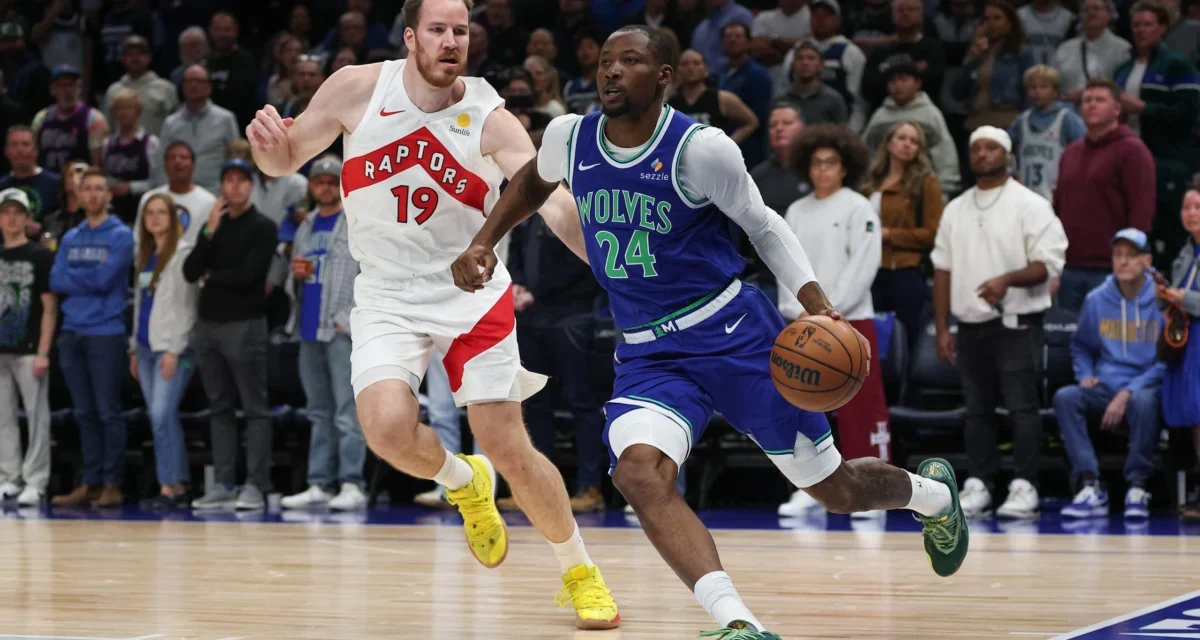
The Timberwolves opened the 2026-27 campaign with an unprecedented display of dominance. They dismantled the Miami Heat, Orlando Magic, and Toronto Raptors with such clinical efficiency that no game was decided in the fourth quarter—a feat never before seen in the franchise’s history.
This momentum faced its first true test on Monday night in Cleveland. Coming off an emotional home opener against the Raptors, the Wolves faced a rest-disadvantage against a seasoned Cavaliers squad. Despite an explosive start that saw Minnesota claim a double-digit lead in the first seven minutes, the physical toll of a condensed schedule caught up with the visitors.
The second half became a tactical tug-of-war. Evan Mobley’s career-best shooting performance from beyond the arc, combined with the veteran guile of James Harden and Donovan Mitchell, allowed Cleveland to erase the deficit. While Anthony Edwards nearly willed the Wolves to a victory in the closing moments, a missed foul call and a botched final possession in overtime resulted in the team’s first loss of the season.
The following Tuesday brought the news that would define the next two months: the decision to move forward with Edwards’ knee surgery immediately. The front office and the medical staff reached a consensus that proactive intervention was necessary, banking on the depth and cohesion of the remaining roster to keep the team in the playoff hunt while their star recuperates.
Supporting Data: The Defensive Shift
The success of this new-look team is rooted in data that suggests a genuine cultural shift. Despite the loss to Cleveland, the Timberwolves currently rank second in the NBA in fewest points allowed per possession.
Much of this success is attributed to the "thankless" labor of Jonathan Kuminga. Often characterized as a lightning rod for instability during his time in Golden State, Kuminga has emerged as a paragon of professional discipline in Minnesota. Tasked with the rigorous assignment of checking opposing power forwards—ranging from the bruising physicality of Giannis Antetokounmpo to the speed of Paolo Banchero—Kuminga has effectively neutralized what was once considered a defensive liability.

His statistical contribution goes beyond the box score. With a team-leading impact on defensive efficiency that rivals veterans like Rudy Gobert and Jaden McDaniels, Kuminga has embraced a role of "glue" rather than "star." His decision-making on offense, specifically his commitment to spacing and a remarkable 10-to-1 assist-to-turnover ratio, highlights a player who has fully bought into the Finch-led philosophy.
Similarly, LaMelo Ball has surprised analysts with his defensive engagement. His length and willingness to pressure the ball have created a new defensive identity for the backcourt, leading to increased deflections and transition opportunities. While his rhythm remains a work in progress, his commitment to the team’s defensive scheme has proven that the Wolves’ current success is not an anomaly of talent, but a result of tactical buy-in.
Official Responses and Strategic Adjustments
The Timberwolves organization is not panicking. According to reports from league insiders, the decision to schedule Edwards’ surgery now was calculated to ensure he is at full health for the stretch run of the season.
"The vision of this front office is not predicated on one player, but on the strength of our system," a team source noted. The coaching staff has already begun to map out the rotational adjustments required to survive the next 30 games.
Ayo Dosunmu is expected to assume the starting guard role, providing a steady hand and perimeter defense. Furthermore, the coaching staff is prepared to increase the workload for Bones Hyland and Jaylen Clark off the bench. TJ Shannon, who has already begun to show flashes of elite playmaking, will likely see a significant uptick in responsibility. The team is also looking to Jaden McDaniels to elevate his usage rate, filling the scoring vacuum left by Edwards’ absence.
Head Coach Chris Finch’s public messaging has remained consistent: the "giddiness" he noted during the preseason has transformed into a resilient, professional focus. The goal remains to maintain the high standard of defensive intensity that defined their opening week, regardless of who is on the floor.
Implications: A Door Cracked Open
The absence of a player of Edwards’ caliber for 30 games is a daunting prospect, but the timing offers a unique opportunity for the rest of the Western Conference landscape. With the Oklahoma City Thunder grappling with injuries to multiple starters and the San Antonio Spurs struggling to find their footing after last year’s playoff run, the hierarchy of the West is in flux.
For the Timberwolves, the next two months represent a crucible. If they can weather this storm by relying on their defensive depth and the newfound chemistry among their role players, they will emerge as a significantly more dangerous team once Edwards returns.
The "And One" newsletter and team analysts emphasize that the urgency is now on the shoulders of the supporting cast. If Kuminga, Ball, and McDaniels continue to play with the selfless vigor observed in the first four games, the Timberwolves will not only remain in the playoff chase—they will prove that their early-season dominance was a permanent shift in identity rather than a fleeting hot streak.
The road ahead is challenging, and the margin for error has tightened significantly. However, the Timberwolves have established a template for success that is built on more than just star power. They have found a rhythm of "ruthless joy," a collective mindset that values the team above the individual. Whether this philosophy can withstand the rigors of a two-month absence of their brightest star remains the defining question of their season. For now, the Wolves are not looking for excuses; they are looking for the next man up.