


















































The Iron Range’s New Attraction: Niron Magnetics’ $1.8 Billion Bet on Minnesota’s Industrial Future

The Minnesota Iron Range, a region synonymous with the grit of taconite mining and the rhythmic hum of heavy machinery, stands at the precipice of a technological renaissance. While national headlines have long been dominated by the contentious debate over copper-nickel mining near the Boundary Waters Canoe Area (BWCA) watershed, a different kind of industrial revolution is quietly gaining momentum. Minneapolis-based Niron Magnetics is currently evaluating the Iron Range as a potential site for a massive, $1.8 billion manufacturing facility—a project that could fundamentally redefine the region’s economic identity and break a decades-long cycle of industrial decline.
This proposed facility, aimed at producing high-performance "Clean Earth" magnets, represents more than just an influx of capital; it is a strategic maneuver in the global race for resource independence. By utilizing iron and nitrogen rather than rare-earth minerals, Niron Magnetics seeks to decouple the United States from its heavy reliance on Chinese supply chains, positioning Northern Minnesota as a critical hub in the transition to a green energy economy.
Main Facts: A Billion-Dollar Paradigm Shift
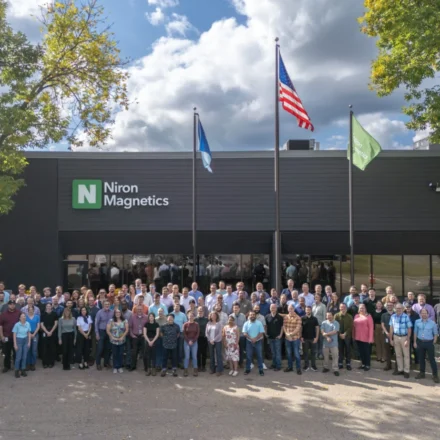
The scale of Niron Magnetics’ ambition is reflected in the sheer numbers of the proposal. The company is scouting locations for its third and largest facility, a 1.6-million-square-foot plant slated to begin construction by 2028. With a projected price tag of $1.8 billion, the facility is expected to create over 700 high-paying, permanent jobs by the time it reaches full operational capacity in 2029.
At the heart of this expansion is Niron’s proprietary technology: the Iron Nitride magnet. Unlike traditional high-power magnets used in electric vehicle (EV) motors, wind turbines, and defense systems—which rely on "rare-earth" elements like neodymium and dysprosium—Niron’s magnets are forged from abundant, domestically sourced iron and nitrogen.
The strategic implications are twofold:
- Economic Revitalization: The Iron Range has suffered for decades as the taconite industry contracted due to the rise of global steel competition and the shift toward electric arc furnaces that utilize recycled scrap. A $1.8 billion investment would be one of the largest private capital infusions in the region’s history.
- National Security: Currently, China controls approximately 70% of global rare-earth mining and up to 90% of the manufacturing process for the resulting magnets. By using Minnesota-sourced iron, Niron offers a path toward a self-sustaining domestic supply chain for technologies essential to both the commercial and defense sectors.
Chronology: From University Lab to Industrial Powerhouse
The journey of Niron Magnetics is a testament to the "Minnesota Model" of innovation—taking theoretical research from the university level and scaling it into a global enterprise.
2014–2020: The Research Phase
The technology was born in the laboratories of the University of Minnesota, spearheaded by Professor Jian-Ping Wang. His breakthrough involved a method to stabilize iron nitride, a material known for its magnetic potential but historically difficult to manufacture at scale. Through a combination of federal grants and early-stage venture capital, the company moved from proof-of-concept to pilot-scale testing.
2021–2023: Pilot Operations and Early Scaling
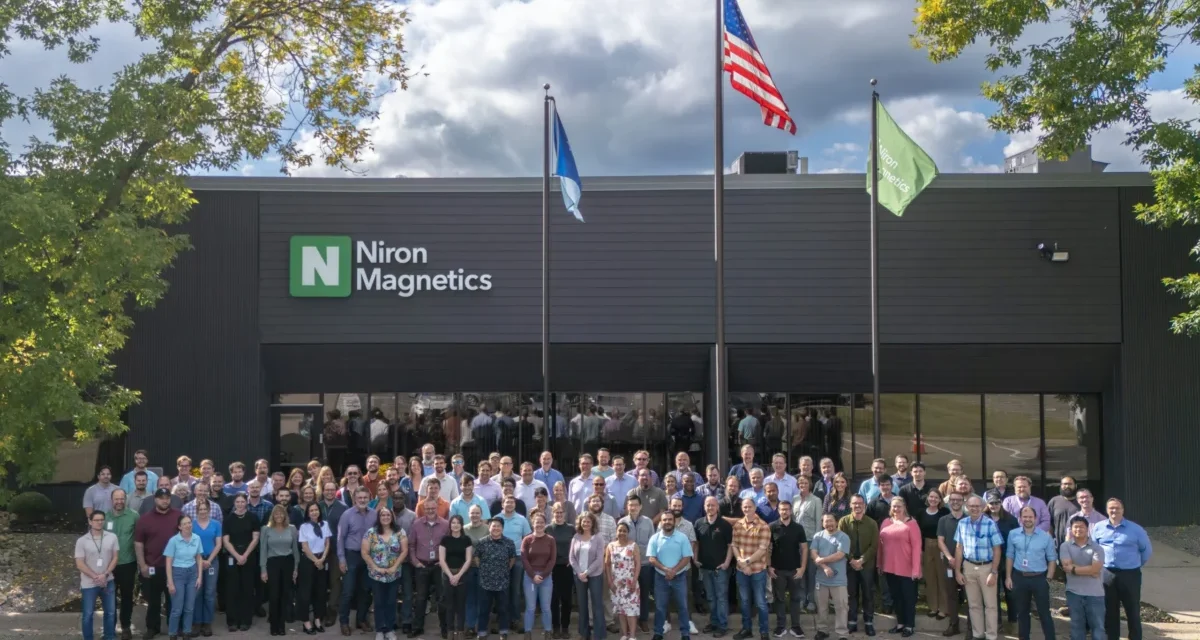
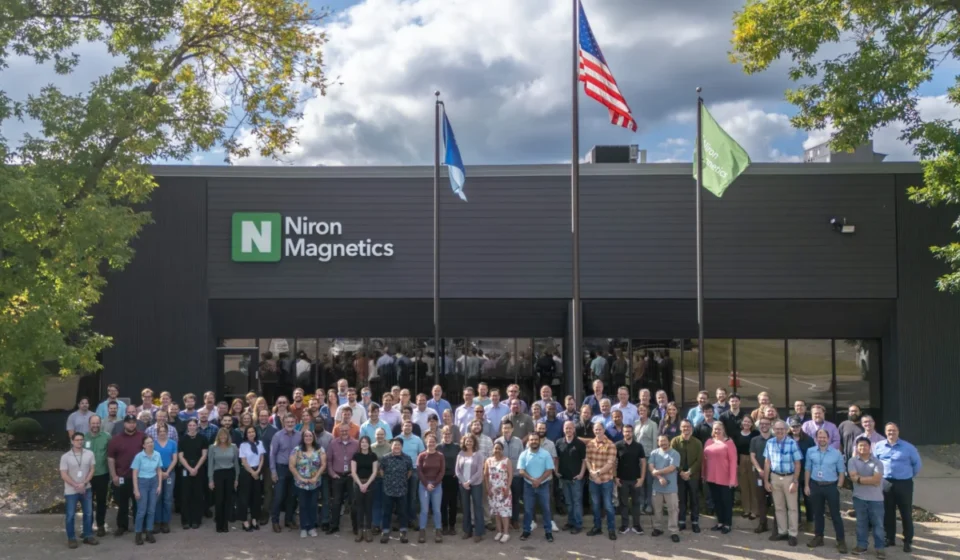
Niron established its headquarters and a pilot production plant in Northeast Minneapolis. During this period, the company secured approximately $300 million in public and private capital. High-profile partners, including GM Ventures, Volvo, Samsung Ventures, and the U.S. Department of Energy, joined the fold, signaling global interest in a rare-earth-free future.
2024: The Sartell Expansion
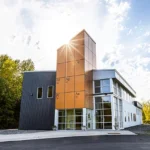
Construction is currently underway on Niron’s first true production facility in Sartell, near St. Cloud. This plant, supported by a $10 million investment from the state, is expected to employ 175 people and produce 1,500 tons of magnets annually. It serves as the bridge between pilot testing and the massive industrial scale required for global automotive supply chains.
2025–2029: The "Mega-Plant" Vision
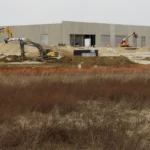
The company recently hired Savills, a global commercial real estate adviser, to lead the site selection process for its "Mega-Plant." While other states are being considered, the Iron Range is a frontrunner due to its existing infrastructure and workforce. The goal is to break ground in 2028, with a target output of 10,000 tons of magnets per year by 2029.
Supporting Data: The Rare-Earth Dilemma
To understand the weight of Niron’s proposal, one must look at the volatility of the global magnet market. Permanent magnets are the "hidden" drivers of the modern world; they are found in everything from the actuators in hard drives to the massive generators in offshore wind turbines.
The China Factor
According to data from the Center for Strategic and International Studies (CSIS), China’s dominance in the rare-earth sector is a "chokehold" on the green transition. The extraction of these minerals is notoriously "dirty," involving toxic chemical leaching that has caused significant environmental degradation in Chinese mining regions. Furthermore, China has demonstrated a willingness to use its market dominance as a geopolitical lever, recently tightening export controls on certain mineral-processing technologies.
The Niron Alternative
Niron’s process avoids these pitfalls. By reducing iron or recycled steel to a fine powder and mixing it with nitrogen—which makes up 78% of the Earth’s atmosphere—the company creates a compound that is both more sustainable and less expensive.
- Cost Efficiency: Iron and nitrogen are commodity materials, unlike rare earths, which are subject to extreme price fluctuations.
- Environmental Impact: Niron’s process does not require the same level of extreme heat or toxic chemical separation associated with rare-earth processing, aligning with the "green" mandates of its automotive partners like Volvo and Stellantis.
Official Responses: Bipartisan Alignment
In a political climate often defined by polarization, the Niron project has achieved a rare feat: unanimous support from across the political spectrum in Minnesota.
The Economic Development View:
Ryan Malich, executive director of business development at the Minnesota Department of Iron Range Redevelopment and Resources (IRRR), views the project as a perfect fit for the region’s evolution. "These are the types of jobs that we’re trying to add to the area in evolving, innovative technologies," Malich said. "We want to be on the frontside of technological development. We have a highly skilled, available workforce. All the elements seem to line up well."
The State Government’s Perspective:
The administration of Governor Tim Walz has been aggressive in courting Niron. Kevin McKinnon, Deputy Commissioner of the Department of Employment and Economic Development (DEED), emphasized the trajectory of the company. "The promise, the trajectory of where they are going is very exciting," McKinnon stated. "The third project would dwarf Sartell. The scale is exciting. We believe Minnesota is a compelling location for such a project."
The Federal Delegation:
The project also enjoys the backing of U.S. Rep. Pete Stauber, a Republican who represents the Iron Range. While Stauber has been a vocal proponent of traditional mining projects like Twin Metals, he has joined the rest of the bipartisan Minnesota delegation in supporting Niron’s expansion, recognizing the importance of domestic manufacturing for national security.
Implications: A Tale of Two Watersheds
The potential arrival of Niron Magnetics on the Iron Range introduces a fascinating new dynamic to the region’s long-standing environmental debates. For years, the conversation has been dominated by the "Twin Metals" project—a proposed underground copper-nickel mine near Ely.
The Environmental Contrast
Twin Metals has faced fierce opposition from environmentalists who fear that sulfide-ore mining could leak acid mine drainage into the pristine BWCA watershed. In contrast, Niron’s proposed plant would likely be located on the site of a shuttered taconite plant, reusing brownfield industrial land rather than disturbing untouched wilderness. Furthermore, Niron’s facility would sit outside the sensitive BWCA watershed, neutralizing many of the environmental arguments that have stalled other mining projects for decades.
Economic Diversification
If Niron selects the Iron Range, it could signal a shift from an extractive economy to a value-added manufacturing economy. Instead of merely shipping raw ore out of the state to be processed elsewhere, Minnesota would be producing a finished, high-tech product. This "Iron Range 2.0" would offer a more stable economic base, less susceptible to the boom-and-bust cycles of global commodity prices.
The Path Forward
As the site selection process continues through 2024, the stakes could not be higher. For Niron, the choice of location will determine its ability to scale fast enough to meet the demands of the EV revolution. For the Iron Range, the project represents a chance to reclaim its status as an industrial powerhouse—this time, not just as a source of raw iron, but as the birthplace of the world’s most advanced magnets.
If Niron and Minnesota officials can finalize a deal involving infrastructure investments and workforce training, the Iron Range may soon find itself at the center of a global solution to a 21st-century crisis, proving that the region’s most valuable resource isn’t just what lies beneath the ground, but the innovation happening above it.