


























































Mind the Gap: Why American Healthcare Draws a Hard Line Between Medical and Dental Coverage

If a patient develops an infection in their finger, a visit to an urgent care clinic, blood tests, and a course of oral antibiotics are typically covered by standard medical insurance, subject to normal copays or deductibles. However, if that same bacterial infection originates a few inches higher—inside a molar—the patient frequently faces hundreds or thousands of dollars in out-of-pocket costs.
For tens of millions of Americans, dental coverage exists as an entirely separate insurance product. It carries its own monthly premium, distinct provider networks, strict annual benefit caps, and unique rules regarding which procedures qualify for reimbursement. Even individuals with comprehensive major medical insurance often discover that routine fillings, root canals, crowns, and periodontal treatments are entirely excluded from their primary healthcare plans.
This structural divide between the mouth and the rest of the body is not grounded in biological reality. Rather, it is the result of a 180-year-old historical precedent, legislative compromises, and divergent insurance financing models.
Main Facts: The Anatomy of an Insurance Divide
The separation of oral care from general medical coverage produces distinct financial and clinical realities for patients across the United States:
- Dual Insurance Requirements: Obtaining full healthcare coverage in the U.S. generally requires purchasing two separate policies: a medical plan for general bodily health and a standalone dental plan for oral health.
- Opposing Financial Architecture: While the Affordable Care Act (ACA) mandates that standard medical plans cap a patient’s annual out-of-pocket expenses, traditional dental plans cap the insurer’s annual payout—often between $1,000 and $2,500 per year.
- Government Program Exclusions: Original Medicare explicitly excludes coverage for routine dental cleanings, fillings, dentures, and extractions. Medicaid coverage for adult dental care remains optional for states, resulting in a patchwork of benefits across the country.
- Systemic Health Connections: Medical research demonstrates strong links between chronic oral infections (such as severe periodontitis) and systemic health conditions, including diabetes management challenges and cardiovascular complications.
- Out-of-Pocket Burden: Because dental benefit caps have remained largely unchanged for decades despite medical inflation, patients bear a disproportionate share of costs for major restorative procedures like root canals, crowns, and implants.
Chronology: How Dentistry and Medicine Formed Separate Worlds
The operational line between medical doctors and dentists was established long before modern health insurance existed.

1840: Opening of Baltimore College of Dental Surgery (First independent dental school)
  │
1930s–1950s: Evolution of commercial medical insurance via employers
  │
1954: Introduction of early dental service plans (Precursors to modern dental insurance)
  │
1965: Enactment of Medicare & Medicaid (Codified exclusion of routine adult dental care)
  │
2010: Passage of the Affordable Care Act (Classified pediatric dental as essential; adult dental left separate)
1840: The Institutional Split
In the early 19th century, dentistry was largely practiced by itinerant tradespeople, barbers, and self-taught practitioners. When leaders in the field sought to formalize dental education within the University of Maryland’s medical school, the medical faculty rejected the proposal, viewing dental work as mere mechanical technique rather than true medical science.
In response, Horace Hayden and Chapin Harris founded the Baltimore College of Dental Surgery in 1840—the world’s first independent dental school. This institutional rejection established dentistry as a completely autonomous profession with its own degree (DDS/DMD), governing boards, professional associations, and regulatory frameworks.
Post-WWII Era: The Rise of Dual Insurance
When employer-sponsored health insurance expanded rapidly during and after World War II, medical plans were designed around hospital care, major surgery, and physician visits. Dentistry remained outside these emerging medical networks.
It was not until 1954 that the first dental service plans (precursors to modern organizations like Delta Dental) were formed by state dental societies to offer separate coverage focused on routine checkups, cleanings, and basic restorations.
1965: Federal Codification in Medicare and Medicaid
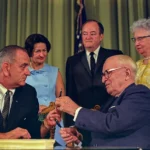
When President Lyndon B. Johnson signed Title XVIII and Title XIX of the Social Security Act into law—creating Medicare and Medicaid—the statutory language mirrored the existing private market. Congress explicitly excluded routine dental care from Medicare Part A and Part B. While Medicaid mandated pediatric dental coverage, adult dental care was classified as an optional state benefit, institutionalizing the gap at the federal level.

2010: The Affordable Care Act Framework
The passage of the Patient Protection and Affordable Care Act (ACA) altered American health insurance by establishing ten "Essential Health Benefits" (EHBs) that qualifying individual and small-group plans must cover. While Congress included pediatric dental care as an essential benefit, adult dental care was excluded from the mandatory list. Consequently, ACA Marketplace medical plans are not required to offer comprehensive adult dental benefits.
Supporting Data: Structure, Costs, and Coverage Mechanisms
Understanding why dental care remains costly requires examining how dental insurance policies are structured compared to medical insurance.
1. The Three-Tier Dental Benefit Model
Most commercial dental insurance plans categorize care into three primary categories, applying different cost-sharing rules to each:
| Care Category | Common Examples | Typical Plan Coverage | Patient Cost Share |
|---|---|---|---|
| Preventive Care | Exams, cleanings, routine X-rays, fluoride treatments | 100% | 0% |
| Basic Procedures | Cavity fillings, simple extractions, non-surgical root canals | 70% – 80% | 20% – 30% |
| Major Procedures | Crowns, bridges, complete/partial dentures, complex surgery | 50% | 50% |
| Orthodontics | Braces, clear aligners | Limited / Lifetime Cap | 50%+ (Often excluded for adults) |
| Elective / Cosmetic | Teeth whitening, cosmetic veneers | 0% | 100% |
2. The Annual Maximum Paradox
The primary structural difference between major medical insurance and traditional dental insurance lies in how financial risk is capped:
- Medical Insurance (ACA-Compliant): Features an Out-of-Pocket Maximum. Once a patient spends a designated amount (e.g., $8,000 in a calendar year) on deductibles and copays for covered in-network care, the insurer pays 100% of covered medical expenses for the remainder of the year. This protects the patient from financial catastrophe.
- Dental Insurance: Features an Annual Maximum Benefit. The insurer agrees to pay eligible claims up to a fixed limit—typically between $1,000 and $2,000 per year. Once the plan pays out this amount, the insurer pays 0%, leaving the patient fully responsible for all remaining costs until the next plan year resets.
Example: Major Dental Work Cost Breakdown ($3,500 Total Bill)

  Total Procedure Cost: $3,500
  ├─ Insurer Pays (up to $1,500 annual cap):  $1,500
  └─ Patient Out-of-Pocket Obligation:       $2,000 + deductible
Because these annual benefit caps have remained virtually stagnant since the 1970s—unadjusted for medical inflation—a single complex treatment plan involving a root canal and a porcelain crown can exhaust a policyholder’s annual benefit in a single visit.

HYPOTHETICAL PATIENT COST BREAKDOWN: ROOT CANAL & CROWN

Total Estimated Fee:                     $2,400
Deductible Paid by Patient:                -$50
Remaining Billable Amount:               $2,350

Insurer Share for Root Canal (Basic 80%):  $800
Insurer Share for Crown (Major 50%):      $600
Total Claim Paid by Insurer:             $1,400  (Consumes near-total $1,500 annual cap)

Total Patient Out-of-Pocket Expense:     $1,000  (Deductible + remaining balances)
3. Medicare Rules and Narrow Exceptions
Original Medicare (Parts A and B) does not cover routine dental exams, cleanings, fillings, crowns, or dentures. However, federal regulations permit narrow exceptions where dental procedures are strictly secondary to, and integrated with, major covered medical interventions:
- Pre-Surgical Clearances: Dental examinations and extractions necessary to eliminate oral infection prior to a major organ transplant or heart valve replacement surgery.
- Oncology Support: Oral radiation therapy preparation or jaw reconstruction following the removal of a tumor.
- Trauma Care: Inpatient hospital care for severe facial fractures or acute jaw injuries.
While some Medicare Advantage (Part C) plans offer supplemental dental coverage, these benefits often come with specific provider networks, separate waiting periods, and restricted annual spending caps.
Official Responses and International Perspectives
Ethical and Public Health Insights
The institutional divide has long drawn scrutiny from public health organizations and ethics journals. Writing in the AMA Journal of Ethics, healthcare historians note that the early decision to separate dental and medical education created a long-term structural blind spot in public insurance design.
The Centers for Disease Control and Prevention (CDC) emphasizes that oral health cannot be isolated from overall physical health. According to the CDC, chronic oral conditions such as severe periodontitis affect nearly half of all U.S. adults aged 30 and older. The CDC highlights that untreatable tooth pain and untreated infections frequently lead to preventable emergency department visits—costing the healthcare system billions while providing non-definitive care, such as short-term pain relief and antibiotics, rather than restorative dental work.
Global Context: The Norwegian Model
The separation of adult dental care from public medical coverage is not unique to the United States. Even nations with robust single-payer or socialized medical systems frequently treat adult dental care differently.

In Norway, for example, the public healthcare system (Helsenorge) fully covers standard medical services, hospitalizations, and pediatric dental care. However, adult dental care operates primarily on a private, fee-for-service basis.
According to official guidelines from Helsenorge:
- Children up to age 18 receive 100% free public dental treatment.
- Young adults aged 19 to 24 receive subsidized care.
- Adults aged 25 and older typically pay for their own dental treatments out of pocket, through private insurance, or via specialized dental providers like Tannlege Team, unless they fall under specific statutory exceptions.
The Norwegian National Insurance Scheme (Folketrygden) provides partial reimbursement for adults only under specific conditions, such as severe periodontitis, oral cancer rehabilitation, rare medical conditions, or severe dental injury caused by other medical therapies. This international parallel demonstrates that integrating adult dental care into broad healthcare financing remains a complex policy challenge globally.
Systemic Health and Economic Implications
The Oral-Systemic Health Link
The human mouth serves as an entry point to the digestive and respiratory tracts, housing billions of microbes. Modern medical research demonstrates that chronic oral disease can directly influence systemic health:
                  ┌─► Systemic Inflammation ──► Cardiovascular Risks
                  │
Chronic Periodontitis
(Gum Disease)     ├─► Glycemic Control Deficits ──► Worsened Diabetes Outcomes
                  │
└─► Bacterial Translocation ──► Bacterial Endocarditis Risk- Diabetes Management: The relationship between periodontal disease and diabetes is bidirectional. High blood sugar elevates the risk of severe gum infections, while severe oral inflammation makes blood glucose levels harder to control.
- Cardiovascular Disease: Chronic oral inflammation can allow bacteria to enter the bloodstream, contributing to arterial plaque build-up and increasing the risk of endocarditis in patients with structural heart conditions.
- Pregnancy Complications: Severe periodontitis has been linked in clinical studies to low birth weight and premature labor.
Economic and Infrastructure Factors
Without robust insurance coverage, private dental practice economics heavily influence consumer costs. A standard dental clinic operates with high overhead costs, including:

- Specialized equipment (digital X-rays, 3D cone-beam scanners, CAD/CAM crown milling machines).
- Strict infection control, sterilization protocols, and medical waste management.
- Custom dental laboratory fees for crowns, bridges, and prosthetics.
- Professional liability insurance and specialized auxiliary staffing (dental hygienists, assistants).
In major metropolitan markets—such as Manhattan, San Francisco, or Chicago—commercial real estate costs and higher wage structures further elevate basic dental fees, leaving uninsured or under-insured patients facing substantial bills.
The Future of Policy: Could Medical and Dental Coverage Ever Merge?
Advocates, policy experts, and lawmakers continue to debate strategies for bridging the medical-dental insurance divide in the United States.
Legislative Approaches
- Medicare Part B Expansion: Reformers regularly propose introducing comprehensive dental, vision, and hearing coverage into Original Medicare Part B. Proponents argue this would prevent severe health declines in older adults and reduce long-term medical expenditures.
- Essential Health Benefits Reclassification: Federal regulatory changes could theoretically mandate adult dental care as an Essential Health Benefit under the ACA, requiring Marketplace plans to integrate oral care into standard policies.
The Policy Challenges
Opponents and cautious analysts point to significant practical and financial hurdles:
- Massive Fiscal Costs: Adding comprehensive adult dental coverage to Medicare or ACA plans would require billions of dollars in new tax revenue or higher overall health plan premiums.
- Provider Participation Rates: Many private dentists choose not to participate in public programs like Medicaid due to lower reimbursement rates and administrative burdens. Expanding public coverage without increasing provider reimbursement could lead to network access bottlenecks.
- Structuring Benefits: Lawmakers must decide whether integrated policies would cover only basic preventive care and acute pain relief, or extend to high-cost restorative care such as implants, bridges, and complex root canals.
Summary for Consumers
The historical split between medicine and dentistry means patients must navigate two separate insurance frameworks. To minimize out-of-pocket spending, health policy experts recommend that consumers:
- Review Annual Maximums: Check whether a dental plan’s annual spending cap will cover anticipated major work like crowns or extractions.
- Obtain Pre-Treatment Estimates: Request that the dental practice submit a formal pre-authorization to the insurer before undergoing complex procedures to determine exact out-of-pocket costs.
- Explore Alternate Care Settings: Look into accredited dental school clinics, Federally Qualified Health Centers (FQHCs) offering sliding-scale fees, or health savings accounts (HSAs/FSAs) to manage necessary expenses when traditional dental insurance falls short.