






















































Defiance in Albert Lea: City Council Rejects Cannabis License in Challenge to State Authority

ALBERT LEA, MN – In a move that legal experts and city officials warn could trigger a costly and potentially losing battle with the State of Minnesota, the Albert Lea City Council has voted to deny a business registration for the city’s first licensed cannabis dispensary. The 4-3 decision, handed down during a tense Monday night session, represents a direct challenge to the state’s burgeoning regulatory framework for adult-use marijuana and sets the stage for a high-stakes legal showdown over the limits of local government autonomy.
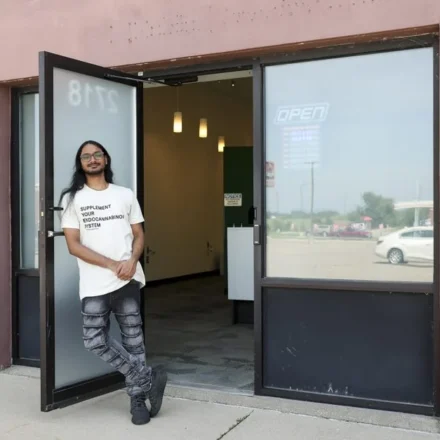
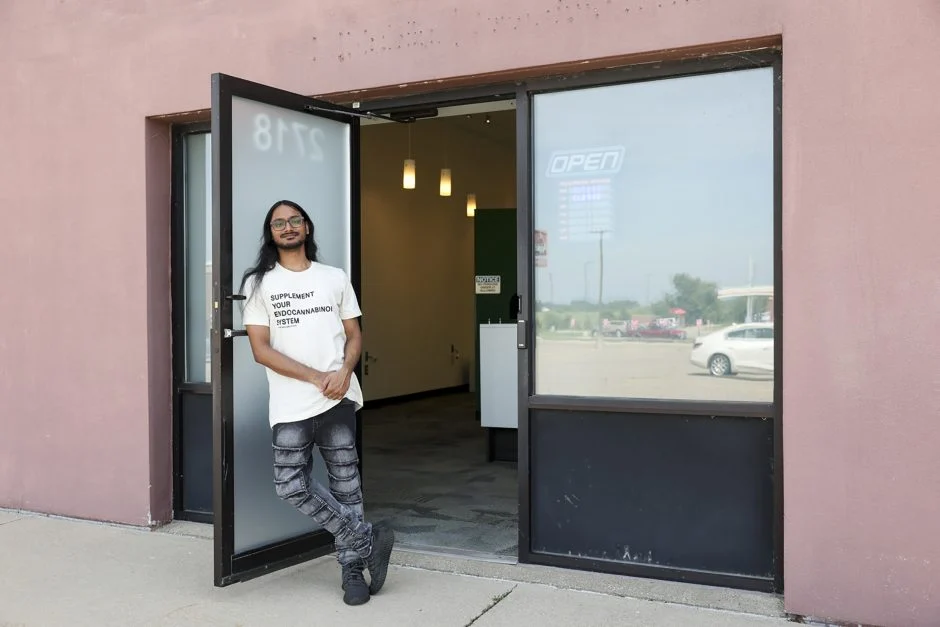
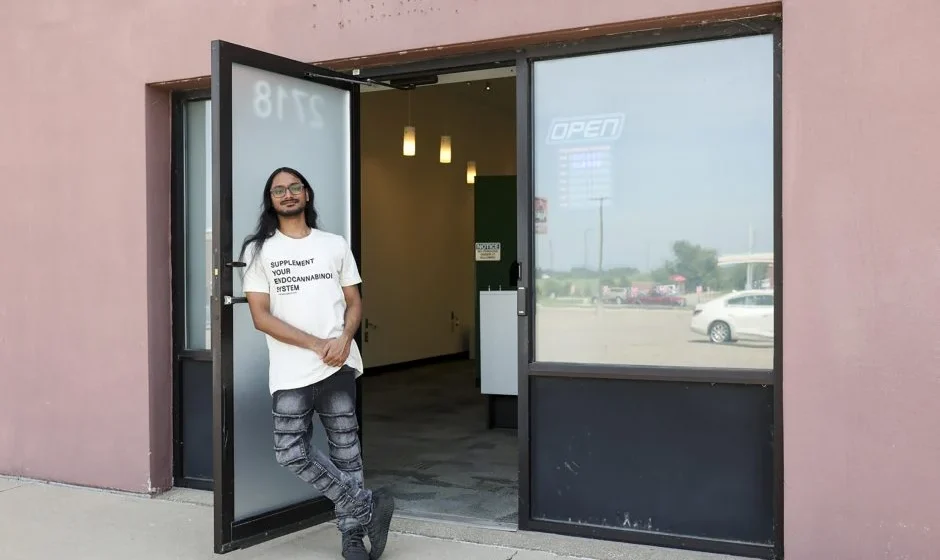
The business at the center of the controversy, The Smoking Tree, is owned by Jacob Schlichter, a local entrepreneur who had recently become the first micro-retail cannabis applicant in Minnesota to pass a state-level licensing inspection. While Schlichter expected the final local registration to be a mere formality, the council’s majority opted instead to use the application as a platform to protest state mandates, regardless of the potential financial penalties or legal ramifications.
Main Facts: A Collision of Law and Localism
The denial of The Smoking Tree’s registration is not merely a local zoning dispute; it is an act of legislative rebellion. Under Minnesota’s cannabis legalization statutes, local governments are granted specific, limited powers regarding the operation of cannabis businesses. While they can dictate where a shop is located through zoning ordinances—ensuring distance from schools, parks, and daycares—they are expressly prohibited from enacted a total ban on the industry.
For a city the size of Albert Lea, which has a population of approximately 18,000, state law requires the registration of at least two cannabis retail operations. The city’s own staff had previously determined that Schlichter’s application met every requirement established by both the Minnesota Office of Cannabis Management (OCM) and the city’s own local ordinances, which were adopted in May.
Despite these compliance benchmarks, the council’s narrow majority—comprised of Mayor Rich Murray and Councilors Larry Baker, Rachel Christensen, and Keith Van Beek—voted to block the shop. The opposition was rooted not in the specifics of Schlichter’s business plan, but in a philosophical objection to the state’s "top-down" approach to legalization.
Chronology: From State Mandate to Local Refusal
The path to Monday’s confrontation began in May 2023, when Governor Tim Walz signed the bill legalizing recreational marijuana in Minnesota. The legislation created a complex, multi-tiered rollout intended to launch a fully regulated market by 2025.
May 2024: In anticipation of the new industry, the Albert Lea City Council approved a local ordinance detailing the registration process. The ordinance established a "first-come, first-served" system based on the time stamps of state licensure.
June 2024: Jacob Schlichter achieved a significant milestone, passing the state’s rigorous inspection process for a micro-retailer license. This designation allowed him to proceed to the final step of the process: local registration.
July 18, 2024: City staff confirmed that Schlichter had completed all necessary local paperwork. A post on the city’s official website indicated that the business was on track for approval, and the item was placed on the "consent agenda" for the July meeting—a section of the meeting usually reserved for routine, non-controversial items that are approved in a single bulk vote.
Monday, July 2024: The atmosphere shifted during the council meeting as members pulled the item from the consent agenda for individual discussion. City Attorney Joel Holstad delivered a blunt warning, advising the council that a "no" vote would be a violation of state statute and would almost certainly result in litigation. Despite this, the council voted 4-3 to deny the license, effectively halting Schlichter’s planned "soft opening" scheduled for the following day.
Supporting Data: The Financial Risks of Rebellion
The decision to defy state law carries significant financial weight for Albert Lea, a city that relies heavily on state funding to maintain its infrastructure and public services. During the meeting, City Manager Ian Rigg provided a sobering breakdown of the potential fiscal fallout.
Albert Lea receives more than $6 million annually in Local Government Aid (LGA), a state-funded program designed to help cities keep property taxes stable while providing essential services. This funding accounts for roughly one-third of the city’s general fund revenue.
Under the state’s cannabis regulatory framework, cities that fail to comply with the mandate to register businesses may face a 5% penalty on their LGA distribution. For Albert Lea, this would result in an immediate loss of approximately $300,000.
Furthermore, City Attorney Holstad estimated that defending a lawsuit from either the State of Minnesota or the business owner would cost the city at least $100,000 in legal fees. He characterized the chances of winning such a lawsuit as "highly unlikely," noting that the state’s language regarding local compliance is exceptionally clear. Totaled together, the "principled stand" taken by the council majority could cost the taxpayers of Albert Lea upwards of $400,000 in the first year alone.
Official Responses: Principles vs. Pragmatism
The council debate highlighted a deep ideological rift between those who view the law as a binding contract and those who see it as an overreach by a distant metropolitan elite.
The Opposition’s Stance:
Councilor Larry Baker emerged as the most vocal critic of the state’s mandate. He framed his vote as a defense of municipal sovereignty. "At some point, people have to start saying no to the state and federal government taking power away from cities," Baker said. "It’s just a matter of principle." Baker expressed fear that if the city did not resist this mandate, the state might eventually strip away other local powers, such as the ability to regulate high-density housing in residential neighborhoods.
Mayor Rich Murray echoed these sentiments, accusing the state legislature and the governor of "ramming" the legislation down the throats of local communities. "I do not like the way they have done this with very little say in the process, all because they’re hungry for more revenue," Murray stated.
The Pragmatic Defense:
Conversely, Councilor Brian Anderson argued that the council’s hands were legally tied and that resisting was an exercise in futility. "I think it’s up to me sitting up here to do the responsible thing and actually say that this is going to happen whether we want it to or not," Anderson said. He urged his colleagues to "embrace it and make the best of it" rather than inviting costly litigation.
City Manager Ian Rigg, while acknowledging the desire for more local control, reminded the council of their administrative duty. "Local control is important and we need to be vocal about it, but until it’s restored or it’s preserved, we do have our orders," Rigg told the council.
The Entrepreneur’s Reaction:
Jacob Schlichter, the owner of The Smoking Tree, expressed bewilderment at the decision. Having followed every rule and passed every inspection, he found himself a pawn in a larger political battle. "The law is the law," Schlichter said. "Whether or not you agree with cannabis, we can all agree that this is a bad use of our tax money. The last thing I want to do is sue my own city, but I don’t know what other options there are."
Implications: A Precedent for Minnesota’s Cannabis Future
The Albert Lea decision is being watched closely by municipal leaders and cannabis advocates across the state. It serves as a litmus test for the "Local Control" movement that has been brewing since the 2023 legalization.
-
The Legal Precedent: If the State of Minnesota moves to sue Albert Lea, the resulting court ruling will likely provide a definitive interpretation of Chapter 342 of the Minnesota Statutes. A victory for the state would cement the OCM’s authority, while a victory for Albert Lea—however unlikely—could embolden dozens of other conservative-leaning municipalities to enact similar bans.
-
Economic Uncertainty: For entrepreneurs like Schlichter, the vote creates a climate of extreme uncertainty. If local councils can arbitrarily deny licenses that have already been vetted by state regulators, the "green rush" in Minnesota may stall as investors become wary of local political volatility.
-
Taxpayer Burden: The most immediate implication for the residents of Albert Lea is the potential for a significant budget shortfall. If the city loses $300,000 in LGA and spends another $100,000 on legal fees, the council may be forced to either cut services or increase property taxes to bridge the gap.
-
The Legislative Response: The defiance in Albert Lea may prompt the Minnesota Legislature to further clarify or strengthen the enforcement mechanisms within the cannabis law. If more cities follow Albert Lea’s lead, lawmakers might consider even steeper penalties for non-compliance.
As of Tuesday, The Smoking Tree remains closed. Schlichter is currently consulting with legal counsel to determine his next steps, while the City of Albert Lea awaits a response from the Minnesota Office of Cannabis Management. What began as a routine business registration has transformed into a landmark case regarding the boundaries of state power and the cost of municipal dissent.