




















































The Fraud Frontier: How Healthcare Integrity Became a Political Battlefield Ahead of Midterms

As the 2026 midterm elections approach, healthcare remains a dominant concern for American voters, but the traditional debate over premiums and coverage has been significantly disrupted by a new, aggressive narrative: the crusade against fraud in government health programs. Led by the Trump administration, this shift has transformed technical debates over administrative oversight into high-stakes political ammunition, blurring the lines between legitimate efforts to safeguard taxpayer dollars and partisan maneuvers designed to reshape the social safety net.
While the administration frames its actions as a necessary "drain the swamp" operation for federal health programs, critics—including Democratic lawmakers and health policy experts—argue that these efforts are a pretext for dismantling the Affordable Care Act (ACA) and Medicaid. As both parties vie for control of Congress, the fraud narrative has become a central, albeit contentious, pillar of the national campaign agenda.
The Evolution of a Campaign Issue
Historically, the GOP has found itself on the defensive regarding healthcare, particularly when tasked with justifying cuts to the ACA and Medicaid. By reframing the conversation around "fraud, waste, and abuse," Republican candidates have discovered a way to pivot. Rather than defending cuts, they are now asserting that they are protecting the fiscal integrity of Medicare and Medicaid from bad actors.
Larry Levitt, executive vice president for health policy at KFF, notes that this tactical shift is highly effective for the GOP. "Going after fraud gives Republicans a healthcare message when they would otherwise just be defending cuts to Medicaid and the Affordable Care Act," Levitt said. This approach effectively blunts Democratic attacks by positioning the Republican party as the guardian of the taxpayer’s wallet.
However, the political landscape remains polarized. While 54% of Republican voters believe that fraud in government health programs is an "extremely important" issue for candidates to address—a sentiment mirrored by rural voters in a recent KFF/AP survey—Democrats continue to maintain a structural advantage in public trust regarding healthcare policy. They are now working to portray the administration’s crackdown as a "smokescreen" intended to justify the disenfranchisement of vulnerable populations.
A Chronology of Conflict
The administration’s anti-fraud campaign has unfolded over the last year with a series of escalating actions that have sparked intense debate:
- Early 2026: The Government Accountability Office (GAO) releases a report highlighting significant fraud risks within Medicare, fueling the administration’s narrative.
- March 2026: CMS Administrator Mehmet Oz announces an investigation into New York’s Medicaid program, alleging that millions of individuals received personal care services—an assertion that was later revealed to be based on a fundamental miscalculation of billing codes.
- May 2026: The administration begins withholding over $1 billion in federal Medicaid funding from Minnesota and California, citing "lax oversight."
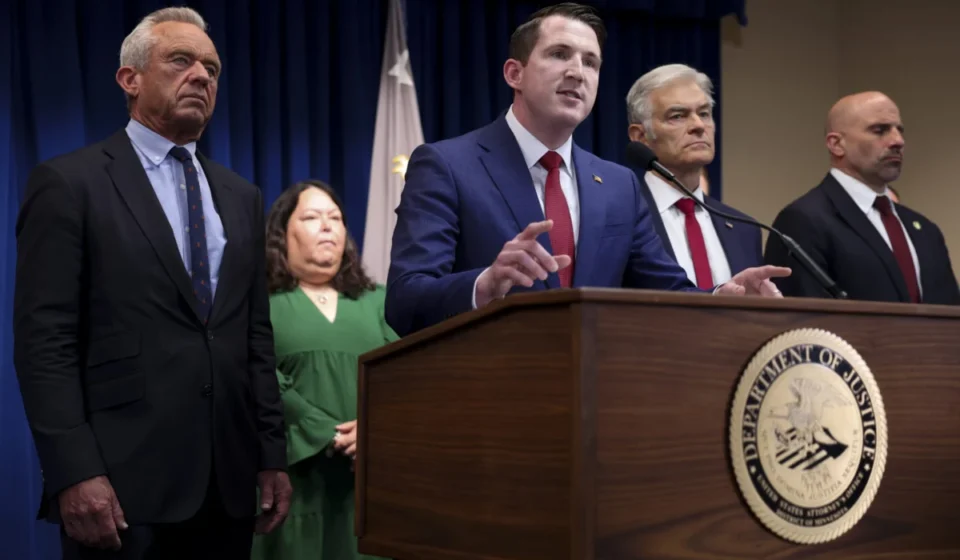
- June 2026: A massive wave of federal charges is filed against hundreds of healthcare providers and doctors across the country.
- September 2026: The Centers for Medicare & Medicaid Services (CMS) cancels ACA enrollments for 760,000 individuals, citing fraudulent applications submitted by third-party brokers.
- October 2026: President Trump calls on Congress to mandate prison sentences for healthcare fraud, aiming to eliminate probation as a sentencing option.
The Data Debate: What Constitutes Fraud?
At the center of the current friction is the definition of "fraud" itself. In September, the CMS canceled coverage for 760,000 ACA enrollees. Administrator Mehmet Oz defended the move, pointing to the fact that approximately 35% of those enrollees had never used their insurance to purchase medication or visit a doctor. "That just is not possible," Oz claimed at a press event. "So we know there is fraud."
However, health policy analysts argue that the administration’s logic is flawed. They point out that healthy, younger individuals are statistically less likely to use their insurance benefits, and that the absence of a Social Security number—another metric cited by the administration—does not automatically indicate fraud, as newborns and certain legal residents may not yet have one assigned.
This discrepancy highlights a recurring theme: the administration’s reliance on what critics call "statistically suspect" evidence to justify systemic changes. When the CMS initially accused New York of rampant Medicaid fraud, claiming services were provided to 5 million people, they were forced to backtrack after it was discovered they had misread the state’s billing data. The actual figure was closer to 450,000. Despite the correction, the administration maintained its pressure on the state, ultimately withholding millions in funding from the state’s fraud unit for "insufficient indictments."
Official Responses and Political Implications
The administration’s stance is firm. Officials argue that fraud diverts critical resources from those who truly need government assistance. "The fraud doesn’t just steal money—it steals our trust," Oz stated during a recent appearance on CBS’s Face the Nation.
Conservative policy experts, such as Brian Blase of the Paragon Health Institute, argue that critics of the administration’s crackdown are either misinformed or politically motivated. "Those criticizing the action either don’t understand it or see some political advantage in mischaracterizing it," Blase said.
Conversely, Democrats are aggressively highlighting what they view as blatant hypocrisy. They point to the fact that the Department of Health and Human Services (HHS) recently recertified hundreds of insurance brokers who were previously suspended for suspected fraud by the Biden administration. Furthermore, they note that the administration has simultaneously cut staff in CMS offices responsible for regional oversight.
Perhaps most damaging to the administration’s narrative are the presidential pardons issued to healthcare executives convicted of multi-million dollar fraud schemes. Critics argue that the administration is creating a two-tiered system: one that aggressively purges individual consumers from the rolls under the guise of fraud prevention, while offering leniency to industry insiders who have perpetrated massive, institutionalized theft.
The Broader Impact: A System in Flux
The implications of this political theater are significant for the American healthcare system. The combination of legislative changes—which have already reduced federal Medicaid spending projections by hundreds of billions—and the expiration of enhanced ACA subsidies has created a "perfect storm" for enrollment declines. The Congressional Budget Office (CBO) estimates that these combined policies could lead to 16 million more uninsured Americans by 2034.
As election day nears, the narrative battle continues to intensify. In Minnesota, Republican gubernatorial candidate Lisa Demuth has utilized the administration’s investigation as a centerpiece of her campaign, attacking Democratic opponent Amy Klobuchar for failing to "stop the fraud." In New York, Republican candidates are echoing similar sentiments, framing the state’s Medicaid program as a symbol of Democratic mismanagement.
Democrats argue that this is a dangerous distraction. "It’s really a way to distract and reframe the cuts in a different way, to say it’s part of an anti-fraud effort," says Anthony Wright of Families USA. "Fighting fraud shouldn’t result in people losing coverage."
Conclusion: A Nation at a Crossroads
The intersection of fraud enforcement and electoral politics has created a volatile environment for millions of Americans who rely on government health programs. While there is broad consensus that fraud is a genuine issue that must be addressed, the methods employed by the current administration have sparked a profound national debate about the limits of executive power and the true intent behind these "crackdowns."
As voters head to the polls this November, they will be weighing two distinct visions for the future of healthcare. On one side, a Republican platform that promises to restore fiscal discipline through aggressive audits and program trimming. On the other, a Democratic platform that warns of a systematic effort to erode the safety net, arguing that the administration’s war on fraud is, in reality, a war on the most vulnerable.
Regardless of the election outcome, the precedent set by these investigations—where technical disputes are elevated to national political issues—is likely to persist. The challenge for the next administration, regardless of party, will be to restore public trust in the integrity of government health programs while ensuring that the pursuit of fraud does not come at the expense of those who depend on these services to survive.