























































The North Star Grid: How Minnesota Became a Global Epicenter for Microgrid Innovation

Main Facts: A Midwest Hub Redefining Energy Resilience
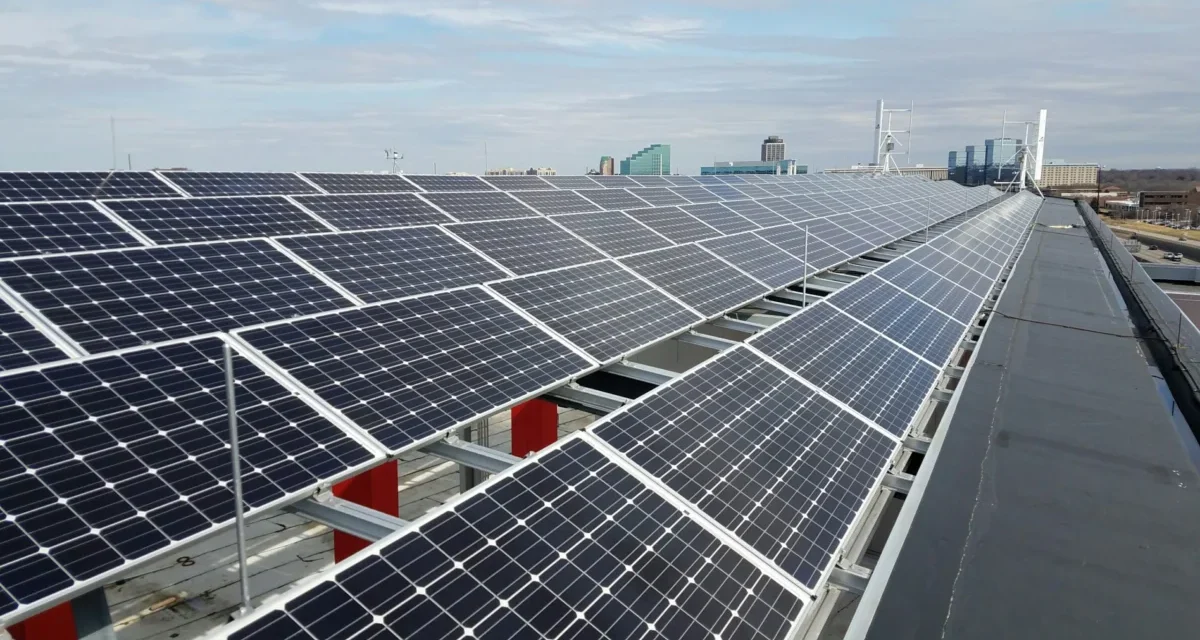
Standing northeast of the I-494 and Highway 100 interchange in Bloomington, Minnesota, is a building that defies traditional corporate architecture. Clad in striking red and blue, the headquarters of Open Access Technology International (OATI) resembles a futuristic sailboat or a robotic sentry. Yet, the true innovation lies within its walls. This facility is not merely an office; it is a fully functional microgrid, a "proof of concept" that integrates solar panels, high-capacity batteries, an onsite cogeneration plant, and emergency diesel generators.
OATI is the flagship of a burgeoning industrial cluster that has quietly positioned Minnesota as a national leader in microgrid technology. While Silicon Valley often captures headlines for software innovation, the Twin Cities and greater Minnesota have become the "engine room" for the hardware and sophisticated AI-powered software required to manage the physical flow of electricity.
A microgrid is a self-contained energy system that can operate in tandem with or independently from the main electrical grid. In an era defined by aging infrastructure, rising electricity prices, and increasingly frequent extreme weather events, these systems offer a critical lifeline. From the urban corridors of North Minneapolis to the remote villages of the Red Lake Nation, Minnesota-based firms like OATI, Syncris, and Microgrid Initiatives are deploying solutions that ensure the lights stay on when the central grid fails.
The state’s influence is bolstered by a unique ecosystem that includes the University of St. Thomas’s Center for Microgrid Research—the only institution of its kind in North America providing hands-on training—and a legacy of manufacturing excellence that sees Minnesota exporting over $2.3 billion in IT-related electrical equipment annually.
Chronology: From Industrial Giants to Decentralized Pioneers
Minnesota’s dominance in the energy sector did not happen overnight. It is the result of decades of industrial evolution. According to Michael Burr, founder and director of Microgrid Initiatives, the state’s outsized footprint is rooted in the long-standing presence of multinational corporations that specialized in power electronics and energy controls.
The Era of Industrial Titans (1980s–1990s):
During the late 20th century, companies like Honeywell, Siemens, IBM, Eaton, and Johnson Controls established deep roots in Minnesota. These firms cultivated a workforce of electrical engineers and software developers who understood the complexities of the North American power grid. During this period, trade publications like Independent Energy magazine—originally launched in Minnesota—began documenting the shift from centralized power plants toward independent power production.
The Birth of OATI (Mid-1990s):
OATI was founded during this transitional era. Initially, the company focused on the software infrastructure required for the deregulated energy market. Their early solutions became the industry standard, and today, OATI software facilitates the majority of high-voltage transmission trades across North America. This established the company’s reputation for managing "big data" in real-time to prevent blackouts.
The Shift Toward Decentralization (2010s–Present):
As the 21st century progressed, the focus shifted from transmission to distribution. The rise of solar energy, electric vehicles (EVs), and home battery storage created a need for Distributed Energy Resource Management Systems (DERMS). Minnesota companies began adapting their grid-scale expertise to a localized level. In the last decade, OATI expanded into microgrid optimization, while newer startups like Syncris emerged to tackle the hardware bottlenecks that made microgrid deployment expensive and custom-heavy.
Supporting Data: The Economics of the "Grid Edge"
The economic impact of Minnesota’s microgrid sector is measurable both in export revenue and operational savings for local industries. Data from the Minnesota Department of Employment and Economic Development (DEED) highlights that the state exported approximately $2.3 billion in IT-related electrical equipment in the previous year alone.
The Modular Revolution:
One of the primary barriers to microgrid adoption has been the high cost of engineering. "Today, every site is a highly custom solution," notes Zach Edmond, COO of Minneapolis-based Syncris. To counter this, Syncris developed a modular inverter—the device that converts DC power from solar/batteries into AC power for appliances. By creating a "Lego-block" design, Syncris allows users to scale their systems without costly re-engineering. This modularity reduces unit costs significantly once volume manufacturing is achieved.
Protecting Power Quality:
For industrial customers, microgrids are about more than just avoiding blackouts; they are about "power quality." In rural areas, "grid edge" locations often suffer from voltage fluctuations. Syncris co-founder Greg Mowry points out that these fluctuations can degrade sensitive machinery. A machine designed to last 20 years might fail in seven due to poor power quality. By using a microgrid to "smooth out" the electricity, one Syncris customer reported saving hundreds of thousands of dollars annually in maintenance and downtime.

The DERMS Network:
OATI’s DERMS platform is now utilized by over 150 electric cooperatives, including 24 members of the Dairyland Power Cooperative in Wisconsin and Minnesota. These systems orchestrate thousands of devices—from water heaters to EV chargers—to reduce demand during peak hours, effectively acting as a "virtual power plant" that stabilizes the regional grid.
Official Responses and Case Studies: Resilience in Practice
Leaders across the industry emphasize that microgrids are no longer a luxury for the wealthy; they are a necessity for community survival.
Tribal Energy Sovereignty:
The U.S. Department of Energy (DOE) has increasingly prioritized tribal projects. Last year, the Red Lake Nation received $3.15 million and the White Earth Nation received $1.75 million to install solar-powered microgrids at community schools. David Heim, OATI’s VP and Chief Strategy Officer, notes that these projects provide more than just electricity. "The mere fact that they’re planning onsite generation gives them a seat at the table," Heim said. It grants Tribal Nations political and economic leverage when negotiating with major utilities.
The "Cottage Community" Model:
In North Carolina, a region frequently battered by hurricanes, OATI partnered with a regional cooperative to build a 31-home "cottage community." This microgrid proved so successful—producing more power than it consumed in its first phase—that it was expanded to support 300 homes. This project serves as a blueprint for how utilities can integrate microgrids to support, rather than compete with, the main grid.
Urban Resilience in North Minneapolis:
Closer to home, the "Resilient Minneapolis Project" is set to begin construction on two microgrids this fall. Developed by Renewable Energy Partners with OATI’s software, these systems will be located at public school facilities. During prolonged outages, these schools will serve as "resilience hubs" where residents can charge medical equipment, access HVAC services, and stay connected.
Implications: A Bulwark Against an Uncertain Future
The rise of the Minnesota microgrid industry has profound implications for the future of global energy infrastructure.
Climate Adaptation:
As extreme weather events—such as the hurricane-force microbursts that recently devastated northern Minnesota—become more common, the centralized grid’s vulnerability is laid bare. Microgrids provide a "fail-safe" mechanism. When the main lines go down, these localized systems "island" themselves, maintaining critical services like refrigeration for food and medicine.
Economic Stability:
With rising tariffs and shifting federal energy policies expected to drive up electricity costs, the ability for businesses and communities to generate and manage their own power offers a hedge against inflation. By reducing "demand charges" (the high fees utilities charge for peak usage), microgrids allow manufacturers to maintain lower operational costs, keeping Minnesota’s industrial sector competitive.
The Talent Pipeline:
The presence of the Center for Microgrid Research at the University of St. Thomas ensures that the state will continue to produce the specialized workforce needed to maintain this lead. By offering hands-on training that isn’t available in Silicon Valley, Minnesota is securing its status as a destination for the next generation of energy engineers.
Conclusion:
Minnesota’s transition from a hub of traditional industrial controls to a pioneer in AI-driven microgrids reflects a broader shift in the global economy. As Mary Brown, OATI’s Chief Legal Officer, suggests, the technology has reached a point where it can "effortlessly orchestrate" entire neighborhoods. In doing so, Minnesota is not just building "robotic dog" buildings; it is building a more resilient, self-reliant, and sustainable future for the entire North American power grid.