



















































By Investigative Staff
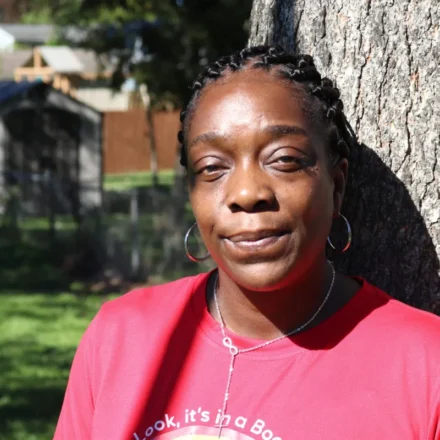
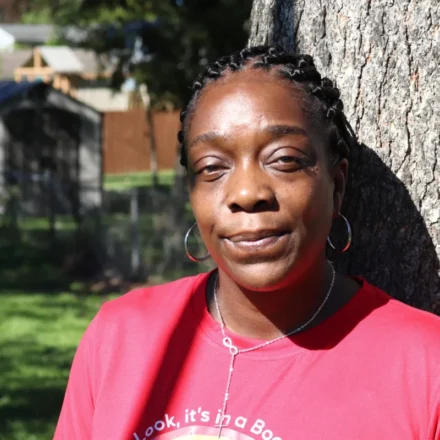
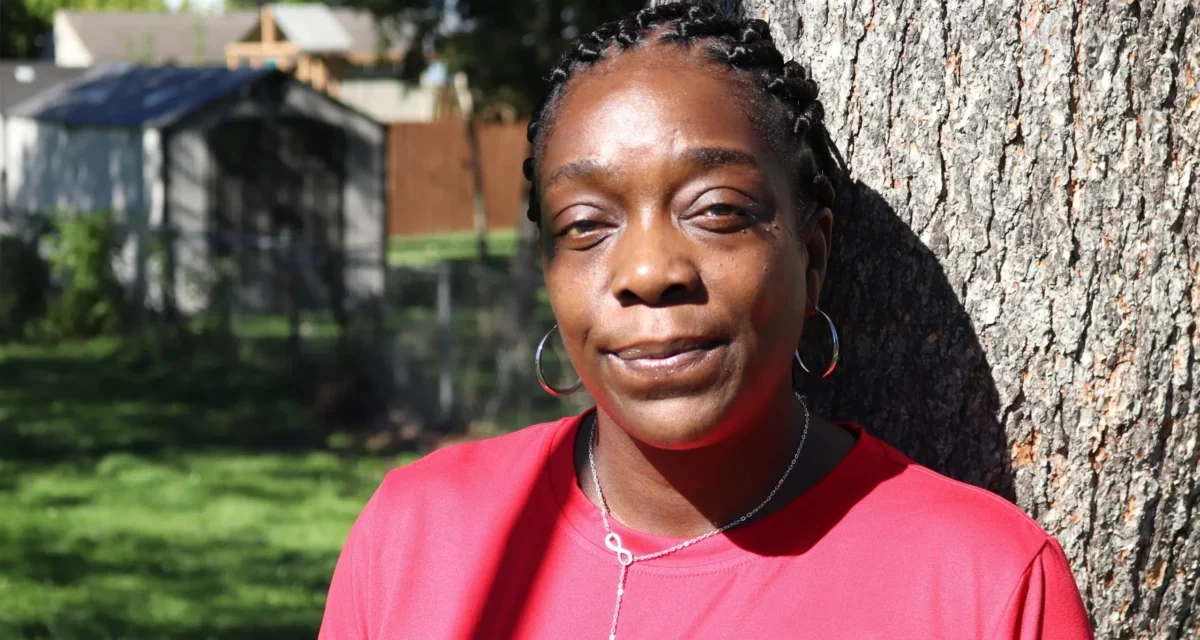
LANSING, Mich. — For Christina Starks-Clay, the math of modern American healthcare is not just complex; it is a source of daily, grinding anxiety. Standing in a sweltering line in downtown Lansing this past September, waiting for a town hall hosted by U.S. Senate candidate Abdul El-Sayed, Starks-Clay pulled out her smartphone to reveal a digital receipt. It was a screenshot of a $1,000 cashier’s check—money she had withdrawn that morning simply to chip away at her son’s dental bills.
Despite having what many would consider "good" insurance, Starks-Clay still faced an outstanding balance of $389 for her son’s care. Her own dental cleaning a few weeks prior had set her back $600. As an early childhood special education paraprofessional, these figures represent more than just numbers on a ledger; they represent a constant struggle to balance basic survival with medical necessity.
"I’m like, ‘Tina, OK, you were in a position for this moment to do this,’" she said, reflecting on the grim arithmetic of her morning. "A lot of people couldn’t do what I had to do today. I couldn’t do it. But I did it. So I need to hear, how are you going to make this better for everyone?"
Starks-Clay is not alone. Her frustration reflects a growing chorus of Americans who are increasingly disenchanted with a healthcare system that leaves many one diagnosis away from financial ruin. As the midterm elections approach, the debate over "Medicare for All" has moved from the fringes of progressive politics to the center of the legislative agenda, particularly in battleground states like Michigan.
The Human Cost: A Crisis of Affordability
The atmosphere outside the Lansing town hall was thick with more than just the humid September heat; it was heavy with the weight of shared hardship. The line stretched for blocks, populated by citizens who have become accustomed to the "choice" between medication and groceries.
One attendee, a man standing just ahead of Starks-Clay, spoke of watching his brother drown in thousands of dollars of medical debt. Nearby, a professor emeritus from Michigan State University expressed deep concern for his grandchildren, whose parents are struggling to meet a daunting $9,000 annual insurance deductible. Healthcare workers in attendance shared stories of patients who routinely delay life-saving tests or forgo prescriptions because they cannot navigate the soaring costs.
These stories underscore a stark reality: for many Americans, health insurance is no longer a guarantee of health. It has become a precarious financial instrument that often fails to cover the very services it promises.
Chronology of a Shifting Landscape
The discourse around universal healthcare has ebbed and flowed over the last two decades, but the current surge in interest is unprecedented. To understand where we are, one must look at the trajectory of the last 15 years:
- 2010: The passage of the Affordable Care Act (ACA) marks a turning point, cutting the national uninsured rate nearly in half and prohibiting insurers from denying coverage for pre-existing conditions.
- 2010–2020: The decade following the ACA sees 40 states and Washington, D.C., expand Medicaid, providing a safety net for millions of low-income individuals.
- 2024: Following the election of President Donald Trump and subsequent policy shifts, the nation begins to see a reversal of these gains. The expiration of enhanced tax subsidies leads to a 20% spike in individual marketplace insurance rates in Michigan alone.
- 2025–2026: Projections from the Urban Institute suggest that up to 355,000 Michiganders could lose Medicaid coverage due to the implementation of the "One Big Beautiful Bill Act," a centerpiece of the current administration’s healthcare policy.
This regression is precisely what fuels the urgency behind the candidacy of Abdul El-Sayed. A physician and former public health official for the city of Detroit, El-Sayed has championed the "Medicare for All" platform since his 2018 gubernatorial bid. To supporters like Starks-Clay, his persistence is his most valuable trait: he has a plan, and he refuses to deviate from it.
The Data Behind the Demand
The growing support for a single-payer system is not merely anecdotal. According to a recent KFF health tracking poll, roughly two-thirds of Americans now support the expansion of a government-run health program. This represents the highest level of support in over a decade.
However, the term "Medicare for All" remains a fluid concept in the public consciousness. While it is traditionally defined as a single-payer system that eliminates private insurance in favor of a federal, tax-funded plan, its popularity fluctuates wildly depending on how the policy is framed to voters.
When researchers at Yale University recently analyzed the economic impact of such a transition, they found that while the upfront cost of implementation would reach approximately $4.2 trillion, the systemic savings—driven by the elimination of administrative bloat and negotiated drug prices—could save the nation roughly $1 trillion in total healthcare spending.
Despite this, the fear of the unknown—often amplified by political opponents—remains a powerful deterrent. "Politically, what matters is if they can scare people," says Jonathan Oberlander, a professor at the University of North Carolina-Chapel Hill. "It doesn’t matter if the fears that they’re spreading are actually accurate. The perception of disruption to the current system is a potent political liability."
Official Responses: The Partisan Divide
The debate has crystallized into a binary choice in the Michigan Senate race. On one side stands El-Sayed, arguing that the status quo is a failure of morality and economics. On the other stands Republican Mike Rogers, who has staked his campaign on the preservation of the private insurance market.
"If the government is going to give you something, they have to take it away from someone else," Rogers stated during a press conference announcing his health platform. He argued that Medicare for All would force millions of Americans off their existing private plans and necessitate a massive, unsustainable tax hike.
Rogers’ stance reflects the traditional GOP argument that choice and competition—rather than government intervention—are the keys to lowering costs. Yet, for voters like Darleana Ash, who works at a medical diagnostics lab, that "choice" is an illusion.
"If you have somebody that’s 75, 80 years old, guess what? They’re going to go without the medication because they have to eat," Ash said. Her observations from the front lines of the healthcare industry provide a sobering counter-narrative to the political talking points: for many, the "choice" currently on offer is between death and poverty.
The Reality of Reform: Implications for the Future
The tragic story of Cindy Lou Coolich, a retiree who once helped others navigate insurance enrollment before falling ill herself, serves as a poignant reminder of the system’s fragility. After a bout of sepsis left her disabled, Coolich lost her horse farm and her livelihood, surviving on a meager $900 monthly Social Security check. She noted, with a grim laugh, that her financial situation only stabilized after the death of her ex-husband, which allowed her to access his benefits.
"It hardly seems like the mark of a functioning healthcare system that someone had to die for things to get better," she noted.
As the election nears, the implications of the "Medicare for All" movement are clear: voters are demanding systemic change, not incremental policy tweaks. Whether this translates into actual legislative reform is another matter. Even if proponents like El-Sayed secure office, they will face a formidable wall of opposition from lobbyists, the insurance industry, and a deeply polarized Congress.
Thomas "Jermaine" Carey, a local activist who attended an El-Sayed town hall in Detroit, remains skeptical. "It’s still America," he said. "You still have super PACs and the lobbyists that control everything."
For now, the debate remains caught between the idealism of those who demand a right to health and the cold realities of a political and economic system built on a different set of priorities. As candidates continue to trade barbs over $4 trillion price tags and "big government," voters like Christina Starks-Clay continue to write checks for the care they hope will keep their families afloat, waiting for the day when the system finally, truly, works for them.