



























































The global digital landscape has experienced a week of unprecedented instability. Within a span of seven days, a cascade of high-profile outages has struck the pillars of modern technological infrastructure: Microsoft, the Federal Aviation Administration (FAA), JPMorgan Chase, United Airlines, the National Security Agency (NSA), and most recently, Apple.
While these organizations have largely maintained that the incidents are disconnected—the result of localized technical failures rather than a coordinated cyber-assault—the sheer frequency of these disruptions has sent shockwaves through both the enterprise sector and the general public. As our reliance on cloud-based ecosystems, unified identity management, and real-time digital connectivity reaches an all-time high, these events serve as a stark, uncomfortable reminder that "resilience" is not merely a buzzword for IT departments, but a foundational requirement for the modern economy.
A Week of Unprecedented Disruption: A Chronology
To understand the scale of this technological turbulence, one must look at the timeline of events that have defined this seven-day period.
- November 12-13: Microsoft 365 suffered a catastrophic failure that rendered essential productivity tools inaccessible for an unacceptable 24-hour period. For millions of businesses, this resulted in a complete standstill, highlighting the dangers of relying on a single, massive ecosystem for daily operations.
- November 13: The FAA faced a critical network equipment outage, leading to the grounding of all flights across the United States for over four hours. The ripple effects were felt globally, stranding thousands of travelers and disrupting logistics chains.
- Mid-November: As the week progressed, the instability spread. JPMorgan Chase reported significant system outages that disrupted financial services for customers, while United Airlines dealt with a widespread system failure that mirrored the chaos previously seen in the aviation sector.
- November 17: In a surprising turn of events, the U.S. National Security Agency (NSA) experienced a downtime of its highly classified internal communications network. While details remain scarce due to the sensitive nature of the entity, the fact that such a hardened network could falter underscores the vulnerability of even the most secure infrastructure.
- November 17 (Later): Apple became the final major entity to succumb, as a vast array of its enterprise and consumer services—including iCloud, Apple Pay, the App Store, and internal corporate tools—suffered a near-total blackout.
Apple’s Blackout: A Microcosm of Modern Dependency
The Apple outage, which began around 11:45 a.m. ET and lasted until approximately 6 p.m. ET, provides a clear lens through which to view the current systemic risks. The outage was not limited to consumer-facing apps like Apple Music or iCloud sign-in; it effectively crippled the company’s internal operations.
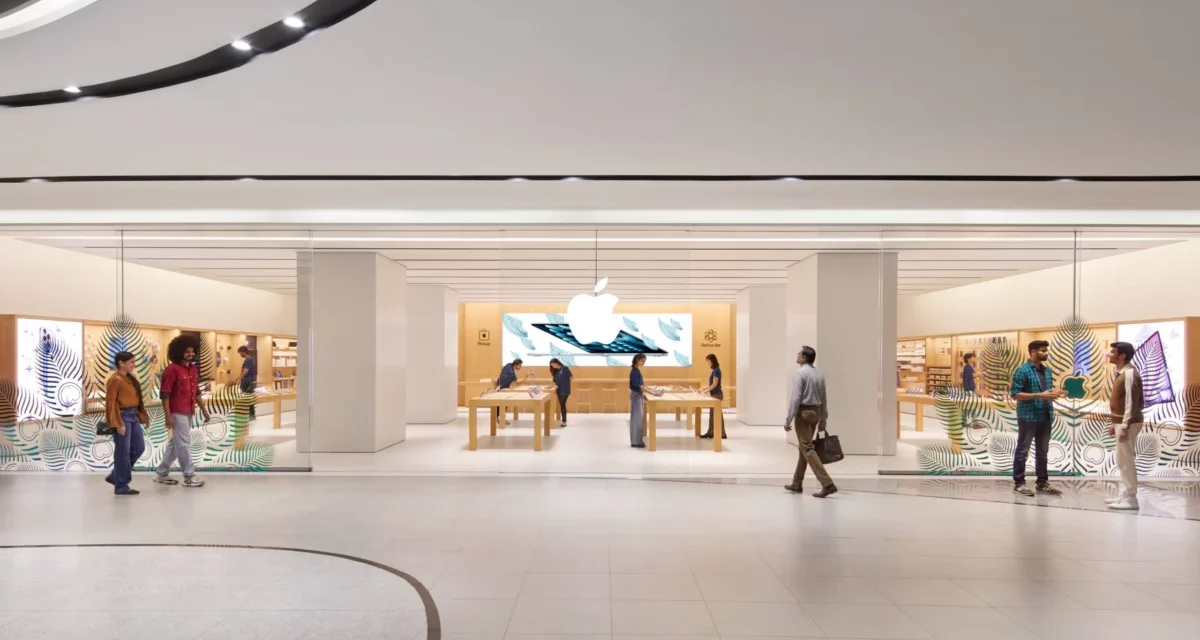
Retail stores were unable to process sales, handle customer pickups, or perform technical repairs, effectively turning high-tech storefronts into quiet showrooms. Furthermore, the disruption reached the developer ecosystem. Tools such as App Store Connect and Xcode Cloud were offline, stalling the workflows of thousands of software engineers who rely on Apple’s infrastructure to build, test, and deploy applications.
For many users, the most jarring aspect was the inability to authenticate new devices. Reports surfaced of users unable to complete the onboarding process for new iPhones, leaving them with high-end, unusable hardware. This underscores the "dependency trap": when the central authentication server goes down, the end-user’s local hardware becomes essentially useless.
Official Responses and the "Internal Update" Paradox
In the wake of these failures, organizations have been quick to perform damage control. Apple’s official response was brief: "Many of our systems are back up and running after an internal update caused some outages this morning. We’re working to get the remaining systems online as soon as possible."
This explanation—a standard response in the tech industry—raises more questions than it answers. The fact that an "internal update" could trigger a cascading failure across multiple, ostensibly siloed services suggests a deeper, architectural problem.
Why Staging Didn’t Catch the Failure
In a mature software development environment, updates are typically tested in "staging" environments that mimic production conditions. The failure to catch a bug of this magnitude before it reached the live environment suggests either a failure in the testing protocol or, more likely, an architectural dependency that the developers did not fully account for.
The Problem of Shared Layers
The most probable culprit for a failure of this breadth is a "shared layer." Modern tech giants operate on complex microservices architectures where many different products—from Apple Pay to developer portals—rely on a singular identity and authorization service. If the "gatekeeper" service experiences a bug, the entire house of cards can collapse. When authentication fails, everything downstream, regardless of how robust its individual back-end might be, ceases to function.
Implications for Business Continuity
The events of this week have forced a global conversation regarding digital resilience. For IT leaders and business owners, the "cloud-first" strategy, which has dominated the last decade, is now being scrutinized for its lack of redundancy.
The Illusion of "Set It and Forget It"
Businesses have grown accustomed to the idea that hyperscale providers like Microsoft and Apple will handle uptime, security, and maintenance. However, when these providers fail, the business has no local "failover" mechanism. The implication is clear: organizations must move away from total reliance on a single provider for critical workflows.
Developing a "Resilience-First" Mindset
To mitigate the risk of future outages, enterprises must adopt a multi-layered approach to continuity:
- Identify Critical Paths: Map out which processes are strictly dependent on a single provider’s cloud infrastructure.
- Establish Recovery Paths: Maintain offline or alternative methods for critical tasks, such as manual sales processing or internal communication channels that operate independently of major cloud suites.
- Authentication Resilience: Since authentication is the most frequent "shared layer" failure point, businesses should explore hybrid identity solutions that allow for local access when cloud-based SSO (Single Sign-On) services go dark.
- Security Literacy: During periods of chaos, phishing attacks often skyrocket. As seen during the Microsoft outage, malicious actors often exploit the confusion by sending fake "fix-it" emails to desperate users. Employees must be trained to treat any unsolicited, urgent request for credentials during an outage as a potential threat.
The Broader Societal Context
The timing of these outages has inadvertently amplified a sense of unease in the broader public. As global governments continue to advise citizens to prepare for emergencies—ranging from natural disasters to infrastructure collapse—the fragility of our digital life is no longer an abstract concept.
When the NSA’s classified networks go down, or when the FAA grounds national aviation, it reinforces the reality that the "invisible" digital architecture supporting modern civilization is held together by increasingly complex, opaque, and brittle code. We are living in a paradox: we have never been more connected, yet we have never been more susceptible to a single, localized point of failure.
Conclusion: The Path Forward
The "Great Digital Gridlock" of this week should serve as a wake-up call. We cannot continue to treat digital infrastructure as a set-and-forget commodity. Resilience requires investment, redundancy, and a healthy dose of skepticism toward the "always-on" promise of the cloud.
While Apple, Microsoft, and the other affected entities will likely publish post-incident reports to reassure their stakeholders, the real work remains with the users—both corporate and individual. We must design our systems to assume that the cloud will fail at some point. By preparing for those eventualities, we can build a more robust digital future that survives, even when its most trusted components falter.
For now, the systems are back, the flights are moving, and the services are online. But the silence following these outages is deafening; it is the sound of an industry collectively realizing that the complexity of our modern world may have finally outpaced our ability to manage it reliably.