











































Minnesota’s Cannabis Transition: From Tribal Monopoly to a Competitive Marketplace

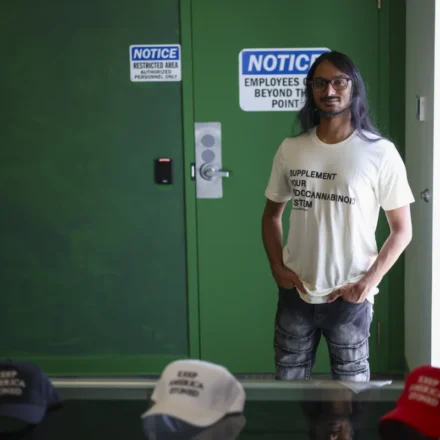
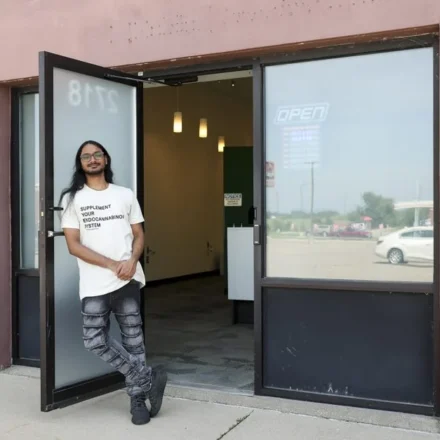
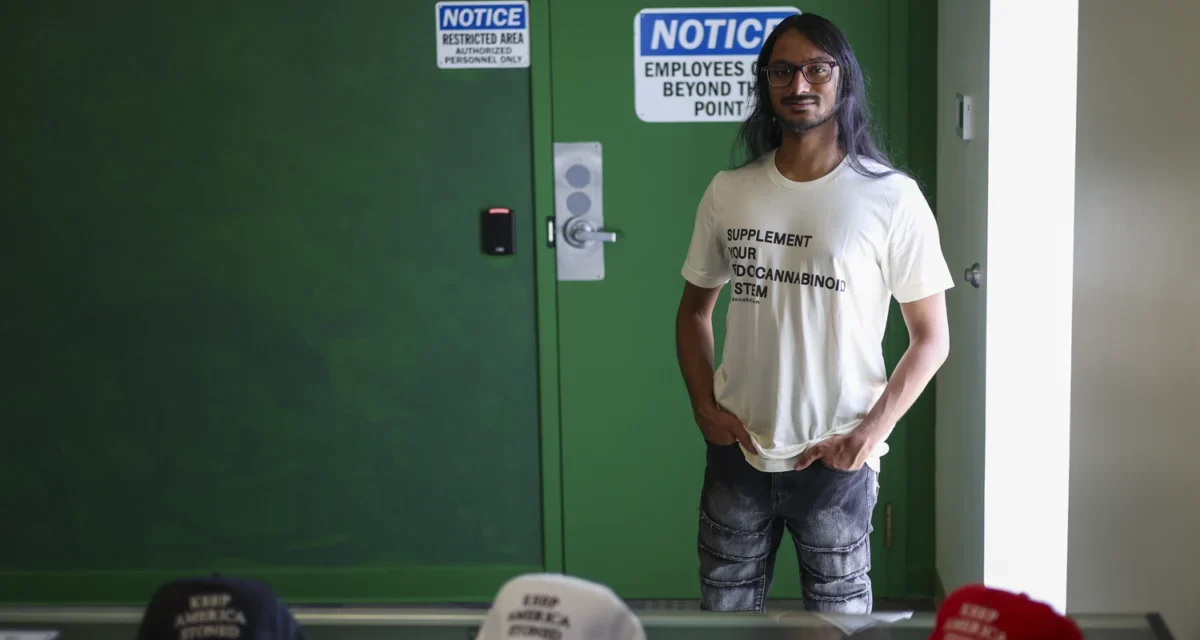
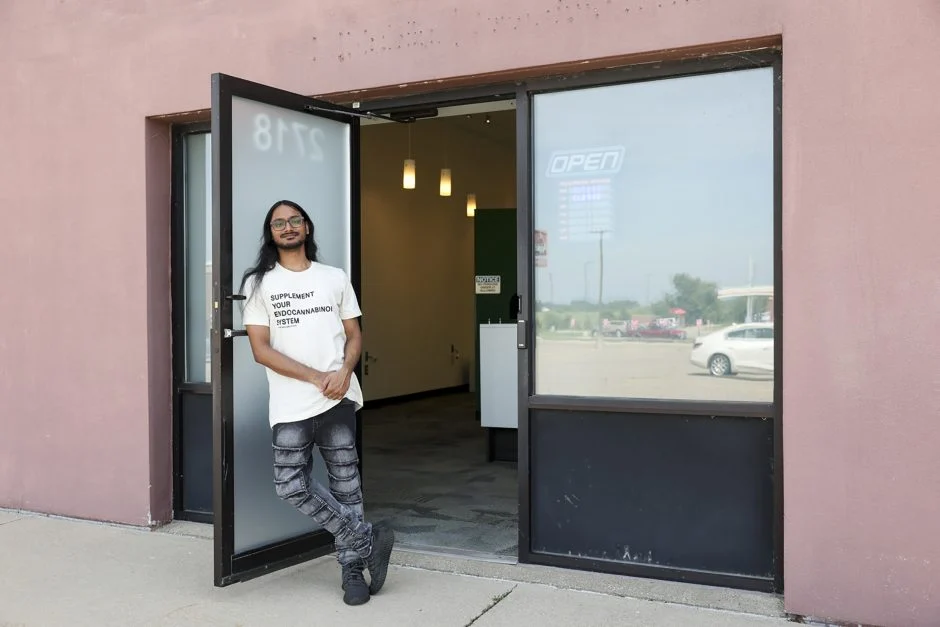
MINNEAPOLIS — For nearly two years, the intersection of West 25th Street and South Lyndale Avenue has served as a quiet observer of Minnesota’s slow-motion cultural shift. At the Loon Smoke Shop, a local fixture where the scent of nicotine and flavored vapor hangs heavy in the air, a new chapter is beginning. The shop is currently in the final stages of the state’s rigorous cannabis licensing process, signaling a move from traditional tobacco and hemp-derived products to a full-scale marijuana dispensary.
The scene at the Loon Smoke Shop—hiring "budtenders" and store managers passionate about a burgeoning industry—is a microcosm of a much larger statewide evolution. After a period of administrative delays, leadership turnover, and legislative fine-tuning, Minnesota’s recreational cannabis market is finally moving beyond its tribal-only origins.
Main Facts: The First Non-Tribal Licenses and the 2025 Outlook
The legal landscape of cannabis in Minnesota reached a critical inflection point this month. Since the signing of the legalization bill by Governor Tim Walz in 2023, the retail market has been exclusively the domain of the state’s tribal nations. However, the Minnesota Office of Cannabis Management (OCM) has recently granted final approval to five non-tribal entities, marking the first time private entrepreneurs have cleared every state-level hurdle to begin cultivation and retail operations.
Among the first wave of approved businesses are Herb-Quest, which will operate a cultivation center in Pine County, and Concentrate Labs (operating as Roots and Resin Farm), which received the green light for a cultivation site in Chisago County. On the retail front, licenses were granted to The Smoking Tree in Albert Lea, Loon Lab Extracts and Research in Isanti, and Fairwater Farm in Plainview.
According to Eric Taubel, the interim director of the OCM, the "bottleneck" phase of state bureaucracy is largely over. Taubel indicates that up to 150 non-tribal marijuana businesses could be operational by the end of 2024. In a recent interview, Taubel emphasized that the responsibility for opening doors now rests with the business owners rather than the regulators. "We’ve transitioned to the point where the onus is on the applicant and a prospective business owner," Taubel stated, suggesting that the state’s framework is finally robust enough to support rapid expansion.
Chronology: From Legislation to Implementation Struggles
The road to this moment has been paved with legislative ambition and administrative friction. When the DFL-controlled Legislature passed the cannabis legalization bill in May 2023, it was hailed as one of the most progressive frameworks in the United States. The law immediately legalized possession and home growth, but the establishment of a retail market was given a target date of early 2025.
However, the implementation proved to be the most difficult task of Governor Walz’s second term. The chronology of the rollout is marked by several key setbacks:
- May 2023: Legalization is signed into law, creating the Office of Cannabis Management.
- Late 2023: A botched initial hire for the OCM’s top position led to a formal review by the Office of the Legislative Auditor, leaving the agency without permanent leadership during its most formative months.
- January 2024: Interim Director Charlene Briner was replaced by Eric Taubel, another interim head, as the state struggled to find a permanent director to navigate the complex regulatory waters.
- June 2024: The state held its first social equity lottery. Out of hundreds of applicants, 249 winners were selected to move forward in the licensing process.
- July 2024: A second lottery was conducted for 75 winners from a pool of 569 applicants, including those who did not qualify for social equity status.
Governor Walz recently admitted that of all the "transformational" laws passed in 2023, cannabis has been the most challenging to implement. He attributed the delays to the lack of a pre-existing model. Unlike other states that allowed existing medical marijuana dispensaries to pivot immediately to recreational sales, Minnesota opted to build a new, more inclusive framework from scratch. While this slowed the initial rollout, officials argue it prevented a monopoly by large, established medical corporations.
Supporting Data: The Regulatory "Checkerboard" and Social Equity
The transition to a legal market is governed by a complex set of data points and socioeconomic goals. Central to Minnesota’s plan is the "social equity" status. To qualify for early licensing lotteries, applicants had to meet specific criteria, such as being a military veteran, having a prior conviction for a marijuana-related offense, or residing in a high-poverty area historically impacted by the "War on Drugs."
While the state has issued approvals, the data shows a "checkerboard" of local regulations that applicants must still navigate. Although Minnesota law prevents municipalities from flatly banning cannabis businesses, it allows them significant control over zoning.
- Buffer Zones: Most cities require dispensaries to be located a specific distance (often 500 to 1,000 feet) from schools, daycares, and public parks.
- Meeting Cycles: Because many city councils and county boards meet only once or twice a month, the local approval process can add 60 to 90 days to a business’s timeline.
- Labor Peace Agreements: Per state statute 342.01, any business with more than a few employees must enter into a labor peace agreement. This ensures that employees have the right to unionize in exchange for a commitment not to engage in picketing, boycotts, or strikes.
Furthermore, the state’s tax data remains a point of contention. During a recent special session, lawmakers increased the cannabis excise tax from 10% to 15%. When combined with standard state and local sales taxes, Minnesota consumers can expect to pay upwards of 20% in levies on every purchase. For comparison, Connecticut maintains a 3% excise tax, while Washington state sits at the high end of the spectrum at 37%.

Official Responses: State Leadership and Tribal Sovereignty
The Walz administration has been vocal in defending its "tribal-first" rollout. Because tribal nations are sovereign, they were able to establish their own regulations and testing facilities much faster than the state. The Red Lake Nation opened the state’s first dispensary in August 2023, followed shortly by the White Earth Nation.
"Minnesota is a national leader in its approach to cannabis and tribal nations," Taubel said. "Gov. Walz and Lt. Gov. Flanagan have been leaders in what tribes can do and recognize their inherent sovereignty."
This sovereignty has allowed tribes to enter into "regulatory compacts" with the state, permitting them to operate dispensaries off-reservation. The White Earth Nation was the first to sign such a compact, leading to the opening of tribal-run stores in St. Cloud and Moorhead.
Governor Walz has stood by Eric Taubel’s leadership during this transition, though he has stopped short of naming him the permanent director. Walz noted that every state that legalized cannabis before Minnesota has "struggled to a certain degree," and argued that Minnesota’s deliberate pace will eventually lead to a more stable market.
However, industry consultants like Leili Fatehi of Blunt Strategies offer a more nuanced view. While she acknowledges the uniqueness of Minnesota’s model, she warns that the delay in non-tribal licensing has given tribal operators a significant market advantage. "I don’t think it was anticipated that the tribal program and operations would start so far ahead of non-tribal licenses," Fatehi noted.
Implications: Market Health and the Illicit Competition
The successful launch of the first five non-tribal businesses carries significant implications for the state’s economy and its goal of eliminating the illicit market.
1. The Price of Legalization:
There is a growing concern among experts that the 15% excise tax may drive price-sensitive consumers back to the black market. Fatehi expressed "enormous concern" that the high tax rate, coupled with the costs of testing and compliance, will make legal weed significantly more expensive than "the guy down the street." If the price disparity is too great, the state may fail to meet its goal of dismantling illegal drug networks.
2. Supply Chain Dependencies:
Because non-tribal cultivation centers like Herb-Quest are only just beginning their grow cycles, the first wave of non-tribal retailers will likely have to source their product from tribal cultivators. This creates a symbiotic, yet dependent, relationship between the two sectors that will define the market for the next 12 to 18 months.
3. Economic Revitalization:
For towns like Albert Lea and Plainview, these dispensaries represent more than just a place to buy weed; they are engines of economic activity. Jacob Schlichter, founder of The Smoking Tree, is currently preparing for his final City Council hearing on July 28. He views his business as a formality at this point, expecting to bring jobs and foot traffic to a retail space that might otherwise sit empty.
4. Social Equity Efficacy:
The true test of Minnesota’s "social equity" focus will be how many of the 324 lottery winners actually make it to opening day. Winning the lottery is merely a license to apply; the capital required to secure a lease, pay for security systems, and navigate the "checkerboard" of local zoning is immense. Without state-backed grants or easier access to traditional banking—which remains difficult due to federal law—many equity applicants may find themselves "license rich but cash poor."
As the Loon Smoke Shop on Lyndale Avenue prepares to transition from a neighborhood hangout to a regulated dispensary, it serves as a reminder that Minnesota’s cannabis experiment is moving into its most visible phase. The "onus," as Taubel said, is now on the entrepreneurs to prove that Minnesota’s slow and steady approach was worth the wait.