

























































The political landscape of the United States has undergone a seismic transformation. Following a decisive "Blue Tsunami" in last week’s midterm elections, the control of both chambers of Congress and key statehouses has shifted firmly into Democratic hands. While the immediate headlines focus on the end of the Trump-era legislative agenda, a secondary, equally profound shift is occurring in the corporate boardrooms of Silicon Valley and Redmond.
For Microsoft, the world’s most valuable technology company, the election results signal an end to the era of regulatory indulgence. As Washington prepares for a new legislative session, Microsoft faces a "triple threat": an aggressive surge in congressional investigations, a mounting grassroots rebellion against data center expansion, and the potential evaporation of lucrative government contracts tied to the Department of Homeland Security.
A Chronology of Conflict: From Tech Darling to Regulatory Target
The relationship between Big Tech and the federal government has been fraught for years, but the 2026 midterms served as a breaking point.
- Early 2025: The Trump administration’s deregulation of AI and heavy reliance on private tech infrastructure for immigration enforcement became a defining feature of federal policy.
- May 2025: Tensions within the tech sector reached a boiling point when Microsoft terminated its contract with a high-profile law firm, citing the firm’s $125 million in pro bono work for the Trump administration—a move that signaled Microsoft’s attempt to hedge against political volatility.
- Late 2025 – Early 2026: Public frustration regarding the environmental impact of data centers reached a fever pitch. Reports from the Federal Reserve Bank of Dallas indicated that AI infrastructure was inflating wholesale electricity prices by nearly 7% nationally.
- November 2026: The midterm elections functioned as a referendum on the "Trump-Tech" alliance. With 40 out of 41 local ballot initiatives against data centers passing, the message to policymakers was clear: the public is no longer willing to subsidize the infrastructure of the AI revolution.
The Investigative Storm: Subpoenas on the Horizon
The most immediate threat to Microsoft is a wave of oversight that threatens to expose the company’s internal decision-making processes. Within forty-eight hours of the election, Senator Richard Blumenthal issued a formal demand for documentation regarding corporate donations to the "White House Ballroom" project—a controversial initiative funded in part by tech giants.
"They are going to need to plant new forests for all of the subpoenas we’ll be printing," Senator Ed Markey remarked on X, signaling a coordinated effort by Democratic leadership to scrutinize the quid pro quo dynamics that defined the previous administration.
The scope of these investigations is expected to expand far beyond campaign finance. Congressional committees are gearing up to probe:
- AI Training Data: How Microsoft and its partners source intellectual property to train Large Language Models (LLMs).
- Lobbying Influence: The mechanisms used by tech firms to bypass state-level regulatory hurdles during the 2025-2026 deregulation push.
- Conflict of Interest: The interplay between federal AI contracts and the private interests of corporate executives.
Supporting Data: The Cost of the AI Infrastructure Boom
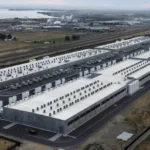
The expansion of AI is energy-intensive, and the cost of this expansion is increasingly being offloaded onto the American taxpayer. According to the Federal Reserve Bank of Dallas, the rapid proliferation of data centers has triggered a 6.9% spike in wholesale electricity prices since 2025.
For communities across the U.S., these facilities have become symbols of corporate overreach. Residents cite three primary grievances:
- Resource Depletion: Massive water consumption required for cooling high-performance computing clusters.
- Infrastructure Strain: The degradation of local power grids, leading to higher utility bills for residential users.
- Environmental Degradation: Increased noise pollution and the displacement of local ecosystems in favor of industrial-scale server farms.
Microsoft, which has struggled to keep up with Azure AI demand, now finds itself in a precarious position. CFO Amy Hood recently admitted that the company’s growth is throttled by a lack of computing power, yet every new facility planned to alleviate this bottleneck is now a target for hostile local government oversight.
Official Responses and Policy Shifts
The democratic transition is not just about rhetoric; it is about the dismantling of the "Trump Doctrine" on technology. The previous administration’s executive order, which effectively prohibited states from implementing their own AI safety standards, is now at the top of the list for repeal.
"Expect a tsunami of new rules and oversight," noted Darrell West of the Brookings Institution. The Democratic agenda, as outlined by incoming committee chairs, focuses on three pillars:
- AI Safety and Ethics: Mandatory audits for AI systems to prevent bias, ensure data privacy, and mitigate job displacement.
- Intellectual Property Protection: Legislative frameworks that would prevent AI companies from "hoovering up" copyrighted material without compensation.
- Accountability for Government Contracts: A systematic review of private-sector tech integration within federal agencies.
The ICE Contract: A Major Revenue Vulnerability
Perhaps the most significant financial risk for Microsoft lies in its relationship with Immigration and Customs Enforcement (ICE). Under the previous administration, ICE’s budget ballooned to unprecedented levels, with a $75 billion supplement in 2025 alone.
Microsoft has acted as a primary technology partner, providing Azure cloud storage for vast troves of biometric and personal data, as well as AI-driven analytical tools used in immigration enforcement. Investigative reporting from The Guardian and its partners highlighted the extent to which Microsoft’s productivity tools and servers underpin ICE’s operational capacity.
With the new Congress signaling an intent to slash the agency’s budget, Microsoft is facing a potential "revenue cliff." Analysts suggest that as the legislative climate shifts, the reputational cost of the ICE contract may soon outweigh its financial utility, forcing Microsoft to choose between its government partnerships and its broader corporate image.
Implications for the Future: A New Operating Reality
The "Blue Tsunami" has effectively ended the era of "move fast and break things" for Big Tech. For Microsoft, the implications are structural and long-term:
- Operational Friction: The ease with which Microsoft could scale its data centers and AI services has vanished. Every new project will now be subjected to environmental impact studies, community hearings, and local regulatory approval.
- Legal Exposure: The company will likely spend the next two years engaged in defensive litigation and discovery, as congressional committees use their subpoena power to force transparency regarding the company’s political and development activities.
- Strategic Pivot: To survive the new regulatory landscape, Microsoft may be forced to adopt a "safety-first" approach to AI, potentially slowing down product launches to comply with federal standards that were previously non-existent.
While Microsoft managed to maintain a veneer of independence from the Trump administration—notably through its leadership’s refusal to engage in the performative displays of loyalty seen by other CEOs—it is not shielded from the systemic changes brought by the new political guard.
As the new Congress prepares to take office in January, the message to Redmond is clear: the era of the free ride is over. Microsoft must now navigate a future defined by increased federal oversight, a hostile regulatory environment at the state level, and the potential loss of high-value government contracts. The company that once defined the digital age is now finding itself at the mercy of a political movement determined to reshape that age in the public interest.