



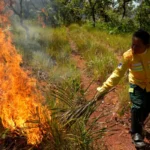

























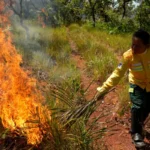











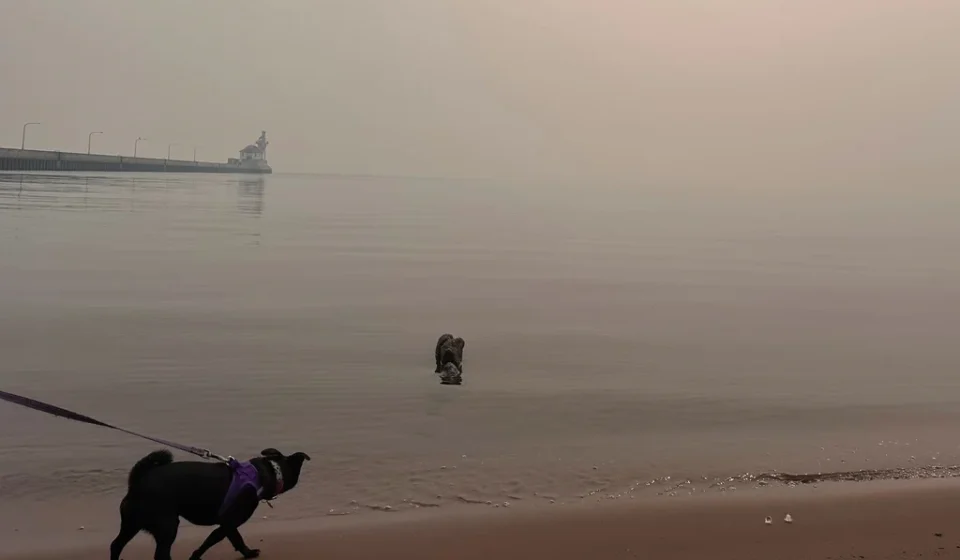

For much of the early summer, Minnesotans enjoyed a rare reprieve. While the previous several years were defined by the encroaching, acrid haze of wildfire smoke, the skies remained remarkably clear through June and well into July. That period of relative normalcy, however, has come to a sudden and dramatic end. A series of lightning strikes, followed by an intense stretch of heat and humidity, has ignited more than a dozen wildfires across northern Minnesota, including several within the pristine reaches of the Boundary Waters Canoe Area Wilderness (BWCAW).
The return of wildfire smoke is more than just a seasonal nuisance; it is an increasingly common signature of a changing climate. As the state grapples with the immediate threat of evacuations and air quality alerts, the situation serves as a stark reminder that in the modern era, the threat of wildfire is no longer a distant concern—it is a local reality.
The Chronology: From Lightning to Lockdown
The current crisis began in earnest on July 6, when a volatile storm system tracked across the northern border. While the storm brought much-needed moisture to some areas, it also carried a heavy payload of lightning. These strikes, hitting dry forest fuel in the Superior National Forest, acted as the catalyst for the current outbreak.
By Thursday, the Minnesota Incident Command System (MICS) reported more than a dozen active fires across the region. Among these, three are burning deep within the BWCAW, a federally protected wilderness area known for its interconnected lakes and dense boreal forests.
The emergency response was swift. On Tuesday, as the fires grew in size and complexity, officials made the difficult decision to close the BWCAW to the public. At the time of the closure, authorities estimated that between 6,000 and 10,000 people were currently camping or canoeing within the wilderness. Karen Harrison, a spokesperson for state and federal emergency management agencies, noted that the logistical challenge of notifying and evacuating these individuals was immense. By Wednesday, officials estimated they had reached approximately 90% of the affected visitors, though the process of ensuring everyone’s safety continued.
The firefighting efforts are being severely hampered by the very conditions that allowed the fires to ignite. Smoke density has reached levels that make aerial support—such as helicopters used for water drops—dangerous or impossible. Consequently, the fires have been allowed to spread, with officials warning that the landscape will likely see fire activity until the arrival of autumn rains or, eventually, permanent snow cover.
The Air Quality Crisis: A Statewide Impact
The environmental toll of the fires was immediate. On Tuesday, the Minnesota Pollution Control Agency (MPCA) issued an air quality alert covering a significant portion of the state, including the Twin Cities metropolitan area, the central counties, and the Arrowhead region. The alert, which remains in effect through 11 a.m. Friday, warns that the combination of wildfire smoke and existing urban air pollution can create significant health risks, particularly for vulnerable populations such as children, the elderly, and those with pre-existing respiratory conditions.
This alert is just the latest in a string of warnings that have become common in recent years. According to the Minnesota Department of Health, the state has issued more air quality alerts due to wildfire smoke in the last five years than at any other point in its recorded history. The shift toward warmer, drier, and more unpredictable summers has fundamentally altered the state’s environmental landscape, transforming what was once a rare phenomenon into an annual struggle.
Supporting Data: A Continental Problem
While the current fires in the Superior National Forest are domestic, they are inextricably linked to a much larger, continent-wide pattern. Canada, which has been experiencing one of its most severe fire seasons on record, remains the primary source of the haze that has blanketed the Upper Midwest for the past several summers.
The scale of this issue cannot be overstated. In 2023, a year described by the Minnesota State Climatology Office as the "Great American Smokeout," an unprecedented 46 million acres burned across Canada. The impact was global, with smoke particles reaching Europe and nearly 98% of Canada’s population experiencing at least one day of hazardous air quality.
Data from the Canadian Interagency Forest Fire Centre (CIFFC) indicates that there are currently hundreds of active fires burning across the northern provinces. Meteorologists at the MPCA and the National Weather Service (NWS) engage in regular, daily communication with their Canadian counterparts to track the movement of these smoke plumes. Current forecasts suggest that Minnesota could face 12 to 16 additional days of smoke-filled skies between late July and early August, depending on wind patterns and the intensity of the Canadian fires.
Official Responses and Meteorological Insight
Brennan Dettmann, a meteorologist at the NWS office in Chanhassen, reflects on the shift in Minnesota’s weather patterns. "We were spoiled to start the summer," Dettmann said, noting that temperatures were slightly below normal and humidity levels were manageable well into the first half of the year. However, that pattern shifted in July, as high pressure brought heat and humidity that sucked the moisture from the soil, priming the forest for the fires that followed.
Despite ongoing discussions regarding federal budget constraints, the NWS maintains its commitment to critical monitoring. Dettmann explains that the Chanhassen office remains fully staffed with a team of 10 to 20 meteorologists. Twice daily, at 6 a.m. and 6 p.m., the team launches weather balloons that ascend up to 20 miles into the atmosphere. These balloons, equipped with sophisticated sensors, record real-time data on temperature, humidity, wind direction, and air pressure. This data is the backbone of the models used to predict not only standard weather but the movement of smoke and the potential for fire growth.
The human element of these crises was highlighted recently when the Royal Canadian Air Force successfully evacuated 11 Minnesota teenagers and four staff members from a wilderness camp in an Ontario provincial park, located roughly 175 miles north of the Minnesota border. The rescue underscored the transnational nature of the danger.
Implications: A New Normal for the North Woods
The situation in Flin Flon, a mining town on the border of Manitoba and Saskatchewan, offers a glimpse into the precarious reality of life in the fire-prone north. Local reporter Ron Dobson notes that while this summer has been relatively "normal" compared to last year’s devastation—when fires nearly wiped out the community—the margin for error is razor-thin.
"They have one little road that goes for 100 kilometers," Dobson explained, referencing the town of Lynn Lake, which was forced to evacuate earlier this summer due to encroaching flames. "If that road gets cut off, they’re in trouble."
For Minnesota, the implications are profound. The state’s reliance on its natural resources—both for tourism and for its identity—is being tested. The BWCAW is not just a destination for outdoor enthusiasts; it is a vital ecosystem. The fact that the wilderness is now subject to the same fire pressures as the rest of the continent suggests that the "Great American Smokeout" is not an anomaly, but a recurring feature of the 21st-century climate.
As the state moves forward, the focus remains on immediate safety and public health. With firefighting resources stretched thin and the fire season likely to persist until the first heavy snows of winter, the message from officials is clear: remain vigilant. Residents are encouraged to monitor the MPCA and NWS websites for real-time updates and to take precautions when air quality reaches unhealthy levels.
The northern forests of Minnesota have burned before, and fire is a natural part of the boreal ecosystem’s life cycle. However, the intensity and frequency of these events, driven by a changing climate and a warming planet, have pushed the system into uncharted territory. For now, the people of Minnesota can only watch the horizon, wait for the winds to shift, and prepare for a future where the hazy, orange sunsets of summer have become an inescapable part of the season.