


















































A Convergence of Modernist Icons: Minneapolis Cultural Weekend Features Stravinsky’s ‘Firebird’ and Beckett’s ‘Godot’

Minneapolis is currently serving as the backdrop for a rare collision of 20th-century artistic innovation. As the Minnesota Orchestra launches its ambitious "Sound Unbound" series with a high-tech reimagining of Igor Stravinsky’s The Firebird, the Guthrie Theater is simultaneously staging a raw, existentialist interpretation of Samuel Beckett’s Waiting for Godot. Together, these two productions underscore the enduring power of modernist classics to evolve, challenge, and reflect the anxieties of our contemporary era.
The Digital Metamorphosis of Orchestra Hall
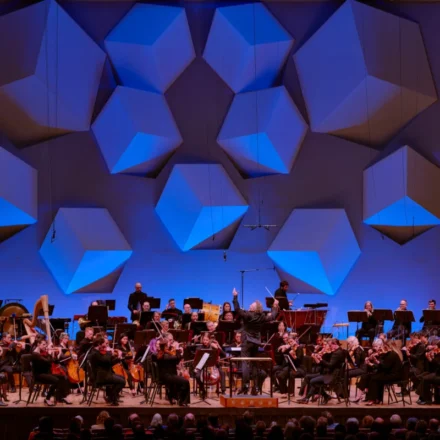
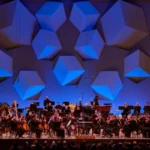
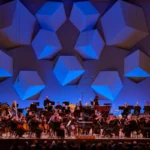
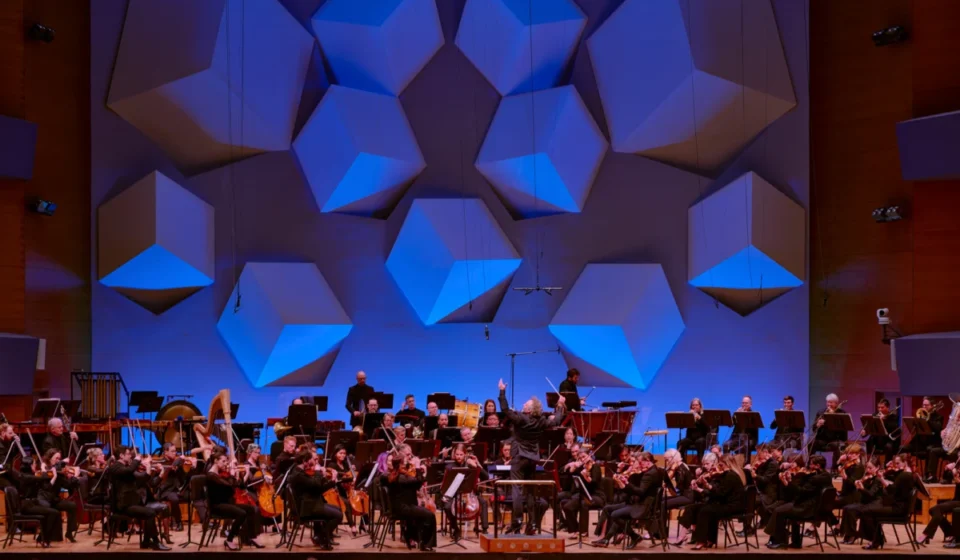
The Minnesota Orchestra’s season opener is defined by a bold marriage of symphonic tradition and cutting-edge visual technology. BAFTA-winning designer Tal Rosner has transformed the distinctive, iconic acoustic cubes that line the back wall and ceiling of Orchestra Hall into a dynamic, shifting canvas for Igor Stravinsky’s 1910 masterpiece, The Firebird.
The Intersection of Folklore and Video Mapping
Rosner, a London-based artist, is employing "video mapping"—a sophisticated technical process that utilizes precise spatial calibration to align digital projections with physical architectural features. For the Minnesota Orchestra, this means the very structure of the hall acts as the storyteller.
The piece, originally composed for Sergei Diaghilev’s Ballets Russes, recounts the folklore of Prince Ivan and his harrowing encounter with the sorcerer Koschei. To convey the narrative arc—the pursuit of the Firebird, the encounter with 12 captive princesses, and the eventual liberation—Rosner has moved away from literal representation toward a more impressionistic, metaphorical aesthetic.
"I don’t show the princesses," Rosner explained in a recent interview. "But the princesses are represented by golden ribbons." By focusing on color, rhythm, and structural variation, Rosner aims to translate the complex movements of the original choreography into a visual language that feels both coherent to the mythic source material and entirely modern in its execution.
Architectural Constraints as Creative Catalysts
For Rosner, the iconic cubes of Orchestra Hall were not an obstacle, but an essential component of the creative process. "Almost every design decision I made is rooted in the fact that the cubes are the projection surface," he noted.
This project represents a shift in Rosner’s artistic philosophy. Having started his career with ambitions to design for MTV, his path led him through television graphics and eventually to theater and orchestral collaborations. He finds the concert hall to be a unique, "blank slate" canvas, offering a scale impossible to achieve in traditional media.
Furthermore, Rosner emphasizes a collaborative, "holistic" approach. Working closely with the orchestra’s in-house lighting crew, he has abandoned the "look at me" individualistic ego of his earlier career in favor of a synchronized, team-based performance. "It’s a piece that is going to be impossible to replicate anywhere else," he said, citing the unique geometry of the hall as the defining element of the work.
Chronology of a Modernist Awakening
To understand the weight of these performances, one must look at the historical timeline of the works themselves.
- 1910: Stravinsky premieres The Firebird for the Ballets Russes. It becomes a bridge between the Romantic Russian tradition and the seismic shift toward modernism.
- 1913: Stravinsky premieres The Rite of Spring, permanently rupturing the musical conventions of the 19th century and sparking a legendary riot in Paris.
- 1948–1949: Samuel Beckett writes Waiting for Godot in French, deeply influenced by his experiences during the French Resistance.
- 1953: Waiting for Godot premieres in Paris, fundamentally altering the landscape of theater by stripping away plot-driven narrative in favor of existential absurdity.
- 2026: The Minnesota Orchestra and the Guthrie Theater align these two pillars of 20th-century thought, inviting audiences to reconsider the intersection of music, light, and endurance in an era of global polarization.
Supporting Data: The "Sound Unbound" Vision
The Minnesota Orchestra’s "Sound Unbound" series is a multi-year initiative designed to move the orchestral experience beyond the traditional "sit-and-listen" format. By inviting visual artists like Rosner to serve as co-creators, the orchestra is attempting to address the changing expectations of the modern concertgoer.
Performance Details:
- Works: The Firebird (Stravinsky), Icarus in Orbit (George Walker, 2004), and Concerto No. 2 in G minor (Prokofiev).
- Soloist: Pianist Vadym Kholodenko.
- Conductor: Thomas Søndergård.
- Dates: Friday, Sept. 25 (8 p.m.) and Saturday, Sept. 26 (7 p.m.).
- Venue: Orchestra Hall, Minneapolis.
- Pricing: Tickets range from $64 to $159.
Official Perspective: The Guthrie’s Existential Mirror
While the orchestra experiments with the visual potential of the hall, the Guthrie Theater is engaging in a deeper, more somber interrogation of the human condition. Directed by artistic director Joseph Haj, the current production of Waiting for Godot has been praised for its refusal to shy away from the play’s inherent, bleak minimalism.
The Urgency of Beckett in 2026
Beckett was notoriously protective of his scripts, dictating every silence and pause. However, Haj and his cast have found room for contemporary resonance. By framing the play within the context of today’s "hyper-polarized" world, the production asks a fundamental question: How does one maintain hope when the societal landscape appears increasingly fractured?
The production stars David Strathairn as Vladimir and Jimmy Kieffer as Estragon. Despite the rigid requirements of Beckett’s stage directions, the actors manage to cultivate a magnetic chemistry that makes the existential dread feel immediate rather than academic.
"Beckett wrote this in the wake of the world’s fight against fascism," notes the production team. By linking the play’s origins in the French Resistance to contemporary anxieties—what theorist Naomi Klein has termed "end times fascism"—the Guthrie production posits that the play is not merely a relic of 1950s absurdism, but a vital piece of political art.
Implications: The Disquieting Stir of Innovation
The juxtaposition of these two works—Stravinsky’s mythic, vibrant Firebird and Beckett’s spare, agonizing Godot—offers a window into the current state of Minneapolis’s cultural sector.
The Audience Experience
The "disquieting stir" mentioned by critics is exactly what these institutions are aiming for. Whether it is through the immersive video mapping of the cubes at Orchestra Hall or the terrifying, raw intimacy of Darron L. West’s sound design at the Guthrie, both productions reject the comfort of passive consumption.
The Role of Technology and Tradition
The technical sophistication of the Orchestra Hall production represents a trend toward "experiential" classical music. By integrating visual art that respects the rhythms of the music, the Minnesota Orchestra is attempting to make modernist scores more accessible to a digital-native audience without sacrificing the integrity of the composition.
Conversely, the Guthrie’s production of Godot moves in the opposite direction, stripping away artifice to focus on the power of the human voice and the silence between lines. Both approaches, however, serve the same end: to make the audience feel the weight of these 20th-century innovations in the present day.
Closing Reflections
As the city plays host to these performances, it is clear that the "modernist" label is no longer synonymous with "outdated." Instead, these works are being treated as living documents. Whether through the lens of a video projector or the stark, minimalist spotlight of a stage, the questions posed by Stravinsky and Beckett—about our relationship to myth, our struggle against the unknown, and the persistence of hope—remain as resonant as the day they were first posed.
For those attending these performances, the week serves as a stark reminder: art does not exist merely to entertain, but to confront. In the silence of the cubes and the waiting of the characters, Minneapolis is finding a new way to listen to the echoes of the past.