



















































For millions of Americans, three digits have become the difference between despair and a path toward recovery. Since the national launch of the 988 Suicide and Crisis Lifeline in July 2022, the service has evolved from a nascent federal initiative into a critical piece of the public health infrastructure. In Wisconsin, however, the lifeline stands at a precarious crossroads. Despite a massive surge in demand and proven efficacy in saving lives, the state’s 988 network faces an uncertain future defined by unpredictable funding, staffing shortages, and a persistent lag in in-state response rates.
The Human Impact: A First-Hand Account
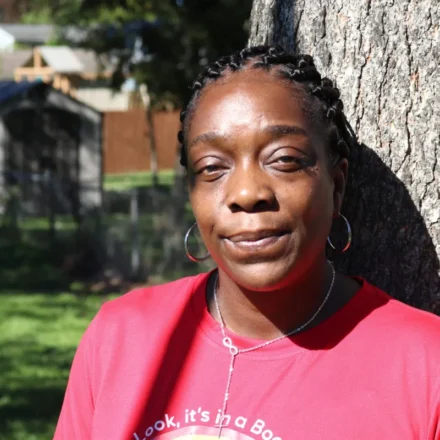
The necessity of the 988 lifeline is best understood not through budget spreadsheets, but through the experience of those it serves. Cadence Van Beek, a former student at Melrose-Mindoro High School, remembers a moment of profound mental health crisis during her sophomore year. Facing the overwhelming weight of anxiety and uncertainty, she feared that reaching out would lead to being placed on a bureaucratic waitlist or treated as a mere number.
Instead, she found a lifeline. A counselor at the other end of the line met her distress with patience and de-escalation techniques, guiding her through the immediate crisis and connecting her with vital resources in Jackson County.
"It didn’t feel rushed," Van Beek recalled. "She took her time with me, and she was very kind—just a kind soul."
Van Beek’s experience is mirrored by more than 345,000 others across Wisconsin who have sought help via text or call since the service’s inception. Her story highlights the lifeline’s role as a bridge between a moment of crisis and a sustainable mental health plan. Yet, Van Beek, now a psychology student at the University of Wisconsin-Whitewater, remains worried. She fears that without stable funding, the "kind souls" on the other end of the line will be stretched too thin to provide that same level of care to the next student in need.

A Proven Success: Data and Life-Saving Potential
The impact of the 988 system is not merely anecdotal; it is statistically profound. A recent study published in JAMA revealed that in the first two and a half years of the service’s operation, suicide rates among individuals aged 15 to 34 were 11% lower than projected. This decline translates to approximately 4,400 fewer deaths—a testament to the effectiveness of providing immediate, accessible mental health support.
Despite these figures, Wisconsin’s internal data presents a more complex picture. As of July 2026, the state handled over 11,200 calls. Of those, approximately 9,000 were answered by in-state counselors. While an 81% in-state response rate marks an improvement from the 74% recorded in January, it lags significantly behind states like Illinois and Minnesota, which consistently maintain 90% in-state response rates.
When Wisconsin’s centers reach capacity, calls are diverted to a national backup center. While these national centers provide support, they lack the intimate, localized knowledge of community-based resources—a critical component of long-term recovery. As Tana Koss, Senior Vice President of Family Services of Northeast Wisconsin, points out: "The longer a person waits on the line, the more likely they are to disengage. The sooner in that process you can have the staff available, the more likely you are to engage that caller."
The Funding Gap: A Case for Structural Reform
The central tension in Wisconsin’s 988 strategy is the lack of a permanent, dedicated revenue stream. While 911 services in Wisconsin have been supported by a stable telecommunications fee—currently 75 cents per month—since 2009, 988 relies on a patchwork of federal grants and biennial state budget appropriations.
In May 2026, Van Beek took her advocacy to the state Capitol, presenting lawmakers with a simple, evidence-based solution: "Fund 988 like 911."

This call for equity is shared by advocacy groups such as the National Alliance on Mental Illness (NAMI) Wisconsin. Julia Polk, NAMI’s advocacy coordinator, explains that the current model requires constant, exhausting lobbying every two years. "What we would love to see is that we can educate our legislators on why 988 is so important and why it’s important to fund it long-term," Polk said.
The legislative history reflects this instability. In 2025, Governor Tony Evers proposed $12.2 million for the lifeline, but the legislature authorized only $7 million. Furthermore, a bill authored by state Rep. Ben Franklin (R-De Pere) and state Sen. Jesse James (R-Thorp) aimed to provide structural support for the service but failed to secure the necessary funding, ultimately stalling in the legislative process.
The Challenge of Growing Demand
Family Services of Northeast Wisconsin, the entity operating the state’s lifeline, has consistently outperformed its initial projections. Tana Koss notes that while the organization planned for moderate growth, the actual demand has "blown all numbers out of the water."
Koss attributes this surge to two primary factors: the lingering mental health repercussions of the COVID-19 pandemic and a significant, positive shift in public perception. "I celebrate more people using the service," Koss said. "It is a reflection of reduced stigma." However, this success creates an administrative burden. The organization is currently in a cycle of constant recruitment to keep up with call volume, all while operating under the shadow of a projected $6.195 million deficit for 2028.
For the staff at Family Services, the stress is not just about the call volume; it is about the uncertainty of the next fiscal cycle. "I’m not personally attached to any route [of funding]," Koss remarked. "I think the request that I would have and advocate for is sustainability over the long haul because what we’re projecting is this growth hasn’t stopped."

Addressing the Digital Frontier: AI and Youth Mental Health
As the 988 network matures, it must also contend with the rapid rise of generative AI. Many younger users, accustomed to digital interfaces, are increasingly turning to AI chatbots for companionship or emotional support. However, experts warn that these tools are not a substitute for crisis intervention.
Megan Zimmerman, NAMI Fox Valley’s outreach program director, works to educate schools on the importance of choosing human connection over algorithmic responses. "Every suicide prevention presentation I give… I always really encourage people to instead think about 988… because then you’re getting a real live human being."
Legislators in states like Illinois are currently exploring measures to hold AI companies accountable, proposing fines for companies that fail to direct users expressing suicidal ideation toward official crisis services. Such legislative initiatives are being closely watched by Wisconsin advocates as they seek to ensure the safety of digital-native generations.
Looking Ahead: A Call to Action
The path toward a sustainable future for Wisconsin’s 988 Lifeline requires more than just stopgap measures. It demands a political commitment to treat mental health crises with the same urgency as fire or medical emergencies.
The upcoming election cycle has already brought the issue to the forefront. Candidates like Brandy Tollefson, a De Pere School Board member, have emphasized the personal and systemic importance of the lifeline. Having lost a family member to suicide, Tollefson advocates for a bipartisan approach to ensure that the funding model is robust enough to survive the political winds of the state legislature.

For Cadence Van Beek, who has moved from being a user of the service to an advocate and now a student of psychology, the mission is clear. "We always kind of assume that it’ll be there," she said of the 988 service. "The possibility that there might not be enough counselors on the line because of funding… just makes me a little worried."
As Wisconsin moves into the next budget cycle, the question remains whether the state will choose to lead or continue to trail. With lives on the line and a proven, effective service in place, the demand for stability is not just a policy recommendation—it is a moral imperative. For the thousands of Wisconsinites who reach for their phones in their darkest moments, the existence of a human voice on the other end of 988 must not be left to chance.