


























































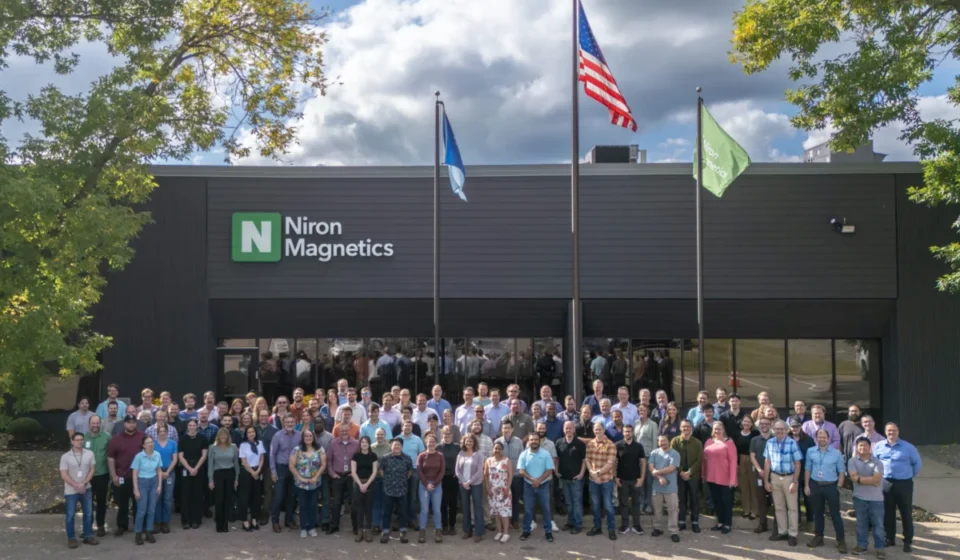
The New Iron Age: Niron Magnetics and the $1.8 Billion Quest to Revitalize Minnesota’s Iron Range

Introduction: A Paradigm Shift in the North Woods
For over a century, the rugged landscape of Northeastern Minnesota, known globally as the Iron Range, has been the backbone of American industrial might. Its taconite mines fueled the steel mills of the Rust Belt, built the skyscrapers of New York, and provided the armor for the "Arsenal of Democracy" during World War II. However, as the global steel industry evolved toward recycled feedstock and overseas production, the Range has faced a slow, painful contraction.
Today, a new industrial frontier is emerging—one that promises to marry Minnesota’s mining heritage with cutting-edge clean technology. Minneapolis-based Niron Magnetics is currently evaluating the Iron Range as the potential site for a massive, $1.8 billion manufacturing facility. This project, which would produce high-performance magnets without the need for controversial rare-earth minerals, represents more than just a capital investment; it is a strategic maneuver to decouple the United States from Chinese supply chains while offering a sustainable economic lifeline to a region in transition.
While traditional mining proposals like the Twin Metals project have sparked decades of environmental litigation and political division, Niron Magnetics offers a different path. By utilizing abundant domestic resources—iron and nitrogen—to create the magnets essential for electric vehicles (EVs), wind turbines, and defense systems, the company is positioning Minnesota at the center of the global energy transition.
Chronology: From University Lab to Industrial Powerhouse
The journey of Niron Magnetics is a quintessential story of American innovation, moving from academic theory to commercial scalability over the course of nearly two decades.
The Breakthrough (Early 2010s)
The technology underpinning Niron’s mission was born at the University of Minnesota. Professor Jian-Ping Wang, a world-renowned expert in magnetic materials, discovered a method to synthesize iron nitride—a material long known to have magnetic potential but considered too unstable for industrial use. Wang’s breakthrough involved a patented process to stabilize the nitrogen atoms within the iron lattice, creating a "Clean Earth Magnet" that could match or exceed the performance of traditional rare-earth magnets.
Pilot Success and Scaling (2014–2022)
Following the initial discovery, Niron Magnetics was spun out to commercialize the technology. The company established its headquarters and a pilot plant in Northeast Minneapolis. This phase was characterized by rigorous testing and the securing of intellectual property. During this period, the company attracted significant interest from the U.S. Department of Energy’s ARPA-E program, which recognized the strategic importance of finding an alternative to Neodymium and Dysprosium—minerals almost entirely controlled by China.
The Sartell Milestone (2023–2024)
In 2023, Niron broke ground on its first commercial-scale production facility in Sartell, near St. Cloud, Minnesota. This $10 million-plus investment, supported by the Minnesota Department of Employment and Economic Development (DEED), is designed to employ 175 people and produce roughly 1,500 tons of magnets annually. This facility serves as the proof-of-concept for the "Niron process" on a manufacturing scale.
The Vision for 2029
The current momentum is directed toward "Project Three"—the $1.8 billion "mega-plant." In early 2024, Niron hired Savills, a global commercial real estate advisor, to begin a nationwide site selection process. While other states are being considered, the Iron Range has emerged as a frontrunner due to its existing infrastructure, skilled workforce, and proximity to raw iron feedstock. The goal is to begin construction by 2028 and be fully operational by 2029, employing over 700 workers.
Supporting Data: The Economics of Magnetics and Geopolitics
To understand the scale of Niron’s ambition, one must look at the data driving the global magnet market and the current vulnerabilities of the U.S. industrial base.
The Rare-Earth Monopoly
Currently, China controls approximately 70% of global rare-earth mining and nearly 90% of the manufacturing process for permanent magnets. These magnets are the "silent engines" of the modern economy; they are found in everything from smartphone speakers and hard drives to EV motors and missile guidance systems. The U.S. largely abandoned rare-earth processing in the 1990s due to the high environmental costs of chemical separation and the low cost of Chinese exports.
The Niron Advantage
Niron’s "Iron Nitride" magnets offer several data-backed advantages:
- Resource Abundance: Unlike rare earths, which require destructive mining and complex chemical leaching, Niron uses commodity iron and atmospheric nitrogen.
- Cost Efficiency: By eliminating the need for expensive rare-earth elements, Niron aims to reduce the bill of materials for EV motors by up to 30%.
- Environmental Footprint: The production process requires significantly less energy and produces no radioactive tailings—a common byproduct of rare-earth mining.
- Capacity: The proposed $1.8 billion plant aims to produce 10,000 tons of magnets annually. For context, a typical EV requires about 2 to 5 kilograms of high-performance magnets, meaning a single Minnesota plant could supply millions of vehicles.
Financial Backing
Niron has successfully bridged the "valley of death" that claims many hardware startups. The company has raised approximately $300 million in a mix of public and private capital. Its investor roster includes:
- Automotive Giants: GM Ventures, Volvo Cars Tech Fund, and Stellantis (owner of Chrysler and Jeep).
- Tech Leaders: Samsung Ventures and Western Digital.
- Public Sector: The U.S. Department of Energy.
Official Responses: A Rare Moment of Bipartisan Unity
In a political climate often defined by gridlock, the prospect of a Niron expansion on the Iron Range has garnered a remarkable level of consensus among local, state, and federal officials.
The Economic Development Perspective
Ryan Malich, executive director of business development at the Minnesota Department of Iron Range Redevelopment and Resources (IRRR), views the project as a perfect alignment of regional strengths. "These are the types of jobs that we’re trying to add to the area—evolving, innovative technologies," Malich stated. "We have a highly skilled, available workforce. All the elements seem to line up well for this potential development."
Kevin McKinnon, Deputy Commissioner of DEED, echoed this enthusiasm, noting the trajectory from the University of Minnesota lab to the Sartell plant. "The promise, the trajectory of where they are going is very exciting," McKinnon said. "The third project would dwarf Sartell. The scale is exciting. We believe Minnesota is a compelling location for such a project."
The Corporate Vision
Niron CEO Jonathan Rowntree has emphasized that the site selection is about finding a long-term strategic partner. "This process is about identifying a partner that shares our commitment to rebuilding U.S. manufacturing capability for technologies that are essential to the global economy," Rowntree said. He highlighted that expanding domestic production is "critical to strengthening supply chain resilience."
The Political Landscape
Interestingly, the project enjoys support across the aisle. While Governor Tim Walz’s administration has opposed the Twin Metals copper-nickel mine on environmental grounds, it has aggressively courted Niron. Simultaneously, U.S. Rep. Pete Stauber, a staunch advocate for traditional mining, also supports Niron’s expansion. This rare overlap suggests that Niron is viewed not as a replacement for mining, but as a necessary evolution of the region’s industrial identity.
Implications: Environmental Stewardship and National Security
The potential establishment of a Niron mega-plant on the Iron Range carries profound implications that extend far beyond the borders of St. Louis or Itasca counties.
A New Environmental Standard
The most significant implication is the contrast with the "hard-rock" mining debate. The Twin Metals project, located within the watershed of the Boundary Waters Canoe Area (BWCA), has faced fierce opposition because of the risk of acid mine drainage. Niron’s facility, however, would likely be located on "brownfield" sites—shuttered taconite plants with existing rail and power infrastructure—outside the sensitive BWCA watershed. This allows Minnesota to contribute to the "Green Revolution" without the environmental trade-offs typically associated with extracting battery and motor metals.
National Security and the "China Plus One" Strategy
As China implements export controls on critical minerals (such as the recent restrictions on gallium and germanium), the U.S. military and commercial sectors are desperate for domestic alternatives. A Niron plant on the Iron Range would provide a "mine-to-magnet" solution entirely contained within the U.S. borders. This bolsters national security by ensuring that the components for F-35 fighter jets and naval turbines are not subject to the whims of foreign adversaries.
The Rebirth of the Iron Range
For the people of the Range, the project offers a psychological and economic shift. For decades, the narrative has been one of decline and "brain drain." The arrival of a $1.8 billion high-tech facility would signal that the region is not just a relic of the first Industrial Revolution, but a leader in the fourth. The 700-plus jobs would likely be high-wage, technical positions, requiring a mix of traditional mechanical skills and new-age chemical engineering expertise.
Conclusion: The Stakes of Site Selection
As Niron Magnetics weighs its options, the eyes of the state are on the Iron Range. The decision, expected within the next year, will determine whether Minnesota can successfully transition its storied mining district into a global hub for clean-tech manufacturing. If the project proceeds, it will serve as a global blueprint for how industrial regions can reinvent themselves—transforming raw earth and local ingenuity into the literal force that pulls the world toward a sustainable future.