









































Google’s Latest Android Update: A Strategic Leap in Accessibility and AI Integration

In a significant move to reshape the mobile user experience, Google announced on Tuesday a comprehensive suite of five new features for the Android ecosystem. These updates, detailed in the company’s latest official blog post, represent a dual-pronged strategy: enhancing accessibility for users with disabilities and deepening the integration of Gemini, Google’s generative AI, into the everyday functionality of the operating system.
As mobile technology becomes increasingly integral to daily life, Google is positioning Android not merely as a communication tool, but as an active assistant capable of mitigating physical discomfort, aiding navigation for the visually impaired, and streamlining personal organization. While some observers note that several of these features—such as motion sickness mitigation and chat customization—align with capabilities already present in Apple’s iOS, Google is betting that the power of its Gemini AI will provide a superior, more proactive user experience.
Main Facts: The Five Key Updates
The September 2026 Android feature drop introduces tools that bridge the gap between digital convenience and physical-world utility. The updates can be categorized into three primary pillars: physiological comfort, accessibility, and organizational intelligence.
1. Motion Assist: Reducing Digital Motion Sickness
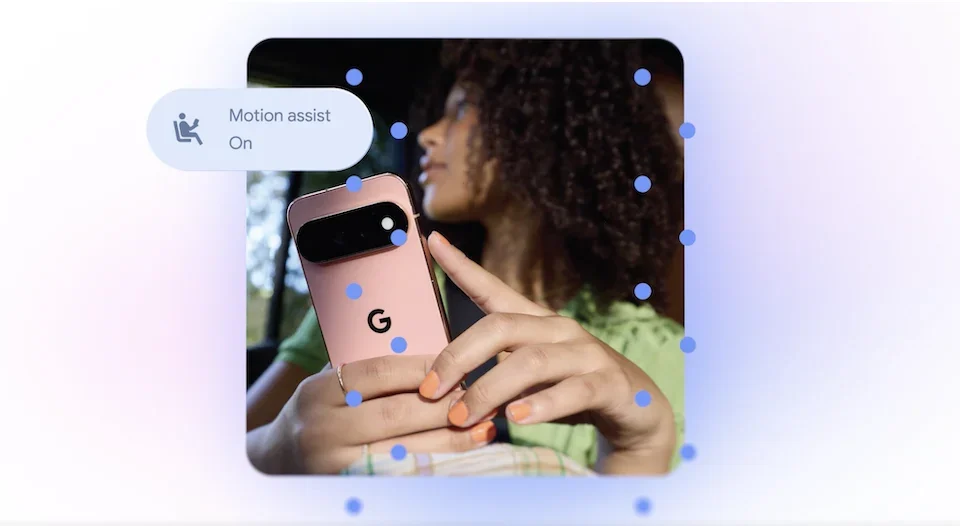
Perhaps the most innovative addition is "Motion Assist." Designed for the millions of users who suffer from car sickness when reading or using their devices while in motion, this feature introduces a dynamic bubble overlay. By responding to the vehicle’s motion, the overlay helps synchronize the user’s visual input with their inner ear’s physical perception, effectively reducing the sensory conflict that causes nausea.
2. Guided Vision: AI-Powered Accessibility
For the blind and low-vision community, "Guided Vision" represents a major leap forward. By leveraging the phone’s camera alongside Gemini’s multimodal capabilities, the device can now describe environments in real-time. Whether reading a menu in a dimly lit restaurant, verifying a food label, or identifying misplaced objects, the AI provides auditory guidance to help users center the subject in the camera frame, providing a level of independence previously difficult to achieve with standard smartphone cameras.
3. AI-Assisted Item Retrieval
Google has also updated its "Find Hub," introducing a memory-based feature. Users can now tell Gemini where they have stored specific items—such as a passport or a set of keys—and even attach a photo for visual reference. This shifts the Find Hub from a simple tracker to a searchable, AI-indexed inventory of the user’s physical possessions.

4. Google Keep Integration in Messages
Productivity is getting a boost via deeper integration between Google Keep and Google Messages. Users can now pull notes, grocery lists, and reminders directly into a chat thread. This allows for real-time collaboration on lists and tasks, eliminating the need to toggle between apps during a conversation.
5. Advanced Chat Personalization
Finally, Google is rolling out enhanced customization for Google Messages. Users can now apply unique backgrounds, color palettes, and photo themes to individual conversations, with the text bubbles automatically adjusting to maintain contrast and aesthetic harmony.
Chronology of Development: From Concept to Deployment
The path to this September 2026 release began several years ago, as Google shifted its internal focus toward "Ambient Computing"—the idea that technology should be available wherever the user is, without requiring active, manual input.
- 2024: Apple introduces "Vehicle Motion Cues," sparking a shift in how the industry views mobile-induced motion sickness. Google begins R&D on proprietary solutions that prioritize, rather than just react to, sensor data.
- 2025 (Q1–Q4): Google accelerates the integration of Gemini into Android’s core system services. During this period, testing for "Guided Vision" moves from internal labs to beta testing with disability advocacy groups.
- May 2026: Google I/O highlights the potential for Gemini to act as an "accessibility companion," hinting at the features announced this week.
- September 2026: Official global rollout of the five features to supported Android devices, starting with Android 17 for high-end handsets and extending legacy support for older models (Android 9+ for specific features).
Supporting Data and Technical Context
The efficacy of these features is rooted in the sophistication of the underlying hardware and AI models. "Motion Assist," for example, relies on the device’s internal gyroscope and accelerometer. According to preliminary testing data shared by Google, the use of a dynamic overlay can reduce symptoms of motion sickness by up to 30% in users prone to vestibular disturbances during transit.
Regarding "Guided Vision," the feature utilizes a combination of Gemini’s image-to-text processing and real-time haptic/audio feedback. Because it functions on devices running Android 9 and newer, Google is effectively bringing high-level AI capabilities to a massive, multi-year install base.
The integration of Google Keep into Messages is a strategic move to combat "app fatigue." Market research indicates that users spend an average of 4.5 hours a day on their phones, with the majority of that time split between messaging and productivity tools. By collapsing these two workflows, Google aims to increase user retention within the Android ecosystem.

Official Responses and Industry Context
Google’s leadership has framed these updates as part of a broader commitment to "universal design." In a statement accompanying the announcement, a company spokesperson emphasized that "technology should be invisible where it needs to be and hyper-present when it is required to assist."
Industry analysts have noted the competitive nature of these releases. While critics point out that Google is "playing catch-up" regarding features like chat backgrounds and motion cues, supporters argue that Google’s implementation of Gemini gives it a distinct advantage.
"Apple’s solutions are often highly polished but somewhat static," says tech analyst Marcus Thorne. "Google’s approach is to make the phone an active participant. If you tell your phone you put your passport in the blue drawer, the AI understands the intent. That is a different category of utility than just changing the color of a chat bubble."
Implications: The Future of the "AI-First" Phone
The introduction of these features signals a permanent shift in how we define a "smartphone." We are moving away from devices that act as passive screens toward devices that act as proactive agents.
1. The Normalization of Accessibility
By making accessibility features like "Guided Vision" standard in the OS rather than hidden in deep sub-menus, Google is normalizing the use of AI for physical assistance. This has profound implications for aging populations and those with disabilities, as the barrier to entry for high-end assistive tech is lowered significantly.
2. The Battle for the "Digital Memory"
The ability to store the location of items in the Find Hub marks the beginning of the "digital memory" era. As Gemini becomes more capable of indexing both digital information (emails, documents) and physical information (item locations), the smartphone becomes the primary repository for the user’s life. This, however, raises questions about data privacy and how much of a user’s physical environment should be logged by a cloud-connected AI.

3. Ecosystem Lock-in
By adding features like Google Keep integration and granular chat customization, Google is strengthening its "walled garden." When users find that their productivity tools and personal communications are seamlessly intertwined, the friction of switching to a competitor—like Apple—becomes significantly higher.
4. The Role of Generative AI in Daily Transit
The success of "Motion Assist" could influence how app developers design their own UIs. If users start to expect a "motion-friendly" mode in every app, we may see a standard requirement for all mobile interfaces to include a "dynamic stabilization" toggle, fundamentally changing the landscape of mobile UI/UX design.
Conclusion
Google’s September 2026 update is more than a simple patch. It is a strategic consolidation of AI and accessibility, designed to make the Android experience more human-centric. By tackling real-world problems—nausea, visual impairment, and the mundane frustration of forgotten items—Google is attempting to transform the smartphone from a tool we use into a partner that helps us navigate the world. Whether these features will be enough to sway users remains to be seen, but the intent is clear: the future of mobile is not just in the screen, but in the intelligence behind it.