





















































Systemic Strain: Minnesota State Approves Controversial $25 Million Redistribution to Stave Off University Insolvency

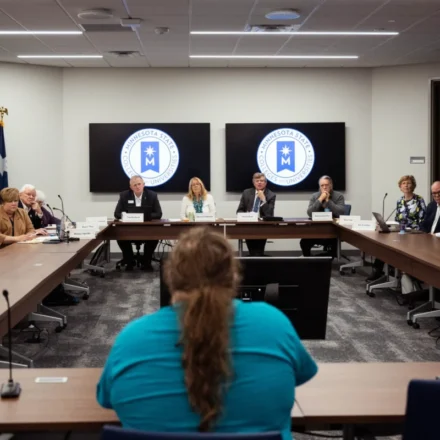
In a move described by leadership as a "last resort" to prevent total financial collapse, the Minnesota State Board of Trustees voted on Wednesday to authorize the annual transfer of up to $25 million from its healthier institutions to those currently teetering on the edge of insolvency. The decision marks a pivotal, albeit painful, moment for the 33-institution system, which comprises 26 community and technical colleges and seven universities.
The approved plan is designed as a four-year stopgap measure intended to stabilize St. Cloud State University and Bemidji State University, both of which are currently facing dire fiscal deficits. For the 2028 fiscal year alone, St. Cloud State is slated to receive $10 million in emergency aid, while Bemidji State will receive $4.8 million.
The funding for this rescue package will be sourced from across the entire Minnesota State system, with individual colleges and universities expected to contribute between $121,000 and $1.8 million annually. The burden falls heavily on the system’s community and technical colleges, many of which have spent the last decade operating on razor-thin margins.
The Chronology of a Financial Crisis
The roots of this crisis are neither sudden nor surprising to observers of the Minnesota higher education landscape. Years of persistent enrollment declines, stagnant or “constrained” state appropriations, and the rising tide of inflation have eroded the financial foundations of the state’s regional universities.
For St. Cloud State, the situation has reached a breaking point. Over the last 15 years, the university has been forced to reduce its total workforce by 40%. Since 2023, the institution has suspended admissions to nearly 200 academic programs—including majors, minors, and certificate tracks—in a desperate attempt to curtail expenditures. Despite these austerity measures, the university’s financial health remains precarious. Having already taken a $2 million emergency loan from the system office, the school is projected to fully deplete its cash reserves by the summer of 2027. Ten years ago, those same reserves held nearly $19 million.
The Board’s decision on Wednesday follows months of internal debate and revised proposals. Earlier versions of the transfer plan were met with significant pushback from community college leaders who argued that the system was effectively punishing high-performing or fiscally disciplined institutions to subsidize the structural deficits of others. In response, the system office amended the plan to exempt, or reduce the burden on, institutions with the lowest cash reserves, while mandating that recipients like St. Cloud and Bemidji submit rigorous, transparent financial recovery plans.
Supporting Data: The Cost of Institutional Survival
The sheer scale of the redistribution effort highlights the "spread thin" nature of the Minnesota State system. Among the contributors, Minnesota State University-Mankato will shoulder the largest single burden, contributing $1.8 million in the first year.
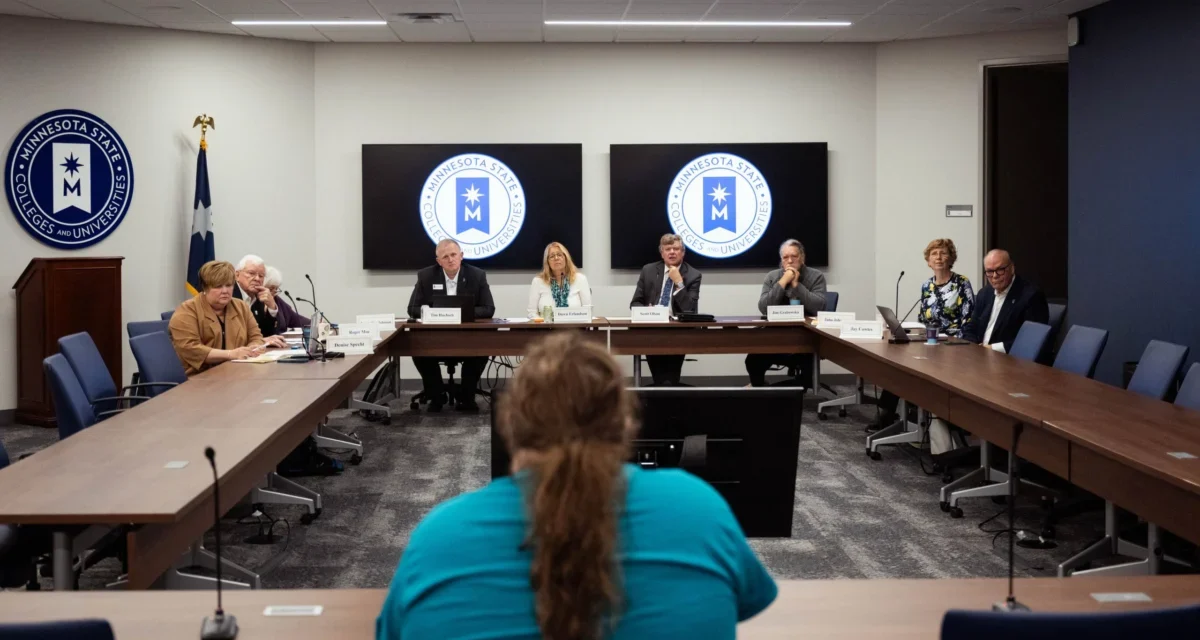
For the smaller institutions, the impact is even more tangible. Michael Berndt, who serves as president of both Dakota County Technical College and Inver Hills Community College, testified before the Board regarding the implications for his campuses. Together, those two institutions serve approximately 6,600 students. Under the new mandate, they are expected to contribute $747,533 to the emergency fund.
Berndt’s testimony captured the sentiment of many campus leaders who feel caught between two equally damaging options:
"It’s frankly demoralizing to our employees to see the outcome of our work significantly reduced by seeing our allocation dollars reduced," Berndt told the trustees. He noted that his colleges have already weathered years of deferred maintenance, budget freezes, and increasing class sizes. While he conceded that the final proposal was "stronger and more thoughtful" than initial iterations, he emphasized that the political and internal cost of explaining this funding diversion to local stakeholders, students, and faculty remains a significant hurdle.

Official Responses and the "Less Damaging" Path
The debate during Wednesday’s meeting was characterized by a somber pragmatism. There were no illusions about the long-term sustainability of the transfer plan.
Edward Inch, president of Minnesota State University-Mankato, spoke on behalf of the system’s university presidents, acknowledging the gravity of the situation. "It’s not a choice that gets made between a good idea or a bad idea," Inch stated. "It’s competing choices of things that are damaging or less damaging." According to Inch, the system must accept that there is a "price to be paid for the whole system" to ensure that its regional universities do not collapse.
Trustee Roger Moe echoed this sentiment in his remarks supporting the measure. "We take the tough medicine, and hopefully we can get this thing corrected over the years coming ahead," he said.
Bill Maki, the system’s vice chancellor for facilities and finance, offered the most sobering assessment of the move. He confirmed that every dollar diverted from an institution represents a negative impact on that school’s ability to serve its own students. "It really indicates that we have a situation where we have significant financial challenges at a couple institutions, and we don’t have a lot of levers to deal with it," Maki admitted. He noted that while the transfer is necessary, the "most ideal" scenario would be for the state legislature to intervene with direct support.
Broader Implications: A System in Transition
The emergency transfer plan is explicitly intended to serve as a bridge to a larger, more comprehensive transformation. Minnesota State leadership is currently developing a long-term strategic plan that may include radical departures from the current status quo. Among the options being considered are the closure or consolidation of campuses, the aggressive shedding of excess real estate, a complete redesign of the state’s higher education funding formula, and the centralization of administrative functions like IT and cybersecurity.
In addition to the $25 million transfer plan, the Board approved a separate measure to address the system’s physical footprint. Over the next six years, $24.3 million will be siphoned from the equipment budgets of all institutions to fund the demolition of underutilized or obsolete campus buildings. The goal is to reduce long-term utility and maintenance costs, which have become a growing drain on shrinking operational budgets.
The financial pressure is expected to culminate in a massive systemic shortfall. Projections indicate that the Minnesota State system could face a deficit of nearly $100 million by the summer of 2028. Consequently, the Board is preparing a $65 million one-time budget request for the state legislature, which includes the $25 million to be distributed to the struggling schools.
The Legislative Hurdle
The system’s reliance on legislative intervention comes at a difficult time. Earlier in 2026, thousands of students faced reduced financial aid due to legislative inaction, leaving many to wonder if the state is prepared to prioritize the stability of the public college system.
For now, the system remains in a state of managed decline. The transfer of funds—described as a "bridge"—is a gamble that the system can survive long enough to restructure itself before the $25 million annual drain permanently compromises the quality of education across the state’s community and technical colleges. As the board looks toward 2028, the central question remains: can the system innovate fast enough to survive the demographic and fiscal headwinds, or will the "tough medicine" of today simply lead to a more hollowed-out system tomorrow?
The eyes of faculty, staff, and students are now turned toward the State Capitol, where the fate of the $65 million request will determine whether this emergency transfer is the beginning of a recovery or merely the first of many difficult cuts to come.