
























































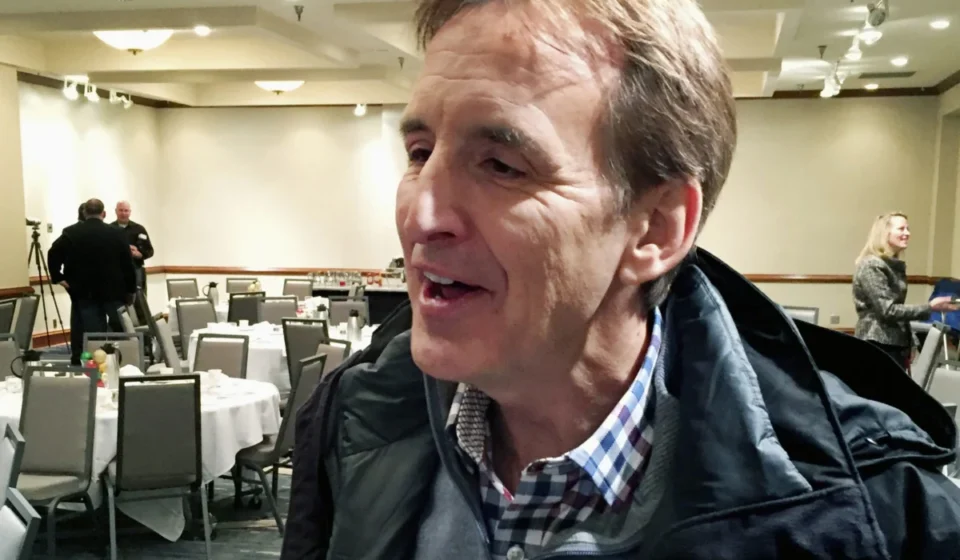

In the corridors of Washington, few political figures possess the unique blend of Midwestern pragmatism and national-stage experience that Tim Pawlenty brings to the table. A former two-term governor of Minnesota and a 2012 presidential contender, Pawlenty has spent much of the last decade navigating the shifting tides of the Republican Party. Today, he finds himself at the helm of the Solar Energy Industries Association (SEIA), stepping into the role of chief executive at a moment of profound uncertainty for the renewable energy sector.
As the industry grapples with the fallout of a major political reversal—the erosion of the legislative framework established by the 2022 Inflation Reduction Act—Pawlenty is spearheading a strategy designed to decouple solar energy from the polarized climate wars. His mission is to reframe solar not as a partisan environmental project, but as a pillar of national security, economic sovereignty, and the protection of private property rights.
The Chronology of a Political Pivot
The current landscape for solar energy is a tale of two eras. Following the 2022 passage of the Inflation Reduction Act (IRA), the solar industry experienced a period of unprecedented optimism. Developers mobilized across the country, fueled by tax credits and a federal mandate to accelerate the energy transition. This period of rapid expansion was marked by record-breaking installation numbers and a surge in domestic manufacturing investments.
However, the political winds shifted decisively in 2024. With a Republican sweep in Washington, the legislative achievements of the previous administration were subjected to a rigorous and, in many cases, destructive overhaul. Last year’s "One Big Beautiful Bill" Act—a centerpiece of the current administration’s legislative agenda—gutted many of the climate-specific tax incentives that had underpinned the solar boom.
Pawlenty, who assumed his role at the SEIA in June, acknowledges the difficulty of this transition. "The current state is relatively bleak," he admitted during an onstage interview at Canary Media’s Climate Week NYC summit. Yet, his rhetoric is not one of resignation. Drawing on his years in the executive branch, he views the current turbulence as a temporary friction point rather than a terminal decline. "Nothing stays the same in politics," he noted, "and there is hope in what is to come in the future."
Supporting Data: Why Solar Persists Despite the Headwinds
Despite the legislative setbacks in Congress, the fundamental economic argument for solar power remains remarkably robust. Data from the last several years indicates that solar is currently the leading source of new electricity generation in the United States. This trend is driven by an "unbelievable, exploding demand" for energy across the country, fueled by the rise of data centers, the electrification of industry, and an aging electrical grid that requires massive capacity upgrades.

Furthermore, the domestic manufacturing landscape has undergone a radical transformation. While early solar industry growth was heavily reliant on imports, particularly from China, recent trade policies and the rapid expansion of U.S.-based manufacturing facilities have significantly altered the supply chain. Pawlenty points out that the U.S. has effectively decoupled from Chinese panel reliance, thanks to a combination of strict trade protections and the maturing of domestic battery and solar cell factories.
Even within the current administration’s budget, which reduced some installation-side incentives, the manufacturing-side support has remained largely intact. This signals a strategic preference within the Republican coalition for "made in America" energy assets, a shift that the SEIA is actively leaning into under Pawlenty’s leadership.
The Strategic Shift: Communicating in Plain English
One of the primary challenges for the solar industry has been its tendency to communicate in dense, technocratic jargon—a practice that often alienates potential allies in conservative circles. Pawlenty’s arrival at the SEIA represents a departure from this approach. He is deliberately pivoting to a vocabulary that emphasizes traditional conservative values.
His argument for solar rests on three pillars:
- National Security: "Iran can’t block the sun," Pawlenty stated. By positioning renewable energy as an antidote to foreign energy dependence, he appeals to a hawkish wing of the party that prioritizes energy independence as a matter of national survival. By producing power domestically, the U.S. reduces its exposure to the volatility of global markets and the influence of adversaries like Russia or China.
- Economic Competitiveness: Pawlenty argues that solar and storage are now the most cost-effective forms of energy available. He posits that the role of the SEIA is not to beg for subsidies, but to present policymakers with the "current facts." Once the outdated narratives are stripped away, the economic case for solar becomes difficult for any fiscal conservative to ignore.
- Private Property Rights: As the solar buildout moves into rural America, it has met with resistance from local communities and zoning boards. Pawlenty, drawing on his background in a major farm state, advocates for a "land rights" approach. He argues that farmers should have the freedom to decide how to utilize their own land, whether that means planting corn or hosting solar panels.
Implications: The Quest for Durable Policy
The ultimate goal of Pawlenty’s strategy is the creation of "durable" policy. In an era of political whiplash, where major legislative acts are reversed every few years, the solar industry faces a crisis of stability. Investors are hesitant to commit capital when the ground rules shift with every election cycle.
"It’s very tempting to just say, ‘Let’s roll whenever we can roll,’" Pawlenty remarked, "but I think it’s wise to take a half a step back and ask: Are we advocating for policies that are likely to survive political turbulence and change?"

This philosophy suggests that the industry may be willing to accept trade-offs in the short term—such as increased trade protections or the scaling back of specific tax credits—if it results in a more stable, long-term regulatory environment that transcends partisan shifts.
The focus on rural engagement is particularly critical. With 87% of U.S. clean energy generation now occurring in rural areas, the "social license" to operate has become just as important as the political license. By framing solar as a potential boon for the rural economy—rather than an imposition from urban centers—Pawlenty hopes to mitigate the misinformation that has fueled local bans and restrictive zoning laws.
Looking Toward the Horizon
The path forward for the solar industry is undeniably difficult. The loss of federal support in the "One Big Beautiful Bill" Act has forced a period of painful readjustment for many developers. However, the energy transition is not merely a matter of policy; it is a matter of physics and economics. The demand for reliable, cheap power is at an all-time high, and the technology to meet that demand is more affordable than ever.
Tim Pawlenty’s tenure at the SEIA marks a significant transition point. By bringing a seasoned Republican operative into the heart of the renewable energy sector, the industry is signaling that it is ready to move beyond the climate-only narrative. It is now betting that the future of solar will be written not just in the language of environmentalism, but in the language of national security, economic autonomy, and the fundamental right of Americans to harvest the resources on their own land.
Whether this pivot will be enough to restore the momentum lost in the 2024 political shift remains to be seen. But in the words of the new SEIA chief, the facts are on the side of the industry. The challenge now lies in ensuring that those facts are heard, understood, and ultimately integrated into a durable American energy policy that can survive the turbulent, ever-changing nature of the national political scene.