














































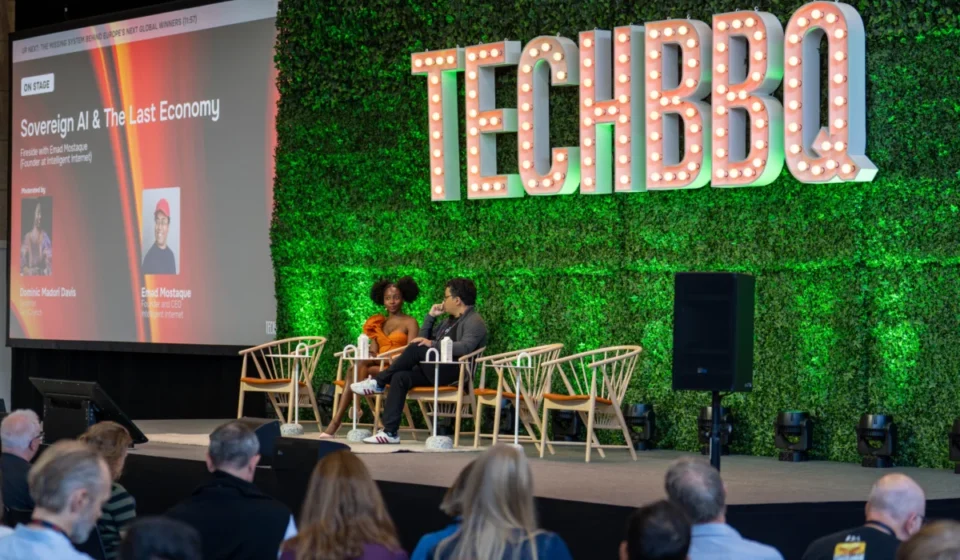

At this year’s TechBBQ in Copenhagen, the atmosphere was a curious blend of Nordic pragmatism and existential anxiety. While the annual conference is traditionally a celebration of innovation, the conversation among the investors, founders, and operators gathered in the Danish capital shifted away from the typical "what to build" rhetoric. Instead, the discourse was dominated by a more pressing, geopolitical question: Who actually controls the engines of the artificial intelligence revolution?
Under the theme "Emerging from Agency," the conference served as a microcosm for a broader European awakening. As the continent grapples with its reliance on U.S. and Chinese technological infrastructure, the desire for "digital sovereignty" has moved from the peripheral musings of policymakers to the center of boardroom strategy.
The Catalyst: A Wake-Up Call from Anthropic
The urgency of the discussion was punctuated by a recent, tangible disruption. Earlier this year, Anthropic made its AI models, Mythos and Fable, unavailable to users across Europe. For many startup executives, this was not merely a technical hiccup; it was a visceral demonstration of vulnerability.
For one startup leader at the conference, the outage caused immediate, significant disruption to his software team’s development pipeline. While other attendees adopted a more stoic "wait and see" approach—arguing that relying on foreign powers is a manageable, albeit imperfect, reality—the sentiment among the broader ecosystem was clear: the current model of "renting" intelligence from overseas giants is inherently unstable.
This dependency has prompted a serious reevaluation of what it means to own the foundational models and the physical infrastructure—the GPUs, the data centers, and the energy grids—that underpin the AI wave.
The Human Factor: Deciding What to Yield
Ellen de Brever, an angel investor and head of partnerships at the Novo Nordisk Foundation Cellerator, observed that the shift in tone at TechBBQ was profound. "The debates weren’t about smarter machines, but about human judgment and who gets to stay in the driver’s seat," she noted as the event concluded on August 27.
The central thesis of the conference was that the rise of AI agents is not a story about machines acquiring independent agency; it is a story about humans deciding which parts of their cognitive and operational autonomy they are willing to surrender. As de Brever put it, "The age of AI agents is a story about humans deciding what to give up."
This theme rippled through a diverse array of sessions, from the future of women’s health technology to a pivotal summit on how the Nordic and African ecosystems can forge deeper ties in innovation and capital. Yet, regardless of the vertical, the subtext remained the same: How do we retain agency in an increasingly automated world?
Sovereignty, Privacy, and the "Data Apparatus"
One of the most highly attended and debated sessions was a panel moderated by this author featuring Signal President Meredith Whittaker. The discussion, which interrogated the compatibility of privacy and AI, provided a sharp critique of the current trajectory of the industry.
Whittaker was unequivocal in her opposition to the integration of AI assistants directly into operating systems—a trend exemplified by ChatGPT’s deep integration with platforms like iMessage. She characterized the current AI gold rush as a "data collection apparatus," suggesting that AI labs are employing sophisticated marketing to obscure the "collateral consequences" of massive data harvesting.
"There is still a huge market need for privacy," Whittaker asserted. "And particularly with the sovereignty concerns, we will have customers here." Her stance resonated with a European audience increasingly wary of the surveillance-capitalism models currently exported by Silicon Valley.
The Power Struggle: Emad Mostaque on Control
The debate intensified during a panel with Emad Mostaque, co-founder of Stability AI and Intelligent Internet. The discussion moved from the functional to the political, centering on the economic impact of an agentic workforce.
Mostaque offered a stark, unfiltered assessment of the power dynamics at play. "Sovereignty is the ability to resist power being exerted over you," he stated, pointing to the concentration of AI development in the hands of a few private labs. He argued that as AI becomes the backbone of state functionality, the control of these models becomes synonymous with the control of the state itself. "Inevitably, every country will be run by AI," Mostaque predicted. "And the person that controls the AI controls the country."
This perspective highlights the existential stakes for Europe. If the continent fails to develop its own sovereign AI capabilities, it risks becoming a digital vassal, subject to the algorithmic priorities and political constraints of foreign powers.
The Societal Shift: Beyond the Technological Revolution
The implications of these developments extend far beyond the economy. Mia Negru, advocacy and engagement director for the nonprofit Life With Artificials, emphasized the profound societal shifts occurring beneath the surface of the tech discourse.
"If intelligent agents perform cognitive work and robots increasingly perform physical work, we may be approaching something much bigger than another technological revolution," Negru shared. She suggested that society is at an inflection point where fundamental concepts—ownership, work, democracy, and economic participation—must be entirely redefined. The ultimate question, according to Negru, is who will be permitted to participate in this new social order, and on what terms.
The Nordic Hub: Innovation amidst the Networking
Despite the heavy, often somber, nature of these debates, TechBBQ maintained the spirit of collaboration that defines the Nordic tech scene. Between the panels, the conference provided ample space for the "human element."
From rooftop barbecues hosted by the likes of Nvidia, OpenAI, AWS Startups, and Lovable, to more intimate gatherings at local cocktail bars like Bird, the event was a testament to the resilience of in-person relationships. Conversations flowed from the geopolitical implications of GPU scarcity to the practical advancements in women’s brain health and the rapid growth of Denmark’s own specialized tech hubs.
The speakers’ dinner, held on a quiet island off the coast of Copenhagen, offered a moment of respite. Surrounded by the international press and the ethereal glow of fire dancers, the intensity of the day’s discussions seemed to soften.
Conclusion: The Persistence of Human Connection
As the event drew to a close, the final takeaway was perhaps the most human one. In an industry obsessed with synthetic intelligence and the automation of everything, the value of face-to-face interaction remains the bedrock of progress.
"In a room full of conversations about machines, the most memorable moments still come from the simplest thing," said de Brever. "Human connection, face-to-face, building relationships, sharing ideas, and reminding each other of what technology can never quite replace."
As Europe moves forward, the path to technological sovereignty will be paved with complex policy decisions, massive infrastructure investments, and a relentless focus on keeping the "human in the loop." The conversations in Copenhagen proved that while the machines may be getting smarter, the people building them are more determined than ever to ensure they remain the masters of their own destiny. Whether Europe can translate this collective will into a concrete, sovereign AI reality remains the defining challenge of the coming decade.