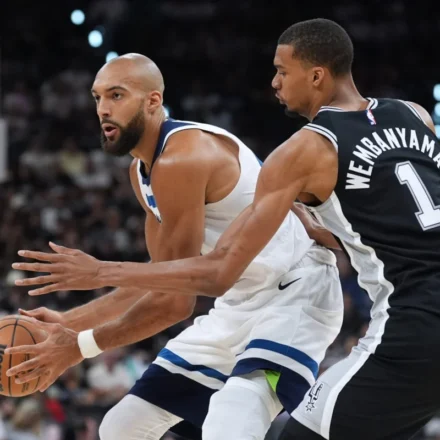









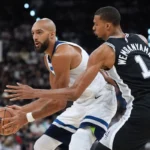







































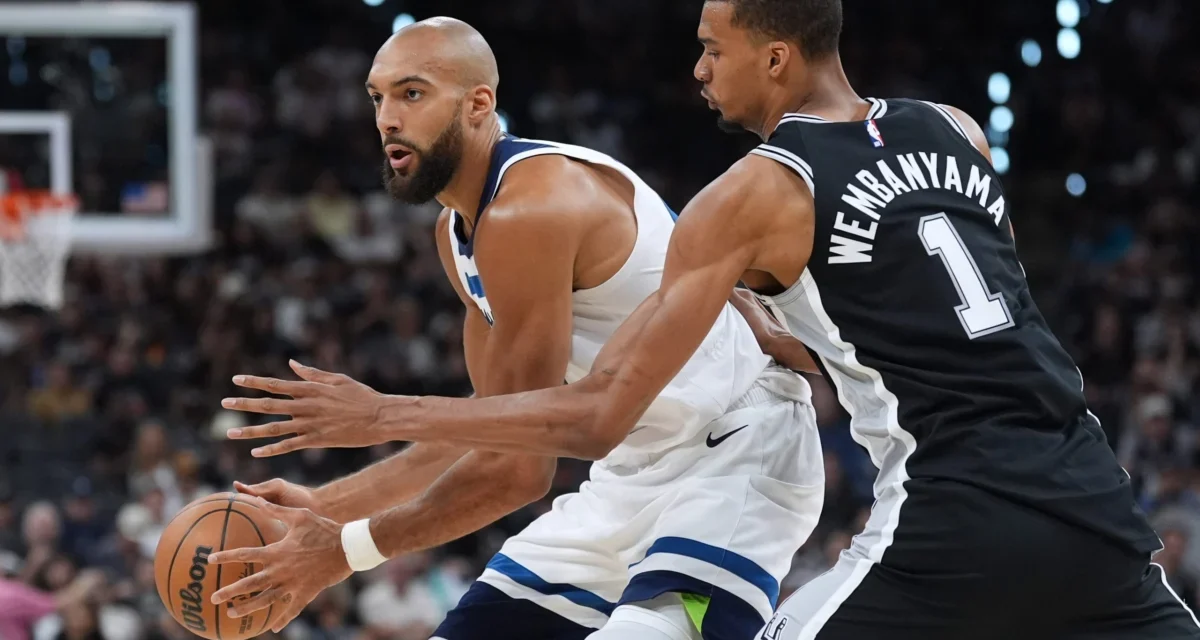




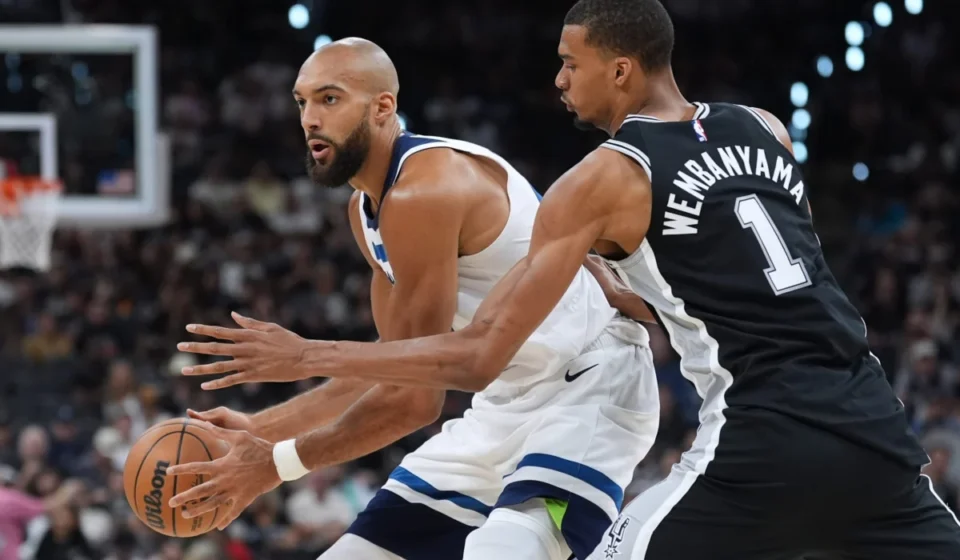

As the Minnesota Timberwolves emerged from their first official practice of the 2026-27 NBA season last month, the visual contrast within the locker room was impossible to ignore. Standing among a roster dominated by players 26 and under, 34-year-old center Rudy Gobert cut a distinct figure. With his head shaved and a dark, refined goatee, he drew a playful quip from head coach Chris Finch, who joked that the Frenchman resembled a character straight out of a Russian crime thriller.
When asked how it felt to be the elder statesman in such a youthful environment, Gobert offered a bemused, knowing smile. “It is interesting,” he replied. “But I feel wise and fresh at the same time. It is a good place to be.”
As the team navigates its final week of preseason, that "place" has become the focal point of the franchise’s championship aspirations. While the headlines have been captured by the high-octane arrival of LaMelo Ball, the reality of the Timberwolves’ campaign rests on a singular, precarious pillar: the sustained health, defensive brilliance, and philosophical grounding of Rudy Gobert.
The Cost of Innovation: A Roster Reconfiguration
The Timberwolves’ front office orchestrated a bold, high-stakes gamble this offseason to bring LaMelo Ball to Minneapolis. The trade was designed to provide superstar Anthony Edwards with a creative playmaker, injecting pace and aesthetic brilliance into an offense that has at times struggled with stagnation.
However, the cost of acquiring a player of Ball’s caliber was steep. To clear the necessary salary-cap space, the front office engaged in a ruthless shedding of assets. Julius Randle was shipped out for minimal return, and the team parted ways with fan-favorite Naz Reid, attaching draft capital to finalize the deal with the Charlotte Hornets.
The strategic fallout of these moves is significant. For the past two seasons, the combination of Randle and Reid provided the Wolves with a luxurious safety net—two power forwards capable of sliding into the center spot to provide quality minutes whenever Gobert rested. With their departure, the team has effectively gutted its frontcourt depth, leaving a massive, unproven void behind their star center.

The Baptism of Joan Beringer
The responsibility of backing up a four-time Defensive Player of the Year has now fallen to 19-year-old French prospect Joan Beringer. The internal consensus on Beringer is glowing; he possesses the raw dimensions, basketball IQ, and sacrificial work ethic to become a legitimate force in the NBA. Yet, his resume is as thin as the air in the Minnesota winter.
Beringer’s development path has been unorthodox. A late bloomer who pivoted from soccer and judo to basketball at age 14, he arrived in the NBA with fewer than 60 games of professional experience across the EuroCup and the Adriatic League. His rookie campaign last season yielded a mere 314 minutes of NBA action, supplemented by just three games with the Iowa Wolves in the G League.
Now, he is being tasked with anchoring the defense for 15 to 20 minutes a night for a team with title-contending expectations. Watching him in the preseason is a study in contrasts: one moment, he displays a fluid grace that suggests a bright future; the next, he suffers from the "anxious gaffes" inherent to a teenager thrust into the league’s most demanding defensive system. The gap between knowing the playbook and mastering the spontaneous, split-second rotations of NBA defense remains a chasm Beringer has yet to bridge.
The "Non-Rudy" Minutes: A Persistent Vulnerability
The math regarding the Timberwolves’ success is unforgiving. Over the last four seasons, Gobert has averaged 32.3 minutes per game, appearing in roughly 73 out of 82 contests. If he cannot maintain that workload, or if he suffers an injury that forces him to miss extended time, the team’s defensive floor is likely to collapse.
Coach Chris Finch has long referred to Gobert as a "mistake eraser," a player whose unique ability to read the floor and coordinate rotations allows his teammates to gamble more aggressively on the perimeter. When Gobert exits the game, that defensive scaffolding vanishes. With the departure of seasoned veterans like Randle and Reid, the "non-Rudy" minutes—a point of extreme focus for the coaching staff last year—now represent a glaring liability.
While the coaching staff has toyed with alternatives—such as playing the 6-foot-9 Trey Lyles or moving Jaden McDaniels into a zone-heavy scheme—none offer the security of a true rim protector. Should the burden prove too heavy, the team may be forced to utilize its 15th roster spot to hunt for veteran insurance, but that would be a reactive measure in a season that demands proactive dominance.

Leadership and the "Stoic" Standard
Perhaps the most overlooked element of the 2026-27 Timberwolves is the evolution of the team’s internal culture. In his preseason assessment, Chris Finch expressed concern regarding the loss of veteran voices like Mike Conley, Joe Ingles, and Kyle Anderson—players who "spoke Rudy," acting as cultural conduits between the center and the rest of the roster.
Yet, the younger core seems to be learning the language on their own. This summer, Anthony Edwards led a team-building trip to France, a significant departure from previous years where Gobert’s invitations were frequently declined. This gesture, coupled with Ayo Dosunmu’s recent five-year commitment and the growing synergy between McDaniels and Gobert, suggests a team finally maturing.
Gobert’s own philosophy has been his armor. A dedicated student of Stoicism, he finds his strength in the teachings of Marcus Aurelius. “It is about finding your own type of leadership and your own purpose,” Gobert noted. “Control what you can control and what I can control is how I show up every day.”
Implications: The Season Ahead
The Timberwolves are entering a season defined by a paradox: they are more talented and creative on the offensive end than they have been in years, yet they are more fragile on the defensive end than at any point since the inception of the Gobert era.
The success of this team will not be determined by the flash of LaMelo Ball’s passes or the explosive scoring of Anthony Edwards, but by the stoicism of their center. The coaching staff has made it clear that it is time for the team’s young leaders to "take the diapers off" and exhibit professional maturity. If they succeed, they will be following the blueprint left by a player who has spent his career silencing critics through sheer, obsessive consistency.
If the young Timberwolves can mirror the discipline of their veteran center, they may find that the "mistake eraser" is the only thing standing between them and a deep, historic playoff run. If they falter, the burden on the 34-year-old’s shoulders will only increase—and so too will the stakes of the gamble the organization made this past summer. As the regular season approaches, one thing remains certain: the Timberwolves will only go as far as their defensive anchor allows them to, and Rudy Gobert is ready to hold the line.