

























































The Silent Architect of the Voice AI Revolution: Inside Treble’s $40 Million Bid to Simulate Reality

The gold rush in artificial intelligence has moved beyond simple text generation and image synthesis. Today, billions of dollars are flowing into the "Voice AI" sector—a competitive race to dominate the way humans interact with machines. From sophisticated meeting notetakers and automated customer service agents to the next generation of augmented reality (AR) smart glasses, voice is rapidly becoming the primary interface for the digital world.
However, as AI labs rush to release more powerful models and hardware manufacturers scramble to embed these brains into physical devices, a critical bottleneck has emerged: the challenge of acoustic reality. How do you train a device to filter out the cacophony of a crowded restaurant to hear a specific user? How do you ensure a robotic assistant understands a command in a room with complex echoes?
Enter Treble, an Iceland-based startup that is quietly positioning itself as the foundational layer for the next era of audio-based intelligence. By leveraging high-fidelity physics simulations, Treble is solving the "data problem" that has long plagued voice AI. With a fresh $18 million in Series A extension funding, bringing its total capital raised to over $40 million, the company is scaling its infrastructure to support industry giants like Amazon and Logitech.
The Core Challenge: Why Audio AI is a Data Problem
For the past decade, the AI boom has been fueled by the mass scraping of the internet. Text, images, and videos were ingested in bulk to train Large Language Models (LLMs). But sound is fundamentally different. Internet-scraped audio is often low-fidelity, poorly labeled, or tainted by background noise, making it insufficient for training the high-precision voice interfaces of tomorrow.
"Audio AI is really a data challenge, and this is where the most opportunities to enable next-generation models and hardware lie," says Finnur Pind, co-founder of Treble. "To date, pretty much all sound-related AI has been made from recordings and data scraped from the internet. We believe that accurate physics simulation can be an alternative way to create data for sound."
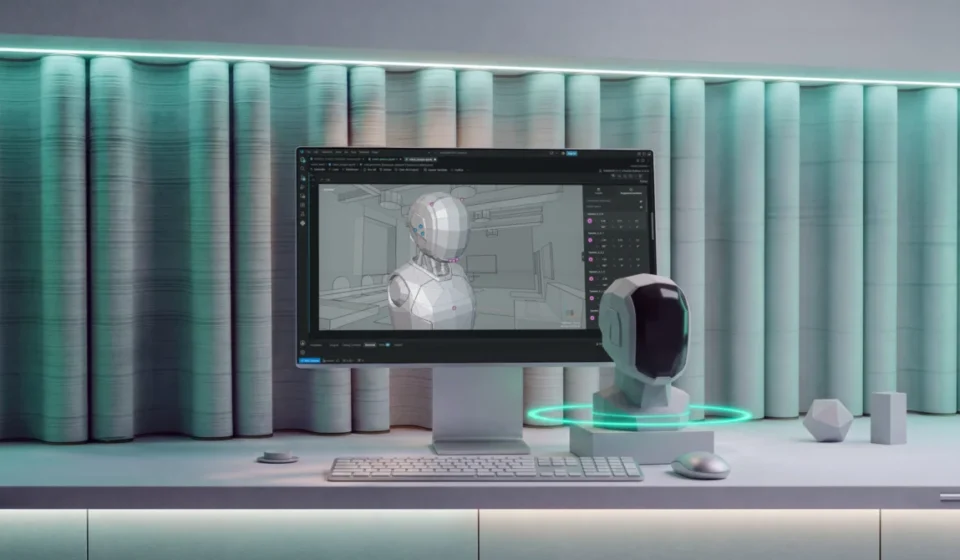
Treble’s platform allows developers to create "synthetic acoustic environments." Instead of relying on real-world recordings, which are expensive and difficult to capture in every possible scenario, Treble simulates how sound waves interact with physical spaces. This enables companies to train their AI models in thousands of virtual environments—ranging from quiet living rooms to chaotic industrial factories—long before the hardware is even manufactured.
Chronology: From Acoustic Engineering to AI Infrastructure
The roots of Treble trace back to 2020, when acoustic engineers Finnur Pind and Jesper Pedersen founded the company with a vision to modernize sound design through computation.
- 2020: Treble is founded in Iceland, focusing initially on virtual prototyping for architectural acoustics and hardware design.
- 2022–2023: Recognizing the pivot toward AI, the company expands its platform to provide synthetic data generation for speech enhancement and noise suppression models.
- 2024: The company accelerates its growth, securing $12 million in funding as the demand for voice-integrated AI devices skyrockets.
- Late 2024/Early 2025: Treble partners with Hugging Face to launch a public benchmark for speech recognition, setting a new standard for evaluating how AI models perform under realistic acoustic conditions.
- September 2026: Treble announces an $18 million extension to its Series A round, led by Paladin Capital Group. This brings their total funding to over $40 million, marking a transition into a broader "Physical AI" player.
Supporting Data and Technical Utility
Treble’s platform serves three distinct but interconnected verticals:
1. Synthetic Data for Model Training
Treble provides AI labs with high-quality synthetic datasets that teach models to recognize human speech even in adverse conditions. By simulating "room impulse responses," Treble helps train models to perform sophisticated noise cancellation, a feature essential for high-end wearables and voice assistants.
2. Hardware Prototyping
Hardware manufacturers, including industry leaders like Logitech, use Treble to test how their speakers and microphones will perform in virtual spaces. By testing the placement of sensors and the shape of device casings in a simulation, manufacturers can avoid the "build-break-repeat" cycle of physical prototyping.

3. Benchmarking and Evaluation
The partnership with Hugging Face represents a pivotal shift toward transparency. By providing a standardized, simulation-based benchmark, Treble helps labs identify exactly where their models fail. Does a model struggle with female voices in large rooms? Does it fail when a sound source is behind a barrier? Treble’s platform provides the diagnostic data to answer these questions.
Official Perspectives: The Investor Thesis
The decision by Paladin Capital Group to lead the latest funding round highlights a shift in venture capital toward "Deep Tech" infrastructure. According to Francois Ruether, VP of Paladin Capital Group, Treble is not just another AI tool; it is a critical piece of the future industrial stack.
"Our thesis is that, as more products depend on understanding sound, this infrastructure becomes increasingly valuable across voice AI, wearables, robotics, and physical AI," Ruether explains. "Customers retain ownership of their models, products, and development workflows, while benefiting from a shared foundation of a simulation-native acoustic infrastructure layer."
This approach—providing the tools rather than the AI itself—mitigates the "model risk" that many startups face. Regardless of which AI model eventually wins the market, they will all require the high-quality, physics-based acoustic training data that Treble provides.
Implications: The Rise of "Superhuman Hearing"
Perhaps the most ambitious aspect of Treble’s roadmap is its commitment to "superhuman hearing." Pind envisions a future where wearable devices, such as smart glasses and advanced headphones, act as an extension of the human auditory system.
"I’m really excited about the next generation of these devices… that can enable [a feature like] superhuman hearing," Pind says. "That’s an area where you can really just hear better in challenging acoustic environments. Maybe you are in a restaurant, and you only want to hear people within two meters of range, or you are in a seminar, and want to mute people around you."
The Move into Physical AI
While voice remains the primary focus, Treble is quietly expanding into the broader realm of Physical AI. This includes:
- Robotics: Giving drones and autonomous robots the ability to interpret spatial audio to better navigate environments.
- Automotive: Improving the voice control and safety-sensing capabilities of self-driving vehicles.
- Drone Technology: Enhancing acoustic awareness for drones operating in complex, noise-heavy environments.
Conclusion: The Quiet Foundation of a Loud Future
As the AI industry matures, the "low-hanging fruit" of text and image generation is being harvested. The next frontier—the physical, audible world—is significantly more complex. By building a bridge between acoustic physics and machine learning, Treble is solving the fundamental problem of how machines perceive the environment.
With $40 million in capital and a roster of Tier-1 clients, Treble has moved past the experimental phase. They are no longer just an Icelandic startup; they are the essential infrastructure provider for any company that wants its machines to listen, understand, and interact in the real world. As AI devices move from our screens to our ears and into our physical workspaces, the technology behind Treble will likely be the silent force making that transition possible.
In a world filled with noisy, unrefined AI, Treble is ensuring that the future of sound is clear, precise, and intelligently rendered.