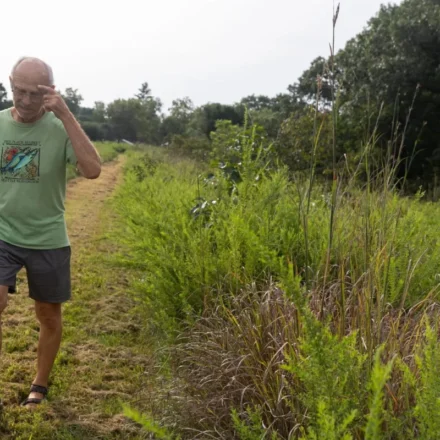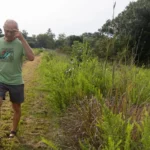

































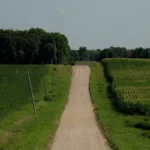











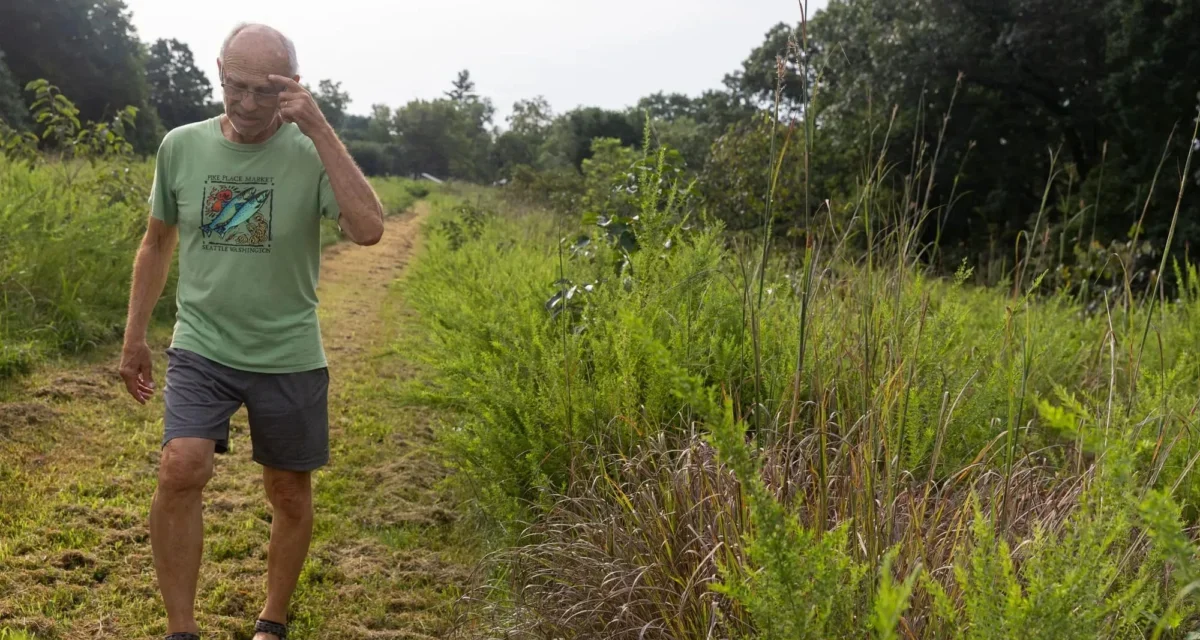




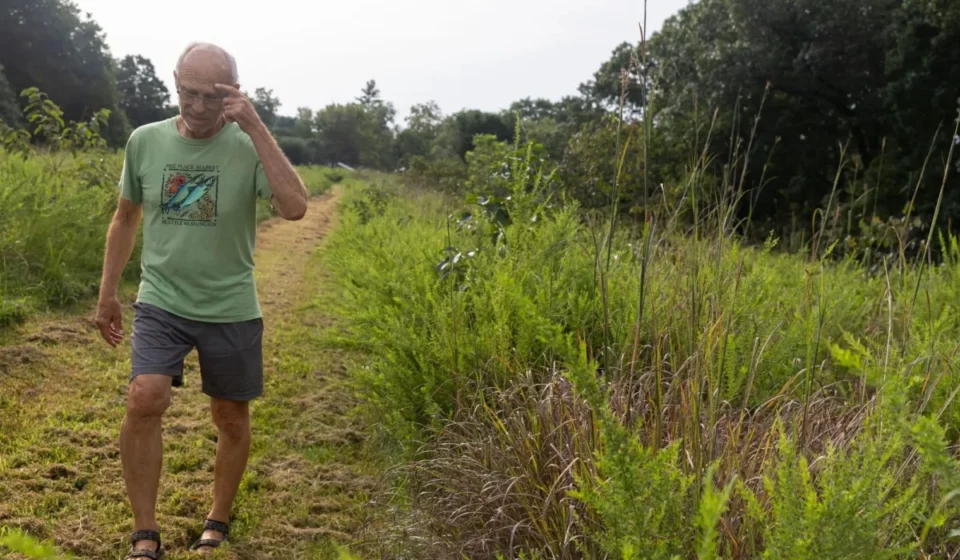

ASHLAND, Mo. — On a sweltering August morning, Dan Kuebler walks the perimeter of what was, until recently, his life’s work. The 30-acre expanse of fields, forest, and pasture in Ashland, Missouri, remains lush and productive, but the silence of the countryside is increasingly punctuated by the distant hum of encroaching residential development.
For 33 years, Kuebler was a fixture at the Columbia Farmers Market, his stall overflowing with seasonal produce, pickles, and artisanal ferments. But as the sleepy towns of southern Boone County transformed into bedroom communities for Columbia and Jefferson City, Kuebler watched his neighbors sell off their acreage to developers. For the retiring farmer, the prospect of his fields being carved into five-acre residential plots felt like a desecration.
“Ashland was a little, bitty, sleepy town in ’77 when we bought it,” Kuebler says, gesturing toward the horizon. “I don’t want it split up into five-acre plots and become a subdivision. That is just like… that’s sacrilege.”
Kuebler’s dilemma represents a growing crisis across the American Midwest: as the average age of farmers rises and suburban sprawl accelerates, millions of acres of fertile soil are at risk of being paved over permanently. While advocates champion legal tools to save these lands, the financial reality often pits a farmer’s retirement security against their desire for a legacy.
A Chronology of a Disappearing Landscape
The transformation of Boone County is not an isolated phenomenon, but a microcosm of a national trend.
- 1977: Dan Kuebler purchases his farm in Ashland, entering a region defined by agricultural heritage.
- 1986: Kuebler begins his farming career at age 40, balancing the physical labor of cultivation with his professional career as an in-home physical therapist.
- 2014: Congress establishes the Agricultural Conservation Easement Program (ACEP-ALE), creating a federal framework to compensate landowners for restricting the development of their property.
- 2001–2016: A critical period where rural housing development converts nearly 7 million acres of agricultural land across the U.S. into low-density residential use.
- 2020s: With the average age of the American farmer climbing, experts predict that at least 50 million acres of farmland in the Midwest will change hands by the end of the decade.
- 2025–2026: Kuebler finalizes an agricultural easement on his 30-acre property, selling the land to a new farmer under strict regenerative guidelines while retaining the right to inhabit a cabin on the grounds for the rest of his life.
Supporting Data: The Scale of the Crisis
The loss of American farmland is not merely an aesthetic or cultural concern; it is a rapid, structural shift in the landscape. According to the American Farmland Trust (AFT), approximately 2,000 acres of American farmland are lost or compromised by development every single day.
Projections are even more sobering. The AFT estimates that an additional 18.4 million acres—a landmass roughly equivalent to the size of South Carolina—will be converted to non-agricultural uses by 2040.
The pressure comes from two directions: traditional urban sprawl, where cities expand into rural zones, and "low-density residential" development. This latter category—often associated with "ranchettes" or large-lot subdivisions—is particularly damaging. It consumes vast amounts of space while effectively removing the land from commercial food production. Research indicates that this specific type of development is surging across Missouri, the broader Midwest, and the American South.
Despite the scale of the threat, the uptake of federal preservation programs remains lopsided. Since the ACEP-ALE program began in 2014, over 1 million acres have been protected nationwide. However, more than half of that total is concentrated in just three states: Montana, Wyoming, and Colorado. In Missouri, the utilization of these federal tools remains virtually non-existent, a trend mirrored by Illinois and Iowa, where protected acreage remains in the low thousands.
The Tool of Last Resort: Agricultural Easements
To combat this loss, conservationists advocate for agricultural easements. An easement is a legal agreement that attaches to the property deed, permanently restricting the land from being subdivided or used for commercial or residential development.
“You cannot subdivide it, you cannot sell it off for residential development or commercial development,” explains Nick Shapiro, executive director of the Greenbelt Land Trust of Mid-Missouri. “That is the guiding principle.”
The role of the land trust is to act as a steward. They monitor the property to ensure future owners adhere to the stipulations. For a farmer like Kuebler, the easement serves as a final, ironclad promise to the land.
However, the process is far from straightforward. It involves complex legal maneuvering, land surveys, and appraisals that can take years to complete. Furthermore, the financial trade-offs are significant. Placing an easement on a property can reduce its market value by up to 65%.
“Whenever you go to sell your property, it’s going to be appraised, and that’s going to be judged at best, highest dollar—and they call it ‘best use’ in the industry,” says Josh Wright of the American Farmland Trust. In the eyes of the real estate market, farming is rarely considered the "best use."
“Unfortunately,” Wright adds, “it’s probably considered the worst use.”
Official Responses and Financial Realities
The federal government has recognized the necessity of incentivizing these protections. Funding for the ACEP-ALE program has been bolstered, with current federal initiatives allocating approximately $650 million annually to assist landowners. This money is designed to bridge the gap between the appraised market value of the land and the agricultural value, essentially paying the landowner for the development rights they are giving up.
Yet, for many, this is insufficient. Eric Gramlich of the Ozark Land Trust notes that even with federal assistance, it is difficult to compete with the sheer capital generated by large-scale developers.
“Even those payments would struggle to keep up with the demand and the price of land for commercial development,” Gramlich says. “That’s a big challenge for us to rise up and be on some sort of a playing field with the other competing interests.”
For some farmers, the financial math simply doesn’t work. Rick Mareske, a berry farmer on the north side of Kansas City, Kansas, considered an easement for his 40-acre farm. Ultimately, the cost—which can reach $25,000 in legal and administrative fees—combined with the drop in property value, proved prohibitive.
“It’s like 20, 25 thousand dollars just to do it, and then you lose money,” Mareske says. As he plans for retirement, his land represents his primary financial asset. Like many of his peers, he is left walking a fine line: wanting to preserve his legacy while ensuring he can afford his later years.
The Human Implication: A Legacy Defined
For Dan Kuebler, the decision to proceed with the easement was never about the money; it was about the moral weight of the land. He spent roughly $20,000 on the process and accepted a loss of approximately $90,000 in appraised property value. He opted not to utilize the federal compensation program, choosing instead to bear the cost himself to ensure his specific standards for regenerative agriculture were codified in the deed.
His land was sold last year to a new owner who shares his philosophy. Under the terms of the easement, the land must remain in agricultural use, and the soil must be managed through sustainable, regenerative methods. Perhaps most importantly, the agreement included a unique provision: Kuebler retains the right to use the small cabin on the property for the remainder of his life.
“I really couldn’t give up the farm totally because I am so attached to it,” he admits.
Today, even though he no longer sells at the market, Kuebler still attends every Saturday. He walks the stalls, buys his groceries, and catches up with the customers he served for over three decades.
“I see them and we talk, and it’s like I really didn’t lose my community,” he says.
The story of the Kuebler farm underscores the tension between individual property rights and the collective need for food security and rural preservation. As urban areas continue to creep outward, the future of the Midwest’s landscape will be determined by a shrinking window of opportunity. Whether the next generation of farmers can afford to hold onto this land, or if it will be lost to the concrete demands of development, remains the defining question for the region’s agricultural heritage.
For the Greenbelt Land Trust and advocates like Shapiro, the mission is clear: “So much of mid-Missouri’s not just economy, but culture and heritage is based in farming. There is an important role for us to play in helping to preserve that heritage as well.”
As the sun sets over the Ashland fields, the easement ensures that, regardless of who holds the title in the future, the soil will continue to do what it has always done: provide. For Kuebler, that is enough.