





















































By [Your Name/Journalistic Staff]
At Century College in White Bear Lake, Minnesota, the daily rhythm of academic life—grading papers, advising students, and managing course registrations—has been disrupted by a modern, digital shadow. For the roughly 8,700 students enrolled at this suburban campus, the institution represents a path to a better future. But for the college’s staff, the campus has become a frontline in a relentless, high-stakes war against "ghost students."
These are not students in any traditional sense. They are digital phantoms—criminals who leverage stolen or synthetic identities to enroll in online courses, secure federal financial aid, and vanish into the ether before the semester’s first exam. At Century College alone, employees estimate they dedicate nearly 60 hours every week simply to fending off these sophisticated fraud attempts.
The Anatomy of an Enrollment Scam
The "ghost student" phenomenon is a growing epidemic in higher education, particularly within the community college system. The scheme is deceptively simple: bad actors use stolen personal information or "straw students"—individuals paid to provide their identities—to complete the Free Application for Federal Student Aid (FAFSA).
Once the federal government clears the application and sends financial aid funds to the college, the institution covers the student’s tuition and fees, and the remaining balance is disbursed directly to the "student." The criminals then withdraw the cash and abandon the account.

For history professor Joe Haker, the realization came three years ago when he noticed a disturbing anomaly: a student in his gender studies course had submitted an identical assignment to one in his history course. "I thought, ‘Well, that’s weird. That probably could only happen if they were the same person,’" Haker recalled.
His suspicion was correct. What followed was a deep dive into his own rosters, where he discovered that nine students were actually a single individual using multiple identities. This summer, Haker estimated that up to a third of his 90 online students may have been fraudulent. "It’s so maddening," he said. "You can’t help but feel very, very strange when you realize that this student you’re devoting even some time to is just scamming."
A Timeline of the Crisis
The surge in enrollment fraud is not a new development, but it has accelerated in a specific, traceable timeline:
- 2021–2022: The rapid, necessary expansion of online learning during the COVID-19 pandemic inadvertently opened the door for bad actors. With physical identity verification becoming difficult, scammers began "testing" systems to see how easily they could bypass security.
- 2023: As the scale of the issue became undeniable, the Minnesota State system established a dedicated work group on enrollment fraud. Individual colleges began implementing their own makeshift security measures, including manual ID checks and custom software filters.
- 2025: The Minnesota Legislature stepped in, formalizing the work group and allocating $3 million toward a new, automated systemwide identity verification solution.
- 2026: Federal pressure mounts as the U.S. Department of Education begins flagging high-risk FAFSA applications, requiring photo-based identity verification. However, the onus remains heavily on individual schools to protect their own coffers.
The Scope of the Problem: Data and Losses
While the human impact—the time lost and the frustration of faculty—is clear, the financial scope remains murkier. The Minnesota State system, which serves over 290,000 students, reported flagging 2,696 fraudulent or suspicious applications in the 2025-26 academic year. While this is a decrease from 7,715 the previous year, officials remain cautious.
National figures are even more staggering. The U.S. Department of Education estimates it has prevented over $90 million in fraud, yet individual cases highlight the massive scale of the losses. A Detroit man recently pleaded guilty to a scheme involving 1,300 people and 100 schools across 24 states, resulting in the disbursement of $10 million.

In Minnesota, the numbers are often shielded by security concerns. When U.S. Education Secretary Linda McMahon suggested in a 2025 letter that 1,834 fake students in Minnesota had siphoned $12.5 million in aid, the state system was unable to verify the claim. Craig Munson, who oversees information security for the Minnesota State system, admitted he was unsure of the origin of that figure, noting that while the system’s 33 schools were likely a portion of that total, it was impossible to confirm without more transparency from federal authorities.
Individual institutions have been even more tight-lipped to avoid being singled out. However, sources suggest that at Century College alone, roughly $500,000 was paid out to suspected fraudulent actors in a single academic year.
Official Responses and the "Patchwork" Problem
The current state of defense is best described as a "patchwork." Because the problem was left to individual colleges to confront for years, the intensity of the response varies wildly based on available resources.
At Normandale Community College, the administration has invested in software that has required the review of roughly 31% of all incoming applications since 2025. "Even if it’s just a few minutes, it’s wasted time," says Susan Ant, director of financial aid and scholarships at the school. "We’re taking time that is meant for real students to get an education… and there’s somebody who’s kind of working against that."
Meanwhile, at Minneapolis College, administrators experimented with third-party verification services but ultimately decided that their own internal, manual processes were more effective at catching the evolving tactics of fraudsters.

The Minnesota State system office is now attempting to centralize these efforts. The $3 million legislative grant is intended to fund a unified, automated identity verification platform. "We want to rightsize that and then get the automation where we can," Munson said. He emphasized that while the system may never be perfectly secure, the goal is to drive the success rate of these scammers as close to zero as possible.
The Implications for Higher Education
The rise of the "ghost student" has profound implications for the future of public education:
- Administrative Strain: Faculty members are increasingly forced into the role of forensic investigators. Whether it’s asking students to wave at a camera or cross-referencing IP addresses on a spreadsheet, the labor is diverted away from teaching.
- Access vs. Security: Community colleges pride themselves on "open admissions" policies designed to make education accessible to everyone. Strict identity verification creates friction that may unintentionally deter vulnerable, legitimate students who lack the technology or documentation to clear digital hurdles.
- Financial Liability: The U.S. Department of Education has made it clear: schools are on the hook. If an institution distributes federal aid to a fraudulent student, the school may be required to repay those funds from its own operating budget.
- A Changing Business Model: Security vendors are seeing a massive surge in demand. Companies like AMSimpkins & Associates have seen their client base explode from six schools in 2023 to over 500 in 2026. This creates a recurring, necessary budget cost for schools that are already operating on thin margins.
Looking Forward: A Call for Systemic Change
Legislators like Sen. Heather Gustafson argue that while the problem is national, Minnesota’s proactive, if decentralized, response has prevented the state from becoming a primary target. "Even if we don’t get it perfect, the more we do, the more it sends the signal that we are not open for fraud business here," she said.
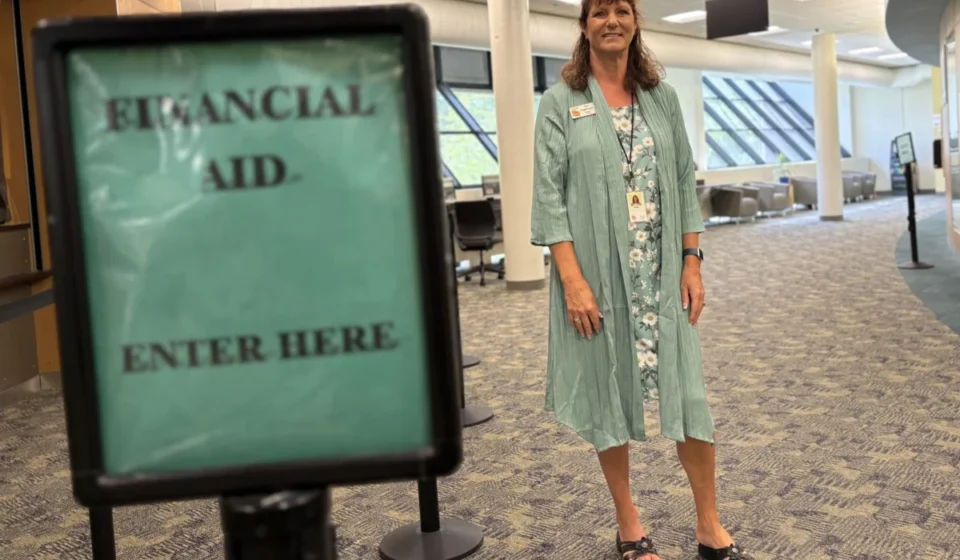
However, for those on the front lines, the legislative support is just the beginning. The goal is to move away from the current model, where success depends on the vigilance of individual professors like Joe Haker or the sheer willpower of financial aid directors like Pam Engebretson.
"This is not a Century College problem," Engebretson stated clearly. "It’s a system office problem, and we need a system office solution to be able to support all of the work that we do."

As the Minnesota State system prepares to pilot its new software, the mood across campuses is one of cautious, anxious hope. For the educators and staff who have spent years chasing ghosts, the introduction of automated, systemic tools can’t come soon enough. Until then, they remain vigilant, shielding their classrooms from the digital interlopers who threaten the integrity of the very institutions designed to uplift the next generation of students.
If you believe you have been a victim of identity theft related to financial aid fraud, or if you are a college employee dealing with this issue, please reach out to our investigative desk at [email protected].