




















































The Productivity Paradigm Shift: Anthropic Moves to Make Claude the Center of the Digital Workspace

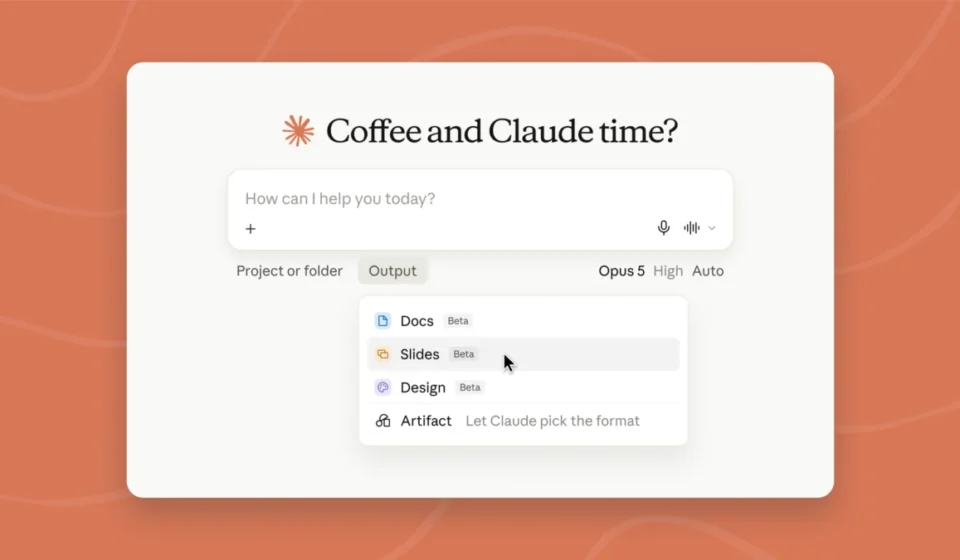
In a strategic maneuver that signals a new frontier in the generative AI arms race, Anthropic has unveiled "Claude Docs" and "Claude Slides," two integrated productivity tools designed to keep users within the Claude interface from inception to completion. By moving beyond simple text generation and into the realm of native document and presentation creation, Anthropic is positioning its flagship AI as a full-lifecycle agentic platform, directly challenging the entrenched dominance of Microsoft 365 and Google Workspace.
This expansion marks a pivotal moment in the "AI-first" movement. While previously users relied on Claude to generate content that was then copy-pasted into external word processors or slide decks, the new suite allows for the creation, editing, and refinement of professional documents directly within the AI’s ecosystem.
The Core Transformation: Moving from Chatbot to Agentic Workspace
The introduction of Claude Docs and Slides represents a fundamental shift in how knowledge work is performed. Anthropic is effectively attempting to invert the traditional relationship between the user and the office suite.
Historically, software giants like Microsoft and Google have integrated AI into their established productivity environments—embedding Copilot into Word, Excel, and PowerPoint. Anthropic, conversely, is attempting to pull the productivity environment into the AI. By offering a rich-text editor directly within the chat interface, Claude is no longer just a brainstorming partner; it is becoming a digital workbench.
How the New Workflow Functions
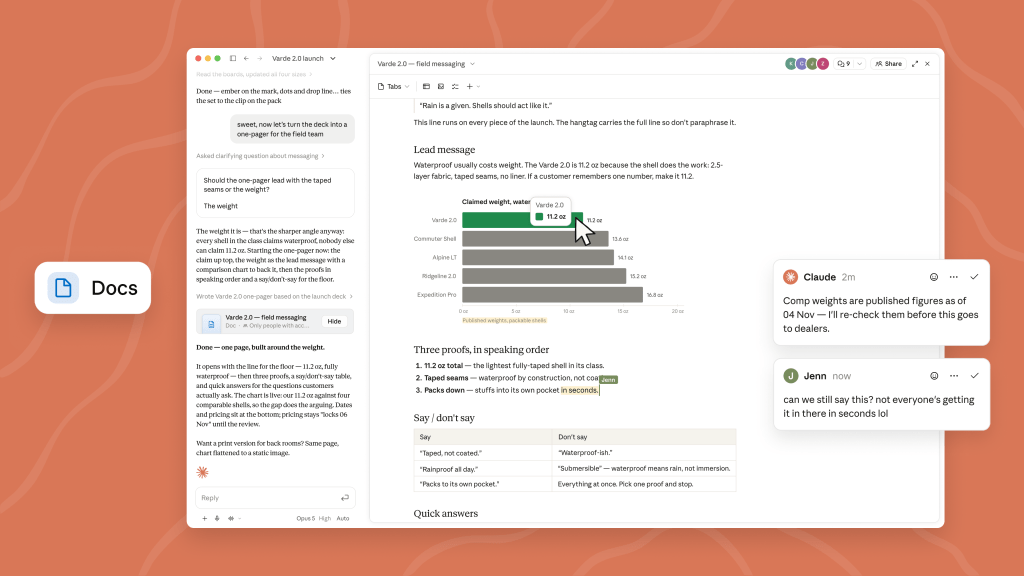
When a user tasks Claude with drafting a report or a presentation, the AI does not merely output a block of text. Instead, it enters a collaborative loop:
- Clarification: Claude asks targeted questions to understand the scope, tone, and specific data points required for the project.
- Dynamic Drafting: The AI generates content, utilizing its "Artifacts" tab to store the document.
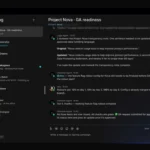
- Iterative Feedback: Claude can leave comments within the document, explaining its reasoning, suggesting improvements, or highlighting areas where it requires more context.
- Exportability: Once the project is complete, users can export these files into industry-standard formats, including Microsoft Word, Google Docs, PDF, or markdown.
A Chronology of Integration: From Text to "Claude Cowork"
The road to this week’s announcement has been one of rapid, iterative development for Anthropic.

- The Early Days: Initially, Claude was positioned as a high-reasoning language model, praised for its nuance and large context window. Its utility was largely limited to text synthesis and coding assistance.
- The Artifacts Era: The introduction of the "Artifacts" window allowed users to view code, websites, and text documents in a side-by-side view. This was the first major step toward transforming the chat interface into a workspace.
- The Rise of Design and Cowork: Anthropic later introduced "Claude Design" for visual prototyping and "Claude Cowork" for executing multi-stage, complex agentic tasks.
- The Unified Interface: This week’s update marks the culmination of these efforts. Anthropic has now folded Design and Cowork capabilities into the standard chat interface. Users no longer need to switch "modes" or navigate between separate tools; the AI now intelligently routes the request, determining whether a task requires a simple chat response, a deep-dive coding session, or the generation of a complex slide deck.
Supporting Data: The Changing Nature of Knowledge Work
The market appetite for these tools is backed by robust data. According to the 2026 Employee Workplace Technology Survey conducted by FDM CCS Insight, approximately 50% of employees utilizing generative AI in the workplace do so specifically for the creation or editing of documents and professional reports.
The shift is driven by a desire for efficiency. Knowledge workers are increasingly suffering from "app fatigue," where the overhead of switching between multiple software platforms—Slack, Microsoft Word, email, and various AI windows—actually hinders productivity. Anthropic’s bet is that if it can host the "heavy lifting" of the document lifecycle, it can capture a larger share of the user’s daily screen time.
However, the "cost" of this convenience is also measurable. Anthropic has confirmed that the usage of these new tools counts toward the user’s established consumption limits. Large, complex requests—such as drafting a document supported by multiple massive sources—will consume significantly more of a user’s quota than a standard chat.
Official Stance and Strategic Implications
Industry analysts are divided on whether this strategy will result in a mass migration away from the "Big Two" of productivity software.
The Analyst Perspective: A Steep Mountain to Climb
Arun Chandrasekaran, a Distinguished VP analyst at Gartner, views this as a bold move. "Strategically, this signals Claude moving from an AI assistant into an agentic platform meant for the full lifecycle of knowledge work," he noted. He anticipates that the most immediate adoption will occur in "recurring, template-driven work"—tasks like status reports, board decks, and data-to-story summaries where the AI can provide immediate, repeatable value.
However, experts caution that utility alone may not be enough to break the hold of incumbents. Maria Bell, a senior research analyst at FDM CCS Insight, argues that Microsoft and Google have a "moat" built of habit and integration. "Microsoft and Google are deeply embedded in how people already work," Bell explains. "Anthropic must do more than match document-creation features; it has to offer an experience compelling enough for users to build entirely new habits around Claude."
The "Stickiness" Factor
Jack Gold, principal analyst at J. Gold Associates, highlights that the battle is essentially about which platform becomes the "primary interface." While the AI capabilities of Claude are often rated highly, the question remains: will a corporate user leave a fully integrated M365 environment, with its deep version history, permission management, and cloud storage, for a standalone AI tool? Currently, Claude Docs lacks the robust version history and advanced access controls that enterprise customers demand, potentially limiting its initial adoption to smaller teams or individual power users.
Limitations and Enterprise Readiness
Anthropic has been clear-eyed about the current state of these tools, which are launching in beta for paid plans. Several critical gaps remain for enterprise-level deployment:
- Security and Compliance: The features are notably absent for organizations utilizing "customer-managed encryption keys" (CMEK), "zero data retention" (ZDR), or HIPAA-ready configurations. For highly regulated industries, these tools are not yet an option.
- Collaboration Constraints: While documents can be shared, the lack of granular access levels and complex version control means that these tools are currently better suited for individual draft creation than for high-stakes, multi-departmental document editing.
- Enterprise Rollout: Recognizing the need for caution, Anthropic has set the feature to "off" by default for enterprise accounts. They have pledged to provide ample warning to IT departments before any changes or features are activated, acknowledging the rigid compliance structures of their largest clients.
The Future of the AI-First Office
The move by Anthropic is part of a larger, industry-wide trend. OpenAI is also widely rumored to be developing native productivity tools, suggesting that the "chatbot" as a standalone product is reaching the end of its life cycle.
As the industry matures, the focus is shifting from "What can this AI model tell me?" to "What can this AI model build for me?" The ultimate winner will likely be the company that best bridges the gap between raw intelligence and the mundane, repetitive tasks that define the workday.
For now, Anthropic has laid its cards on the table. By integrating document and slide creation, it is forcing a conversation about whether the office of the future will be built on a traditional document platform with AI bolted on, or on an AI platform that has learned to build the documents itself. Whether this is enough to unseat the giants of the tech industry remains the most pressing question for the coming year. As users begin to test these beta features, the real-world feedback will determine if the "Claude-first" workflow is a genuine paradigm shift or a clever, but niche, productivity experiment.