



































Navigating Volatility: Chris Finch on the Timberwolves’ Evolution, Coaching Transitions, and the "High-Ceiling" Challenge

As the Minnesota Timberwolves stand on the precipice of the 2026-27 NBA season, the atmosphere surrounding the franchise is defined by a unique tension. Following an 80-minute, wide-ranging interview with MinnPost, head coach Chris Finch has provided a transparent look into the mechanics of a team in transition. Having weathered a "super-frustrating" previous campaign, Finch is now recalibrating his roster, his coaching staff, and his own tactical philosophy to meet the demands of an increasingly unforgiving Western Conference.
The Raw Potential of Joan Beringer
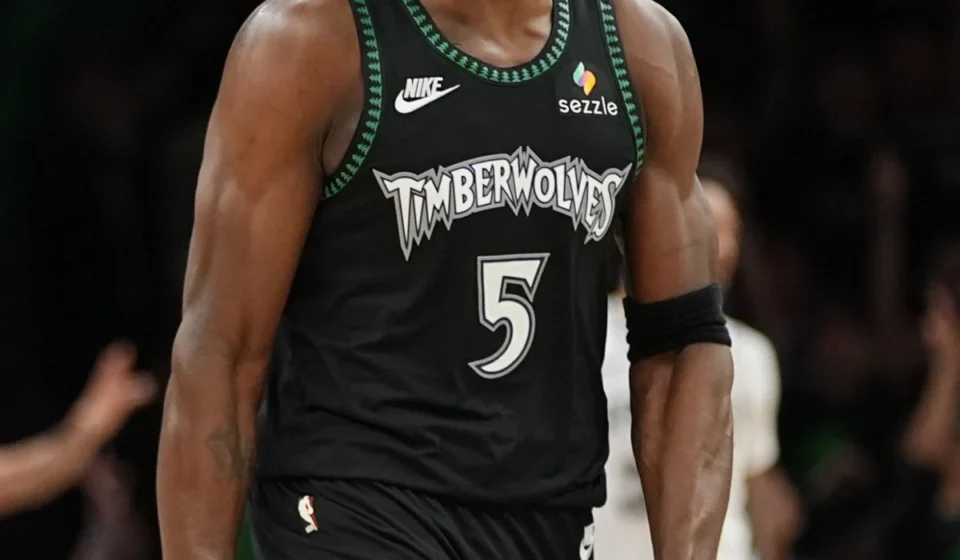
A central point of discussion in the final segment of this interview series is 19-year-old center Joan Beringer. Despite his youth, Beringer has emerged as a pivotal, if raw, component of the Timberwolves’ rotation.
Finch acknowledges the inherent risks of leaning on a teenager, noting that inconsistency is an inevitable hurdle. "You have to realize, as with all young players, there is going to be inconsistency," Finch explained. "Is it self-imposed inconsistency or is it just young-player-growth inconsistency? With Joan, you are certainly going to have the latter."
The coaching staff is focused on tempering Beringer’s high-motor approach. Finch noted that while the young center’s effort and energy are elite, his tendency to over-pursue often leads to foul trouble and poor positioning. Physical development, particularly in the core, remains the primary objective. "That’s where bigs get in trouble. They fall to the ground a lot," Finch said, emphasizing that core strength is essential for playing effectively in the air and landing safely.

The team’s expectations for Beringer are nuanced. Finch admits that if he hits a rhythm of one good game for every one bad game, the team will be in a manageable position. However, he cautioned that if the output skews toward two poor games out of three, the team will find itself "exposed." Despite this, the organization’s confidence in him remains high, bolstered by his coachability and the mentorship of veteran players like Joe Ingles, who invested heavily in Beringer’s development throughout the previous year.
Reconfiguring the Coaching Staff: Life After Micah Nori
The departure of lead assistant Micah Nori—who left to assume a head coaching role in Portland—has forced a total redesign of the Timberwolves’ internal structure. Finch, who prides himself on tailoring roles to the specific skill sets of his staff, is currently in the midst of a meticulous reorganization.
"Pablo (Prigioni) moves up to being the lead assistant, but his role is very different than Micah’s," Finch noted. Prigioni will continue to spearhead the offensive scheme, while specialized duties—such as end-of-game management, clock strategy, and timeout usage—will be redistributed. Finch plans to reclaim some of these late-game decision-making responsibilities, while veteran assistant Elston Turner will take a more prominent role in defensive adjustments.
Finch views this departure not merely as a loss, but as an opportunity for internal growth. "One of my challenges to the staff is they all have to take a step forward," he said. By leveraging the specific strengths of assistants like Kevin Hansen and the incoming expertise of new staff members like Daniel Brady, the organization remains fluid, constantly redesigning how it functions to remain competitive in a league where coaching staffs are frequently poached.

Reflections on a Disappointing Campaign
The conversation inevitably turned to the 2025-26 season, which Finch candidly described as an underachievement. Despite a roster built on the promise of continuity, the team struggled with consistency, focus, and at times, a lack of "joy."
Finch took personal accountability for the team’s struggles, particularly regarding the late-season rotation shifts. "I think we took Julius (Randle)’s last 35 games from two seasons ago for granted and we didn’t create enough easy stuff for him," he admitted. The pressure placed on stars like Anthony Edwards and the mental toll on veteran Mike Conley created a disjointed offensive flow that Finch now seeks to rectify.
"We just couldn’t get out of our own way," Finch reflected. The team’s inability to maintain a high standard of play—despite their stated commitment—served as a hard lesson. For a coach known for being a "players’ coach," the experience was jarring, but it has served to harden his resolve to re-establish a clear, identity-driven structure for the upcoming year.
Tactical Shifts and Future Identity
Looking toward the upcoming season, Finch is emphasizing a return to the fundamentals that defined the Timberwolves’ earlier success: pace, ball movement, and aggressive defensive pressure.

"I want to continue to play faster, offensively," Finch stated. He intends to be more purposeful with player combinations, specifically utilizing Anthony Edwards in more strategic two-man games. The goal is to provide freedom within a structure, ensuring that even as the roster changes, the team’s tactical DNA remains intact.
When asked if the team’s floor is lower while the ceiling remains high, Finch quietly agreed. This acknowledgment highlights the "volatility" that the Timberwolves are embracing. By integrating new talent and redesigning the team’s internal hierarchy, the Wolves are accepting that the path to success will not be a linear progression.
The Philosophy of Roster Volatility
The partnership between Finch and President of Basketball Operations Tim Connelly has become synonymous with radical roster reconfiguration. Unlike many successful franchises that prize long-term continuity, the Timberwolves are unafraid to dismantle and rebuild in real-time.
Finch attributes this philosophy to his diverse coaching background, including his time spent developing teams overseas. "Overseas there are a lot of external factors that you can’t control," he explained. "I’ve learned to embrace it." He believes that modern NBA coaching requires this level of adaptability. By focusing on the four specific things that will help the team win in any given moment, rather than clinging to a static vision of what the team "should" be, Finch believes the Timberwolves can remain competitive.

"Sometimes the biggest disappointments might be when you have that expectation of continuity," Finch said, reflecting on the previous year. As the team heads into the 2026-27 season, that lesson is clearly at the forefront of his mind. The goal is no longer to be a 60-win juggernaut by default; it is to build a team that can identify its strengths, adapt to its environment, and perform when the stakes are at their highest.
As the Timberwolves prepare for training camp, the narrative is one of cautious optimism. There is no guarantee of success, and the competition in the Western Conference has never been more daunting. However, with a coach who is willing to take ownership of his mistakes and a staff that is being empowered to step into larger roles, the Minnesota Timberwolves are positioning themselves to embrace the volatility of the season ahead. Whether this transformation leads to a deep playoff run or a period of growing pains remains to be seen, but for Chris Finch, it is a challenge he is ready to meet.