


























































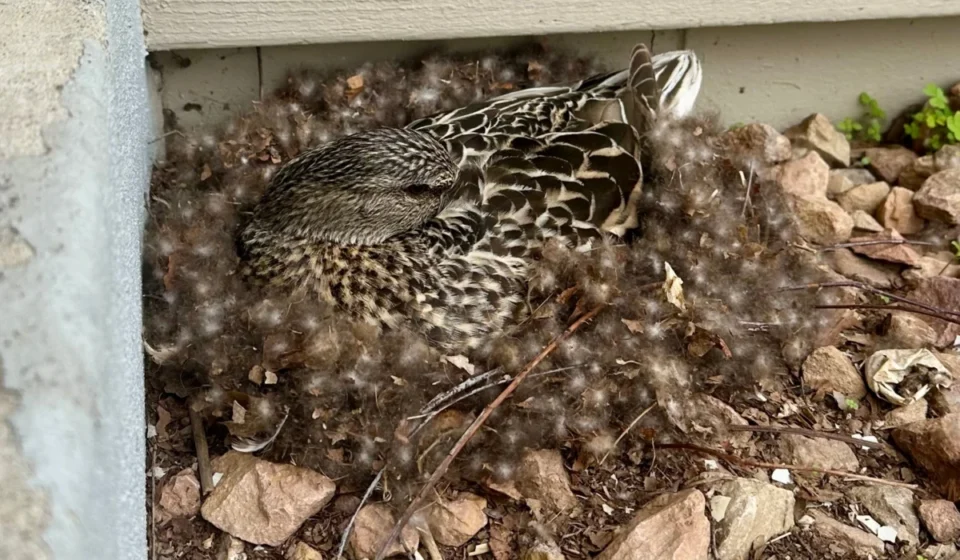

For the past four years, a tranquil suburban home in Eagan, Minnesota, has served as an unlikely maternity ward. Each spring, a female mallard—affectionately dubbed “Martha” by homeowners Caitlin Deal and her family—returns to the same spot tucked behind a bush near their front door. For the Deal family, this annual ritual has become more than just a passing encounter with nature; it has evolved into a masterclass in patience, education, and the delicate art of human-wildlife coexistence.
As urban sprawl continues to push into traditional habitats, encounters between humans and wild animals have transitioned from rare occurrences to seasonal realities. Whether it is a mallard nesting on a porch, a deer fawn camouflaged in a backyard, or an alligator patrolling a Florida retention pond, the arrival of spring brings with it a surge of wildlife activity. Experts suggest that while these encounters can be jarring, they are also deeply rewarding—provided that residents approach them with a blend of curiosity and disciplined restraint.
The Rhythm of the Season: A Chronology of Coexistence
The story of Martha the mallard is a quintessential example of seasonal adaptation. Her timeline is predictable: she arrives in early spring, selects a sheltered spot, and settles in for a month-long incubation period. The Deal family has learned to synchronize their own household rhythm to her presence.
“It feels nice that she trusts that area, that she trusts us to be able to come back year after year,” said Caitlin Deal. The impact of this connection is profound, particularly for her 4-year-old son, Owen, whose first word was, fittingly, “Duck.”
The cycle typically culminates around Mother’s Day, when the ducklings hatch and the family leads them away toward nearby water. This period requires constant adjustment from the homeowners, including strict management of their pet, Piper. By keeping the dog on a leash and maintaining a respectful distance, the Deals have successfully turned a potential conflict into a living lesson in environmental stewardship.
However, not all wildlife interactions are as gentle as a nesting duck. Across the country, spring triggers a cascade of reproductive behaviors that bring animals into closer proximity with human infrastructure. From the moment the vernal equinox passes, wildlife species across the continent begin to seek out nesting sites, foraging grounds, and nurseries. Understanding the chronology of these behaviors—when animals are most active, when they are most defensive, and when they are likely to depart—is the first step toward effective coexistence.

Supporting Data: Why Wildlife Invades Our Spaces
Ecological experts point to several factors driving wildlife into residential zones. As natural habitats become fragmented by development, many species have learned to exploit the “edge effects” of suburban landscaping. A manicured lawn might look like a decorative choice to a human, but to a rabbit or a deer, it represents a high-quality, low-predation environment.
Data from wildlife rehabilitation centers across the United States indicate a significant uptick in “nuisance” calls during the spring months. According to Brittney Yohannes, a spokesperson for the Wildlife Rehabilitation Center of Minnesota, the majority of these calls stem from human misunderstanding rather than genuine crises.
“My two biggest things are: stay away from the nest or the little family as much as possible, and stay curious,” Yohannes explains. This curiosity should be observational, not interventionist. The common instinct to “rescue” a perceived orphan is often the most dangerous action a person can take. For example, fawns are frequently left alone by their mothers for hours at a time while the doe forages nearby. This is not abandonment; it is a calculated survival strategy designed to keep the fawn hidden from predators. By “rescuing” the fawn, well-meaning humans often remove it from the very environment it needs to survive.
Official Guidance: The “Leave It Alone” Mandate
Wildlife management agencies, including the Oregon Department of Fish and Wildlife, emphasize that human intervention is rarely necessary and often illegal. Under federal law, moving or destroying the nest of a protected migratory bird is a violation that can carry significant penalties.
Beth Quillian, a spokesperson for the Oregon department, underscores the importance of public education. “The doe will come back to that fawn, and that is natural and normal,” she notes. When residents encounter a nest in an inconvenient location, the recommended first step is to contact a local wildlife agency rather than taking immediate action. These agencies provide expert assessments on whether the situation is truly hazardous or merely a temporary inconvenience.
For more aggressive species, the advice shifts from passive observation to active avoidance. John Coluccy, of the conservation group Ducks Unlimited, highlights that while mallards are generally docile, Canada geese and swans are a different matter entirely. These birds are highly territorial and protective of their “reproductive investment.” A defensive goose is capable of exerting enough force to cause significant physical injury to a human. Similarly, in warmer climates like Florida, the presence of nesting alligators requires a strict “look but don’t touch” policy, with experts urging residents to keep pets on leashes and avoid the shorelines of water bodies where nests may be concealed under organic debris.

Implications for Future Stewardship
The challenge of living alongside wildlife is fundamentally a challenge of perspective. As we encroach on their territory, we must accept the responsibility of being “good neighbors.” This involves practical steps to mitigate conflict without resorting to lethal control or trapping.
Innovative Non-Invasive Solutions
When animals like raccoons or squirrels decide to raise their young in a garage or under a deck, Tami Vogel, executive director of the Wildlife Rehabilitation Center of Minnesota, suggests “harassment” techniques that rely on biology rather than violence.
- Light: Installing a high-intensity shop lamp in the dark, quiet space where an animal has nested can mimic the discomfort of an exposed environment, often encouraging the mother to relocate her young to a more secluded area within 48 hours.
- Physical Barriers: Installing metal mesh or specialized exclusion devices can permanently seal off access points to sheds and decks, but only after the young have matured and left the site.
- Temporary Barriers: For ground-nesting animals like rabbits, a simple laundry basket can be placed over the nest during the day to prevent pets from disturbing the site, provided it is removed at dusk to allow the mother to feed her young.
The Role of Education
The long-term goal of wildlife centers is to build a community that views wildlife not as a pest, but as a local resource. When a homeowner successfully manages a situation—like the Deal family—they become an informal educator for their neighbors. “We want them to know we’re here as a safety net,” says Vogel. “The good news is, two weeks later, their neighbor may have a similar situation and they can pass along that information.”
Conclusion: A Temporary Arrangement
The overarching theme in modern wildlife management is the concept of temporariness. Most wildlife nesting cycles are short-lived. By choosing to tolerate a bird’s nest or a rabbit’s burrow for a few weeks, residents contribute to the preservation of local biodiversity.
As urban areas continue to densify, the ability to coexist with wild neighbors will define the health of our local ecosystems. While it requires a degree of sacrifice—such as keeping a dog on a leash or avoiding a section of the backyard—the reward is a deeper, more profound connection to the natural world.
For the Deal family, the departure of the ducklings each year is a bittersweet milestone. It marks the end of a season of vigilance, but also the beginning of an anticipation for the next. As Martha returns to her spot behind the bush, she reaffirms a quiet, persistent truth: with enough patience and respect, even the most crowded suburbs can remain a home for the wild. The key, as the experts remind us, is to remain curious, keep our distance, and recognize that we are merely guests in the natural world, even in our own backyards.