






















































It is likely just the beginning.
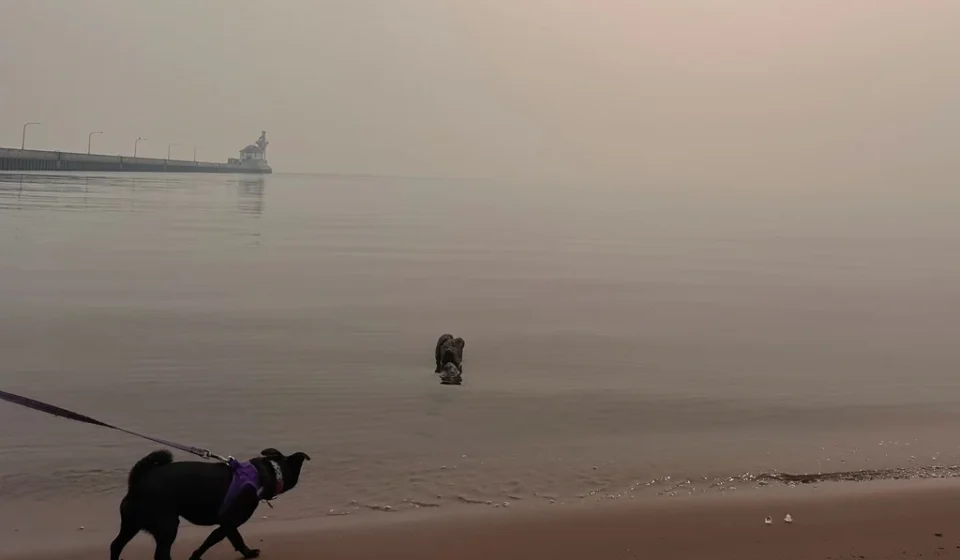
For the residents of Minnesota, the early weeks of summer offered a deceptive sense of security. Skies remained clear, and the air was crisp, free of the choking, particulate-laden haze that has defined the state’s summer experience over the last several years. But by mid-July, that reprieve evaporated. A volatile mix of lightning, extreme heat, and long-term environmental shifts ignited a series of wildfires in the Superior National Forest, signaling a difficult season ahead for air quality across the Upper Midwest.
While Canadian wildfires remain the primary culprit for the recurring smoke events that have plagued the state in recent memory, the recent localized outbreak—comprising more than a dozen active fires as of Thursday, including three within the iconic Boundary Waters Canoe Area Wilderness (BWCAW)—highlights a growing vulnerability in Minnesota’s own backyard.
The Chronology of an Escalating Crisis
The current crisis was sparked by a turbulent weather system that swept through northern Minnesota on July 6. The storm front brought with it an intense barrage of lightning, igniting dry, parched timber and underbrush. According to the Minnesota Incident Command System (MICS), the resulting fires quickly gained traction, exacerbated by a period of sustained high temperatures and low humidity.
By Tuesday, the Minnesota Pollution Control Agency (MPCA) had no choice but to issue a statewide air quality alert. The warning, which extended through 11 a.m. Friday, covered a vast swath of the state, including the Twin Cities metropolitan area, central Minnesota, and the sensitive Arrowhead region. The MPCA warned that the heavy smoke, coupled with existing ground-level ozone and particulate pollution, would likely exacerbate health conditions for vulnerable populations, including the elderly, children, and those with respiratory issues.
The situation in the Boundary Waters reached a critical juncture on Tuesday, forcing officials to shutter the area to all visitors. At the time of the closure, an estimated 6,000 to 10,000 people were dispersed throughout the wilderness area. Superior National Forest staff worked frantically to contact these recreationists, and by Wednesday, authorities estimated they had successfully reached 90% of those in the backcountry.
Supporting Data and Meteorological Context
The rapid transition from a mild start to the summer to an active fire season caught many off guard, but meteorologists had been warning of the potential for months. In late June, MPCA meteorologist Matt Taraldsen noted that the agency was closely monitoring fire activity in Canada, bolstered by the lingering impacts of El Niño patterns that suggested a long-term, persistent drought.
Brennan Dettmann, a meteorologist at the National Weather Service (NWS) office in Chanhassen, characterized the early summer as a period where Minnesotans had been "pretty spoiled" by below-normal temperatures and manageable humidity levels. However, that baseline shifted abruptly in July.
"The weather patterns suggested a stretch of warm, humid, summer-like conditions that would last at least through the first half of July," Dettmann explained. The data confirms the shift: in the last five years, Minnesota has issued more air quality alerts related to wildfire smoke than in any previous period on record. This is not merely an anomaly, but a reflection of a broader climatic trend toward hotter, drier conditions that prime the landscape for ignition.
The impact is regional and international. The National Institutes of Health (NIH) recently labeled 2023 a "turning point" in wildfire history, noting that 46 million acres burned across North America that year. During that period, 98% of Canada’s population was exposed to at least one day of unhealthy air, and the smoke traveled as far as Europe. The Minnesota State Climatology Office famously dubbed last year the "Great American Smokeout of 2025," noting that northerly winds acted as a conveyor belt, pulling smoke from massive fires in the forests of Manitoba and Saskatchewan directly into the heart of the Upper Midwest.
Official Responses and Operational Challenges
The logistical challenge of managing these fires is immense. Karen Harrison, a spokesperson for state and federal emergency management agencies, noted that the smoke itself is actively hindering suppression efforts. The dense haze prevents helicopters from flying safely, grounding the very resources needed to dump water and monitor the fires’ progression.
"There will be fire on the landscape until fall," Harrison warned on Thursday. "Some fire will be burning until snow cover."
The severity of the situation is reflected in international operations. On Wednesday, the Royal Canadian Air Force successfully evacuated 11 Minnesota teenagers and four staff members from an Ontario provincial park located approximately 175 miles north of the border. The evacuation serves as a stark reminder of the interconnected nature of these wildfire events; when the borders of the boreal forest are ablaze, the entire region feels the consequences.
Even as the Minnesota fires burn, the state remains at the mercy of its neighbor to the north. Hundreds of active fires continue to burn across Canada. Forecasters predict that Minnesota could face an additional 12 to 16 days of heavy smoke exposure between late July and early August.
To manage this, the MPCA maintains an hourly data upload to the NWS, with daily inter-agency calls involving the U.S. Forest Service and their counterparts in Ontario. Despite reports of federal budget constraints, the Chanhassen NWS office continues its critical monitoring, including twice-daily weather balloon launches at 6 a.m. and 6 p.m. These balloons, which ascend up to 20 miles into the atmosphere, provide the essential data on temperature, pressure, and wind speed that allow meteorologists to model how smoke plumes will track across the state.
Global Implications and Lessons from the North
The reality of the "new normal" is perhaps best understood by looking at towns like Flin Flon, a mining community straddling the Manitoba-Saskatchewan border. Local reporter Ron Dobson, speaking to MinnPost, provided a sobering look at the fragility of life in these fire-prone zones. While Flin Flon saw some relief this year due to rainfall, the town is still reeling from the events of last summer, when fires nearly razed the community.
"They have one little road that goes for 100 kilometers," Dobson explained, highlighting the vulnerability of remote infrastructure. "If that road gets cut off, they’re in trouble." This summer, that isolation proved disastrous for the residents of Lynn Lake, Manitoba, which was forced to evacuate due to advancing flames.
The lessons from the Canadian north and the American West—which served as a primary source of smoke for Minnesota in 2020—are converging. From the massive, health-threatening plumes that impacted Detroit and New York City in recent years to the localized, lightning-driven fires of the Boundary Waters, the message is clear: wildfire is no longer a peripheral environmental issue. It is a central public health concern.
As Minnesotans navigate the remainder of the summer, the reliance on state and federal tracking websites—such as the Canadian Interagency Forest Fire Centre (CIFFC) and the Minnesota Department of Health’s air quality resources—will remain a daily necessity. The "Great American Smokeout" of previous years has evolved into a persistent, multi-seasonal threat.
For now, the focus remains on containment, communication, and public safety. As the fires in the BWCAW continue to challenge crews on the ground, and as the atmosphere continues to transport smoke from the vast, burning forests of the north, the state finds itself in a period of heightened vigilance. Whether this year marks a temporary spike or a continuation of a dangerous, long-term trend, the reality of smoke-filled skies has become an undeniable feature of life in the North Star State.