






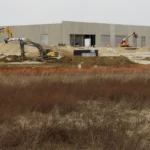




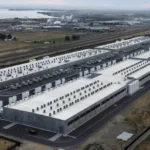












































The global race to construct the physical backbone of the artificial intelligence revolution is running into a wall of hard, inescapable reality. While billions of dollars in capital continue to flow into the sector, the vision of a sprawling, AI-driven infrastructure is increasingly colliding with the limitations of the physical world. From localized community pushback and protracted permitting quagmires to an acute, nation-wide scramble for electricity, the "data center boom" is no longer the frictionless growth story that early venture capital projections suggested.
Perhaps most critically, there is a fundamental disconnect between the number of data center projects being announced and those that will realistically ever see the light of day. As the industry faces mounting pressure to deliver, the ability to distinguish between viable, grid-integrated infrastructure and speculative, "vaporware" development projects has become a high-stakes imperative for investors and policymakers alike.
The Anatomy of the Bottleneck: Main Facts
The current crisis in data center development stems from a confluence of three primary factors: energy scarcity, regulatory friction, and over-saturation.
Data centers are massive consumers of electricity. As AI models grow in complexity, the power density requirements for these facilities have skyrocketed. Modern hyperscale data centers require gigawatts of power—an amount equivalent to the energy needs of entire mid-sized cities. When these projects are proposed in areas with aging electrical grids, they place an immediate, unsustainable strain on utility providers.
Furthermore, the "Gold Rush" mentality has led to a glut of land-use applications. Many developers are filing for grid interconnection without having secured local land rights, environmental impact assessments, or even committed end-users. This has created a backlog of "zombie" projects—proposals that occupy space in the interconnection queue but lack the financial or technical backing to proceed. Consequently, regional grid operators are struggling to manage a massive pipeline of requests, only a fraction of which will ever be operational.
A Chronology of the Crisis
The rapid ascent of AI-focused infrastructure can be traced through a series of key milestones and friction points over the last 24 months:
- Mid-2023: As generative AI gained mainstream traction, hyperscalers like Microsoft, Amazon, and Google significantly increased their CAPEX for infrastructure. Local governments initially welcomed the tax revenue and job creation.
- Early 2024: The first signs of grid strain appeared. Public utility commissions in key regions, including Virginia and the Pacific Northwest, began issuing warnings about the capacity of the grid to handle the projected load.
- Late 2024: Community opposition movements intensified. Residents in towns across the U.S. began protesting the visual impact, noise pollution, and water consumption of cooling systems associated with mega-data centers.
- March 2025: The realization that energy availability is the ultimate constraint for AI investment hits the mainstream financial discourse, with analysts shifting focus toward energy tech and grid modernization as the "true" AI play.
- May 2026: A critical inflection point as the largest U.S. power grid (PJM Interconnection) officially signals that the growth of AI demand is unsustainable under current infrastructure constraints.
- August 2026: Texas—a state historically friendly to rapid industrial development—announces a formal halt on new data center approvals, citing the need for comprehensive audits and a re-evaluation of energy reliability.
Supporting Data: The Infrastructure Gap
To understand the severity of the situation, one must look at the interconnection queues. In many regional transmission organizations, the queue of proposed power generation and load projects has stretched to years. According to industry reports, for every 100 megawatts requested by a data center developer, the local utility might only be able to provide 10 to 20 megawatts without significant and costly upgrades to the transmission lines and substations.
The financial data further suggests a bubble. Venture capital funding for AI-related infrastructure remains at an all-time high, yet the success rate of large-scale infrastructure projects is falling. Brent Nelson, Senior Managing Director of Markets and Strategy at Ascend Analytics, notes that the discrepancy between "announced" capacity and "actual" capacity is widening. Many developers are using interconnection requests as a "placeholder" to secure potential site access, essentially squatting on grid capacity. This behavior distorts market signals, making it appear that energy demand is higher than it truly is, while simultaneously preventing legitimate, shovel-ready projects from moving forward.
Official Responses and Regulatory Shifts
The regulatory landscape is shifting rapidly. The recent decision by Texas Governor Greg Abbott to halt new data center approvals marks a turning point in state-level oversight. The official narrative is that the grid must be protected to ensure the health and safety of the existing population and traditional industries.
"We cannot allow the promise of AI to compromise the basic stability of our energy supply," a spokesperson for the Texas Public Utility Commission noted in recent correspondence. Similar, if less draconian, measures are being considered in other high-demand states. Regulators are now demanding "load shedding" agreements, where data centers agree to power down during periods of peak grid demand—a requirement that creates significant operational hurdles for AI firms that require 24/7, 365-day uptime.
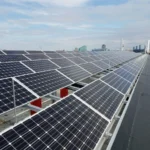
Furthermore, grid operators are beginning to prioritize projects that offer "grid-positive" solutions, such as those that include on-site renewable energy generation or battery storage, over projects that are purely extractive of existing power.
Implications for the Future of AI
The implications of this bottleneck are profound for the broader tech sector.
1. The Death of Speculative Development
The era of "build first, ask questions later" is coming to a close. Investors who have backed data center developers based solely on press releases are likely to see significant write-downs as projects are rejected by local zoning boards or denied power connections by utilities. We are entering a phase of "infrastructure consolidation," where only the most well-capitalized firms with sophisticated energy strategies will survive.
2. The Rise of Decentralized and Edge Computing
If centralized, mega-scale data centers face too much regulatory and electrical friction, the industry may pivot toward smaller, more localized "edge" computing facilities. By placing smaller clusters of compute power closer to the end-user, firms might bypass the need for massive, grid-taxing hyperscale facilities.
3. The Energy-Tech Convergence
The most successful AI firms of the next decade will likely not be software companies, but energy companies. We are already seeing moves toward Small Modular Reactors (SMRs), private microgrids, and massive investments in battery storage by tech giants. The "AI-Energy" nexus is the new competitive battlefield.
4. A Shift in Global Geography
Companies may begin to look outside of traditional high-demand regions. Countries with abundant, cheap, and "stranded" energy—such as those with excess hydroelectric or geothermal potential—may become the new hubs for the AI industry, shifting the center of gravity away from Northern Virginia and Silicon Valley.
Expert Insight: The Equity Podcast Perspective
In a recent episode of TechCrunch’s Equity podcast, hosts Rebecca Bellan and Tim De Chant sat down with Brent Nelson of Ascend Analytics to unpack this exact phenomenon. The discussion highlighted a critical distinction: "grid awareness."
Nelson emphasized that developers who engage with the reality of grid constraints early in the project lifecycle are the ones who will succeed. The ones who treat the grid as an infinite resource to be tapped are heading for a cliff. The podcast underscored that the "data center boom" is not a monolith; it is a split market between those who have done their homework on power, water, and local politics, and those who are simply chasing a valuation spike.
Conclusion
The data center industry is currently in a "show me" phase. The initial hype cycle, fueled by the explosive growth of AI, is being tempered by the reality of the physical world. While the demand for compute remains insatiable, the capacity to deliver that compute is limited by the very real constraints of our power grids, the political power of local communities, and the limitations of aging infrastructure.
As we move forward, the winners will be those who recognize that an AI strategy without an energy strategy is not a strategy at all. Investors, developers, and tech leaders must pivot from speculative expansion to disciplined, grid-conscious development. The data center boom is far from over, but its shape is changing—moving away from the sprawling, unchecked growth of the last two years toward a more constrained, engineered, and ultimately more stable future.
For those looking to navigate the market, the advice is clear: follow the power, not the press releases. The future of AI will be built not by those who promise the most, but by those who can actually secure the electrons to turn the lights on.