























































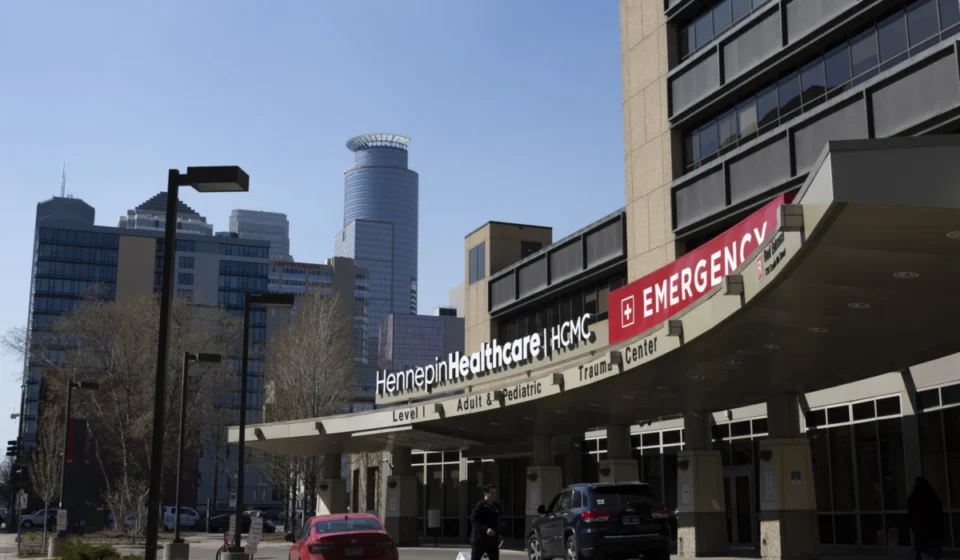

As the clock ticks toward the May 18 conclusion of Minnesota’s legislative session, the fate of the state’s most critical safety-net institution, the Hennepin County Medical Center (HCMC), hangs in the balance. Amidst a deepening financial crisis that threatens to shutter the state’s busiest Level 1 adult and pediatric trauma center, state lawmakers are engaged in a high-stakes scramble to cobble together a survival package. While confidence remains high among leadership that a collapse will be averted, the path forward remains obscured by competing legislative visions, complex tax structures, and deep-seated debates over the hospital’s future governance.
The Impending Deadline: A Landscape of Uncertainty
HCMC, a cornerstone of the Hennepin Healthcare system, serves as the region’s medical backbone, treating patients regardless of their insurance status or ability to pay. However, the institution is currently staring down a fiscal abyss. Projections presented to the Hennepin County Board’s budget committee in March indicated that the hospital faces a staggering $1.7 billion in losses over the next decade.
The urgency is not merely fiscal; it is existential. Hennepin County Commissioner Angela Conley has warned that without state intervention during the current session, the hospital could initiate a closure process as early as June. The financial cost of such a shutdown alone is estimated at $100 million—a figure that underscores the catastrophic nature of the potential loss. The situation has become so dire that National Nurses United, the nation’s largest registered nurse union, issued a “Red Alert” on April 21, warning that any closure would have a “drastic, irreversible impact on patients and healthcare workers across Minnesota and the Midwest.”
Chronology of the Crisis
The current crisis did not emerge overnight. It is the culmination of years of systemic pressures, exacerbated by recent economic shocks.
- Early 2026: Projections of a $1.7 billion decade-long deficit are formalized, highlighting the unsustainable nature of current operating costs versus reimbursement rates.
- March 2026: The Hennepin County Board of Commissioners receives a formal briefing on the hospital’s dire financial trajectory, setting the stage for emergency legislative requests.
- April 2026: Legislative activity intensifies. The Minnesota Department of Revenue releases analyses of various proposed tax solutions.
- April 21, 2026: National Nurses United declares a “Red Alert” status for HCMC, publicly highlighting the threat to patient safety and the regional healthcare ecosystem.
- Late April 2026: House and Senate committees begin holding hearings on competing funding bills, including sales tax adjustments and one-time state appropriations.
- May 18, 2026: The constitutionally mandated end of the legislative session, serving as the final deadline for a long-term solution.
The Legislative Chessboard: Two Paths to Funding
The Legislature is currently debating two primary mechanisms for long-term fiscal stabilization, both of which seek to leverage the existing 2007 Hennepin County sales tax—a tax originally established to fund the construction of the Minnesota Twins’ Target Field.
The Senate Proposal: A Measured Approach
Sen. Ann Rest, DFL-New Hope, has introduced a bill that seeks a moderate increase to the current 0.15% sales tax, raising it to 0.25%. A Department of Revenue analysis suggests this would generate approximately $84 million annually. Under this model, HCMC would receive the lion’s share—$50 million—while $21 million would be directed to North Memorial in Robbinsdale for uncompensated care. Smaller allocations would support Target Field improvements ($9 million) and county libraries and youth programs ($4 million). Sen. Rest argues that while any tax increase is inherently regressive, her proposal is designed to be a burden that the public can absorb while providing the necessary stabilization for the hospital.
The House Proposal: A More Robust Injection
Conversely, the House bill, co-authored by Rep. Danny Nadeau, R-Rogers, and Rep. Esther Agbaje, DFL-Minneapolis, proposes a more aggressive 1% tax rate. This would yield a significant $337 million annually. Under this plan, HCMC would receive over $300 million, with $24 million allocated to North Memorial and $7 million to the Twins’ ballpark. Supporters of this approach argue that the scale of HCMC’s financial shortfall requires a massive, immediate infusion of capital that a 0.1% increase cannot provide.
Supporting Data: Why HCMC is Failing
The financial fragility of HCMC is driven by a convergence of structural factors:
- Uncompensated Care: As a safety-net hospital, HCMC absorbs the costs of treating the uninsured and those on public programs, which constitute the majority of their patient base.
- Federal Medicaid Cuts: Looming federal reductions in Medicaid funding are expected to significantly diminish the hospital’s revenue stream.
- UCare Insolvency: The recent, high-profile shutdown of Minnesota-based health insurer UCare has left a massive hole in HCMC’s balance sheet, with $115 million in unpaid claims currently outstanding.
- Operational Costs: Rising costs for specialized trauma and pediatric care have outpaced the reimbursement rates provided by both private and public insurers.
Official Responses and Internal Debates
The legislative process has been marked by a blend of urgency and skepticism. Sen. Melissa Wiklund, DFL-Bloomington, has pushed for a “shot in the arm” through a separate, one-time funding bill. Her proposal includes $300 million in stabilization funding, with $150 million earmarked specifically for HCMC and the remainder distributed to other struggling providers across the state.
However, the discourse in the Capitol is not limited to funding levels. Representative Nadeau has pointed out that many discussions are currently bogged down by debates over HCMC’s internal governance and its historical financial track record. There is a palpable tension between the desire to provide aid and the necessity of ensuring that the institution is managed in a way that prevents future crises.
Furthermore, an alternative proposal from Nadeau seeks to redirect a 1.56% hospital surcharge—currently funneled into the state’s general fund—directly to hospitals facing financial hardship. This would essentially function as a redistributive mechanism, allowing financially solvent hospitals to subsidize those in crisis.
Implications for the Future of Healthcare
The debate over HCMC is not merely about one hospital; it is a bellwether for the future of public health in the United States. As rural and urban safety-net providers across the country face similar pressures, Minnesota’s experiment in legislative intervention is being watched closely.
The Risk of Inaction
Should the Legislature fail to reconcile these bills before May 18, the implications are severe. The loss of HCMC would shift the burden of trauma care to neighboring systems that are already operating at or near capacity. The “irreversible impact” warned of by nursing unions suggests that the loss of specialized staff and the destruction of existing, highly tuned emergency protocols would be impossible to replicate in the short term.
The Need for a Holistic Model
Legislators are increasingly reaching a consensus that a single bill will not suffice. As Senator Wiklund noted, one-time support can only act as a bridge; a long-term solution must address the fundamental structural issues, such as the rising costs of uncompensated care and the volatility of federal health funding.
Conclusion: A Delicate Balancing Act
As the session nears its end, the atmosphere at the Capitol is one of cautious optimism tempered by the reality of a complex political environment. Leaders like Jeffrey Lunde, chair of the Hennepin Health Board, emphasize that while the current debate is fractious, the simple fact that viable solutions are now "on the table" represents progress.
The task facing the Minnesota Legislature is to reconcile the desire for fiscal restraint with the moral and functional imperative of preserving a vital public institution. The final compromise will likely involve a hybrid approach: a mix of one-time emergency funding to avert the June closure, combined with a long-term tax structure that ensures HCMC remains the bedrock of regional trauma care for decades to come. Whether the state can successfully navigate this path remains the central question of the 2026 session.