






















Bridging the Chasm: How Philanthropy is Tackling America’s Deepening Divides
SEATTLE, WA – In an era increasingly defined by sharp disagreements and entrenched ideological camps, the very fabric of American society appears strained. From the intimate confines of family gatherings to the sprawling battlegrounds of social media and the halls of political power, polarization has become a pervasive force, threatening the nation’s capacity to address its most pressing challenges. A stark illustration of this sentiment emerged from a fall 2025 Times/Siena poll, which revealed that a staggering 64% of Americans believe political divisions have become too profound to allow for effective problem-solving. Yet, amidst this growing chasm, a determined movement is gathering momentum, with philanthropic organizations stepping forward to champion the cause of unity and collaboration.
This critical undertaking is not a new concept but has gained unprecedented urgency. Over the last decade, organizations dedicated to fostering connection across divides have blossomed. The ListenFirst Coalition, a leading network in this space, has grown to include more than 500 member organizations, ranging from local initiatives like Engage Winona to broader cultural entities such as Arts Midwest and national dialogue facilitators like Braver Angels. These groups are united by a common mission: to equip Americans with the tools and mindsets necessary to engage constructively, even in the face of profound disagreement.
Recognizing the pervasive impact of these divisions across all sectors, philanthropy itself, with its vast network of foundations and funders, is increasingly positioning itself as a crucial architect of solutions. Many within the philanthropic community are not merely observing this trend but are actively seeking to lead the way, leveraging their resources and convening power to bridge divides.
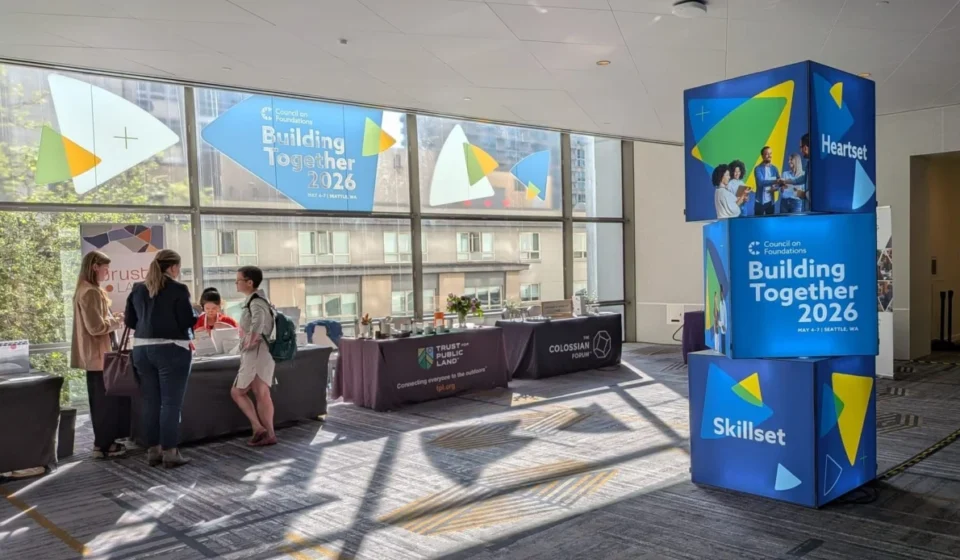
A significant shift in this direction occurred five years ago when the Council on Foundations (CoF), a prominent philanthropy-serving organization, formally integrated "working across difference" as a core strategic pillar. Through this commitment, CoF has been diligently empowering its diverse membership to cultivate the skills and strategies needed for meaningful connection and collaboration. A cornerstone of this effort is its "Building Together" conference, with its second iteration scheduled to take place from May 4-7, 2026, in Seattle, Wash., serving as a vital forum for advancing these critical conversations.
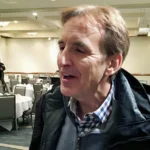
Project Optimist recently engaged in a candid conversation with Kristen Scott Kennedy, Executive Vice President at the Council on Foundations, to delve deeper into why philanthropy has embraced this focus on cross-difference collaboration and what lies ahead for this vital work across the nation. The following interview has been edited for clarity and length.
The Pervasive Challenge of Polarization
The notion that America is deeply divided is hardly novel, but the current intensity and breadth of this polarization are reaching critical levels. Beyond the well-documented political rifts, the fragmentation permeates social interactions, community dynamics, and even personal relationships. This societal fracturing manifests as an erosion of trust in institutions, a decline in civil discourse, and an increasing difficulty in finding common ground on issues that demand collective action. The Times/Siena poll serves as a powerful indicator of public anxiety, reflecting a widespread concern that the nation’s ability to function and progress is severely hampered by its internal conflicts. This environment creates a fertile ground for misunderstanding, dehumanization of "the other," and an overall paralysis in addressing shared challenges, from climate change to economic inequality.
The consequences of such deep divisions are far-reaching. They hinder legislative progress, stifle innovation, and undermine social cohesion. In local communities, they can prevent collaborative problem-solving on issues like infrastructure, education, or public health. On a national scale, they can compromise the nation’s global standing and its ability to act decisively. It is against this backdrop that the "bridging" movement has gained such traction, recognizing that fostering constructive engagement is not merely an idealistic endeavor but an urgent practical necessity for the health and future of democratic society.
Philanthropy’s Unique Position to Bridge Divides
In a landscape often dominated by partisan politics and short-term electoral cycles, philanthropy occupies a distinct and potentially powerful position to address the systemic issue of polarization. Unlike government entities, foundations typically possess a longer-term horizon, allowing them to invest in initiatives that may not yield immediate, measurable results but are crucial for deep societal change. Their independence from political pressures also enables them to convene diverse stakeholders, including those from opposing viewpoints, in neutral spaces for dialogue and collaboration.
Furthermore, philanthropy has the capacity for risk-taking and innovation that government agencies or corporations might shy away from. They can fund pilot programs, research, and experimental approaches to bridging work, learning and adapting along the way. Foundations often have deep roots in specific communities, understanding local nuances and building relationships of trust that can be leveraged to initiate difficult conversations. By supporting both national bridging organizations and grassroots efforts, philanthropy can foster a multi-layered approach to mending societal rifts. Their ability to serve as a non-partisan convener, an investor in long-term solutions, and a catalyst for innovation makes them uniquely suited to tackle a challenge as complex and deeply ingrained as national polarization.
The Council on Foundations’ Strategic Pivot
Kristen Scott Kennedy: "We talk about it more as working across differences. And the reason that it came up for us is that when we did our strategic planning process in 2020 and 2021, we listened really, really hard to our community. We did a lot of stakeholder outreach to understand what was the right role for the council to play in this moment."
The Council on Foundations, as one of the largest and most diverse philanthropy-serving organizations in the United States, represents a broad spectrum of institutional members. With over 1,000 member institutions, encompassing thousands of individuals, its community reflects the rich tapestry of the nation itself. These members hail from diverse geographical locations—big cities and small towns, urban centers and rural landscapes—and represent various philanthropic models: community foundations, corporate grant makers, private foundations, family foundations, and public grant-making charities. This inherent diversity, Kennedy explains, is both a defining characteristic and a strategic advantage for CoF.
Scott Kennedy: "Our membership is really reflective of the diversity of the country. And so we try to maintain essentially a big tent for all of the diversity of the membership."
It was through an intensive strategic planning process conducted between 2020 and 2021, marked by extensive stakeholder outreach and deep listening, that the imperative to address societal divisions became clear. The CoF recognized that the very polarization gripping the nation was mirrored within its own philanthropic community. Yet, this challenge also presented a unique opportunity. Members expressed a profound desire to connect, learn, and find common ground with those holding different perspectives.
Scott Kennedy: "When we did the strategic planning process, we thought: It’s a challenge. But it’s also an important opportunity for us and something that we heard people really wanted. They wanted to come and find community with people that were different from them, to learn from them, and also to develop a different kind of understanding. So we felt like we needed to lean in there."
This strategic imperative led to the formal establishment of "supporting philanthropy to develop the strategies and skills to work across differences" as one of CoF’s core pillars. Since the strategy’s launch in 2021, CoF has been systematically building and implementing a robust suite of programs to achieve this goal. The "Building Together" conference stands as a cornerstone of these efforts, offering a dedicated forum for learning and networking. The upcoming 2026 conference marks its second iteration, signifying the growing importance and demand for such gatherings.
Beyond the flagship conference, CoF has cultivated a diverse portfolio of initiatives. These include a specialized cohort program developed in collaboration with the renowned Greater Good Science Center at UC Berkeley, focusing on the science of well-being and its application to bridging divides. They also work closely with organizations like Resetting the Table, which provides expert staff and board training in difficult conversations and respectful engagement. Regular workshops and various other resources further equip members with practical skills.
Scott Kennedy: "This is the second time we’ve run Building Together. We also have the cohort program that we do with the Greater Good Science Center. We work really closely with Resetting the Table who’s done staff and board training for us. We do workshops. We have a lot of stuff that we built out over the years."
Addressing a Societal Problem, Shaping Philanthropic Practice
When asked whether this focus on "working across differences" is viewed as solving a problem, Kennedy’s response is unequivocal.
Scott Kennedy: "Yeah, I do. Many of the divisions that we see playing out in broader society are reflected back within philanthropy. We’re not immune to those destructive forces. We’re trying to contribute to these bigger societal problems using philanthropy as a potential norm shaper for what could be possible if folks could do things differently."
The ambition extends beyond merely mitigating internal divisions within the philanthropic sector. The CoF hopes that by modeling and facilitating effective cross-difference work, philanthropy can serve as a powerful "norm shaper" for society at large. The ripple effects of this internal transformation are expected to extend outwards, influencing the very programs and investments of member organizations.
Scott Kennedy: "That’s one of the hopes, that folks will think about how can they apply a lens of working across difference within their programs, within their investments. And it could look different ways. There’s, how does it look internally — how you operate as a staff? How does it look externally in how you fund, in how you have relationships in the community with grantees with other partners? How does it look at your own strategic level?"
Indeed, CoF has already observed tangible shifts among its members. Some organizations, inspired by these conversations, have gone so far as to develop entirely new strategic focuses centered on bridging and collaboration. This demonstrates a growing recognition that an intentional integration of "working across difference" can profoundly impact a foundation’s effectiveness and its ability to achieve its mission. While acknowledging that different organizations will have different entry points and approaches, the overall goal is to foster a deeper, more intentional integration of these principles into philanthropic practice.
Cultivating "Heartset, Mindset, and Skillset"
The CoF’s framework for fostering cross-difference collaboration is built upon three interconnected pillars: heartset, mindset, and skillset. This holistic approach recognizes that effective engagement across divides requires more than just intellectual understanding; it demands a fundamental shift in disposition and practical ability.
Scott Kennedy: "Part our focus is helping people develop the heartset, the mindset, and the skillset to work across differences. And heartset is really the drive, the motivation, the desire to want to do that work. That’s pretty personal. The mindset is the strategies, the frameworks, the ideas. And the skillset is putting all of that into practice, having the ability, the capacity to make the heartset and the mindset a reality."
- Heartset: This refers to the intrinsic motivation, empathy, and genuine desire to engage with those who hold different views. It’s about cultivating an open heart, a willingness to listen, and a belief in the possibility of constructive interaction. Many philanthropists, Kennedy notes, already possess this fundamental "heartset," driven by a desire to see a more cohesive society.
- Mindset: This encompasses the intellectual frameworks, conceptual tools, and strategic approaches for understanding and navigating differences. It involves learning about the dynamics of conflict, the psychology of polarization, and proven methodologies for dialogue and consensus-building. While some individuals may arrive with a degree of this, CoF’s programs aim to deepen and broaden this understanding.
- Skillset: This is where the practical application comes in – the tangible abilities needed to put the heartset and mindset into action. It includes communication techniques, active listening, facilitation skills, conflict resolution strategies, and the capacity to build rapport across divides. Kennedy highlights that this is often where individuals and organizations "get stuck." They have the desire and some understanding, but lack the concrete skills to translate their intentions into effective practice.
Scott Kennedy: "Where folks often get stuck is on the skillset. They’re like: I want to do this. I maybe have some ideas of how to do it. But I don’t know how to put it into practice. That’s what our program is focused on — changing that, equipping any funder who wants to have all of those components. Because none of them are sufficient on their own. It’s really this formula that needs to be in place for folks to be able to implement this work with a level of effectiveness."
The CoF’s programming is meticulously designed to address each of these components, ensuring that funders are not only inspired but also equipped with the comprehensive toolkit necessary to make a tangible difference in fostering collaboration and understanding.
Measuring the Unquantifiable: Challenges in Assessing Impact
While the drive and methodology are clear, measuring the long-term impact of "working across differences" remains a complex challenge, one that CoF, like many others in the field, is actively grappling with.
Scott Kennedy: "This is a big question that we’re really sitting with, and I don’t have a fantastic answer for you yet. I think a lot of folks that are working in the space are really trying to think about that. We have ways to measure the experience people have with our programs. We have ways to look at application and how they might apply what they’re learning. We’re working on, but don’t yet have a way to think about, the longer term outcomes of it. We have a sense of where we want to be headed. But we don’t have an answer yet."
The difficulty lies in quantifying shifts in social cohesion, trust, and collaborative capacity – outcomes that are inherently qualitative and evolve over extended periods. While CoF can measure participant satisfaction and immediate application of learned skills, tracking systemic change at a community or national level requires sophisticated tools and methodologies.
Kennedy acknowledges that the field is still developing robust metrics for these nuanced outcomes. She points to emerging tools and research being explored by other organizations, such as the "belonging barometer" and the "social cohesion index," as examples of efforts to measure community-level change. These tools aim to assess aspects like a sense of inclusion, trust between different groups, and the prevalence of cooperative behaviors within a community. Integrating such broader societal indicators with specific program evaluations will be crucial for understanding the true, long-term impact of philanthropy’s investment in bridging work.
The Evolving Landscape of Bridging Work Nationwide
Looking ahead, Kennedy observes a significant and encouraging trend: a marked increase in interest and sophistication surrounding conversations about working across differences.
Scott Kennedy: "My observation over the last couple of years has been that there’s definitely an increased interest in conversations about working across differences. I think that one of the things I’ve seen is that folks are all really coming from different entry points."
This growing awareness is coupled with a more nuanced understanding of how "bridging" can manifest. It’s not a one-size-fits-all solution, but rather a spectrum of approaches tailored to specific contexts and challenges. For some, it might involve direct "bridging" efforts to find common ground between polarized groups. For others, the focus might be on addressing deeply entrenched conflicts within a community before any common ground can even be sought. In other instances, it could revolve around tackling shared problems where collaboration is an undeniable necessity, regardless of underlying differences.
Scott Kennedy: "Part of it is figuring what’s the right entry point for my organization, for my work, for my community. What are the goals that I want to accomplish, and how does this frame of working across differences fit? And for some people that might look like bridging. For some people, it might look like trying to find common ground. For some people it might look like, maybe they have a really entrenched conflict in their community that they need to work through first before they can actually ever get to common ground. Or maybe it’s a shared problem. There’s all these different ways that folks can enter into the work."
This adaptability and recognition of diverse pathways are key to the future success of the movement. Kennedy expresses optimism that this increased awareness will lead more individuals and organizations to find meaningful ways to engage with this work, customizing their approaches to fit their unique circumstances and objectives.
Scott Kennedy: "It feels like the conversations are getting more sophisticated, and folks are really starting to think about how this could look in their own contexts — not just on an intellectual level, (but) really taking it home and thinking about: OK, what does this mean for the work that we’re doing in my community?"
The trajectory suggests a future where bridging work moves beyond theoretical discussions into concrete, localized applications, fostering a more resilient and collaborative society from the ground up.
Conclusion
As America grapples with unprecedented levels of polarization, the role of philanthropy in fostering connection and collaboration has never been more critical. The Council on Foundations, through its strategic commitment to "working across differences," is at the forefront of this effort, equipping its vast network of funders with the "heartset, mindset, and skillset" necessary to navigate complex divisions. While the challenge of measuring long-term societal impact remains, the growing sophistication and widespread interest in bridging work offer a beacon of hope. By empowering foundations to model and champion constructive engagement, CoF and its partners are not just addressing a problem within their sector; they are actively shaping a future where dialogue triumphs over division, and collective action becomes the norm, not the exception. The journey to a more unified America is long and arduous, but with philanthropy stepping up as a key architect, the possibility of bridging the chasm moves closer to reality.