











































From the Stage to the Boardroom: How Signe Harriday is Redefining Leadership at Pillsbury United Communities

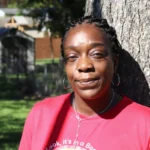
In an era where university theater programs are facing existential threats—ranging from being folded into larger, unrelated departments to being shuttered entirely—the perceived utility of an advanced degree in the performing arts has come under intense scrutiny. Yet, for Signe Harriday, the stage was not a dead end; it was the ultimate training ground for the C-suite.
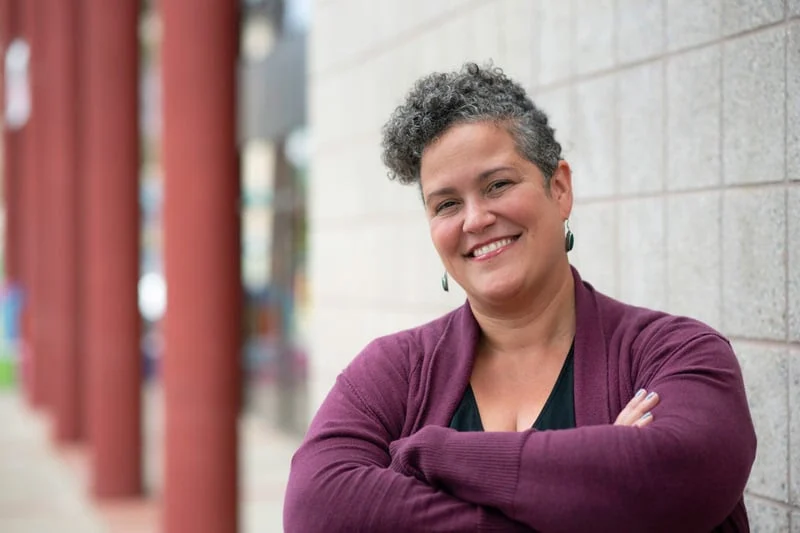
On June 23, Pillsbury United Communities (PUC), one of the Twin Cities’ most historic and expansive nonprofit organizations, announced that Harriday would serve as its new president and CEO. Her ascension marks a significant shift in how the nonprofit sector views leadership, proving that the skills honed in rehearsal rooms and under theater lights—collaboration, narrative building, and radical empathy—are exactly what is needed to steer a complex, multi-faceted organization through a tumultuous economic landscape.
The Evolution of a Leader: A Chronology of Impact
Harriday’s appointment is the culmination of a 25-year relationship with Pillsbury United Communities. Her journey from the stage to the CEO’s office offers a blueprint for how mission-driven organizations can nurture leadership from within their own creative ranks.
- Early Career & Training: After graduating from St. Olaf College, Harriday pursued an MFA in acting from the A.R.T. Institute for Advanced Theater Training—a prestigious collaborative program between the American Repertory Theater, the Moscow Art Theatre, and Harvard University. Following her training, she cut her teeth in audience development and public relations at the Mixed Blood Theatre, balancing administrative work with professional acting roles.
- The Pillsbury Years: Harriday eventually found a home at Pillsbury House + Theatre, where she spent years acting, directing, and teaching. Her deep immersion in the community programs allowed her to understand the organization’s heartbeat from the ground up.
- 2021 Transition: Harriday was named the artistic producing director of Pillsbury House + Theatre. In this role, she began to bridge the gap between pure artistic expression and the operational demands of a nonprofit, overseeing not just the stage, but the organization’s social enterprises, including KRSM Radio, the Full Cycle Bike Shop, and the local news outlet North News.
- 2026 Milestone: Following a period where she balanced her artistic leadership with broader organizational oversight, the board officially named her president and CEO, signaling a new chapter for the century-old institution.
The Theater of Leadership: Redefining the C-Suite
Harriday’s leadership philosophy is rooted in the collaborative nature of theater. Unlike the traditional, top-down corporate model that relies on unilateral decision-making, Harriday views her role through the lens of a director and producer.
"As a director and a producer, it is actually not my job to build the set, to design the set, to build the costumes, to even perform the show," Harriday explains. "It’s actually my job to inspire the greatest performance or the best idea in the room, and then help the team find a way to make that real."
This approach—which prioritizes collective intelligence over individual ego—is vital for an organization like PUC, which manages a diverse portfolio of community centers, charter school oversight, and social equity programs. By applying the "ensemble" mentality of a theater company to the operations of a large nonprofit, Harriday aims to foster an environment where staff are empowered to innovate and take ownership of their work.
Supporting Data: Innovation Through Infrastructure
Harriday’s tenure at PUC has already been marked by tangible growth and strategic expansion. Board Chair Kaori Yamada points to the $5.7 million Pillsbury Creative Commons building on Chicago Avenue as a testament to Harriday’s vision. This facility is more than just a physical space; it is a hub for community empowerment, housing KRSM Radio and providing the infrastructure for technical workforce development programs.
This facility serves as a primary example of how Harriday uses creative vision to solve practical problems. By creating a physical anchor for both media production and technical training, she has successfully integrated the "arts" into the "workforce," proving that these two sectors are not mutually exclusive.
However, the path forward is not without its hurdles. Harriday has been central to the strategic debates surrounding North Market, a community grocery store initiative in North Minneapolis that is currently on hold. These types of projects, which aim to address food deserts and economic inequality, require the kind of high-stakes, long-term planning that the arts, paradoxically, prepare leaders for.
Official Responses and Strategic Outlook
The appointment of an artist to lead a major nonprofit is being met with enthusiasm, but it also reflects a broader recognition that the nonprofit sector is undergoing a period of profound transformation.
"I think she will continue to bring this organization into what it always has done, which is to innovate and be creative and listen to the needs of the moment," says Board Chair Kaori Yamada. This sentiment of "listening to the needs of the moment" is a cornerstone of Harriday’s strategy.
Harriday herself remains grounded about the challenges ahead. As local arts groups face mounting financial pressures, she notes that the stability of being part of a larger, diversified nonprofit has allowed the theater to "weather this tumultuous time." She emphasizes that the organization’s "nimbleness and agility" are a direct result of their ability to pivot during the COVID-19 pandemic and the subsequent social uprisings.
"I think that the arts ecosystem and the nonprofit sector will look different, and so will Pillsbury in the future," Harriday says. "I couldn’t predict exactly what that will be, but I think it would be naive to think that with all the pressures and all the things that make this moment hard and challenging and difficult, that we will somehow be the same on the other side."
Implications for the Future of Nonprofits
The implications of Harriday’s rise are twofold. First, it challenges the academic and professional stigma currently attached to theater degrees. When an individual can leverage an MFA to navigate the complexities of board governance, urban development, and social enterprise, the "impracticality" of the arts is effectively debunked.
Second, it suggests a shift toward "artist-leaders" in the nonprofit sector. For years, the rallying cry has been "we need artists as leaders in the right places," and Harriday’s appointment is a concrete win for this movement. She represents a generation of leaders who are deeply embedded in the communities they serve, rejecting the separation of "professional" management from "community" work.
Harriday’s background as a multidisciplinary artist and organizer—including her work with the Subversive Sirens synchronized swimming team and the Rootsprings creative sanctuary—provides her with a unique toolkit. These roles have taught her to navigate issues of body acceptance, queer visibility, and racial justice—topics that are now central to the social equity work performed by Pillsbury United Communities.
As she assumes the helm, Harriday brings a childhood ambition into her adult reality. Reflecting on her early dream of becoming a fire truck, she laughs. "I think it is actually kind of like a little bit true about me throughout my entire life. Don’t tell me what I can do. I’m going to show you what we can do."
For the arts community and the nonprofit sector at large, Harriday’s leadership offers a glimmer of hope: a path forward that doesn’t sacrifice creativity for stability, but rather uses the former to ensure the latter.
For those interested in the future of the local arts landscape, Pillsbury House + Theatre will be participating in a community roundtable on July 8 at Mixed Blood Theatre. The event, modeled after the "Frankly Speaking" series, will address critical topics including arts funding, the loss of venues, and the future of the local creative ecosystem.