

















































In a strategic pivot that signals a fundamental shift in the artificial intelligence landscape, Anthropic is aggressively expanding the utility of its Claude AI assistant. Moving well beyond the role of a passive chatbot, the company is retooling Claude into a comprehensive productivity hub. This latest expansion—which includes sophisticated spreadsheet, whiteboard, and meeting assistant tools—marks a calculated attempt to capture the "knowledge worker" demographic, mirroring the successful integration patterns previously established with developers.
For Anthropic, the goal is clear: to evolve Claude from a destination for singular inquiries into an immersive, team-oriented workspace where project lifecycles are managed from inception to execution.
The Core Expansion: A New Suite of Productivity Tools
Anthropic’s latest update, released this week, represents a significant broadening of its ecosystem. The features build upon the "Claude Docs" and "Slides" capabilities introduced in September, signaling a robust roadmap toward full-scale office automation.
Claude Meetings: The Virtual Note-Taker
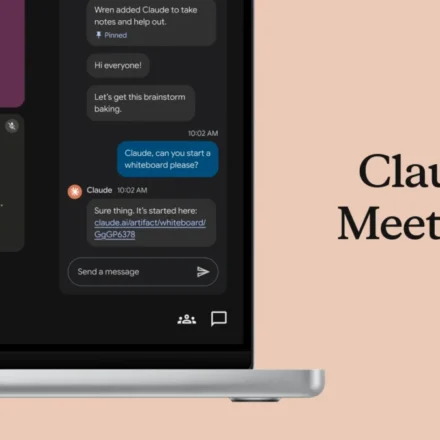
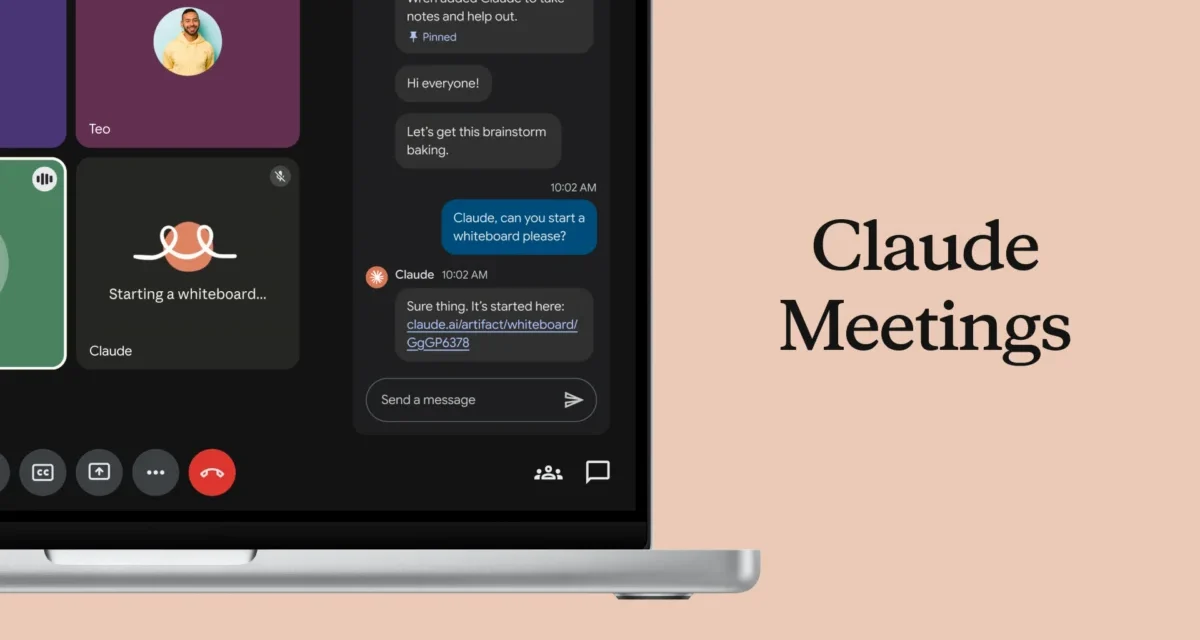
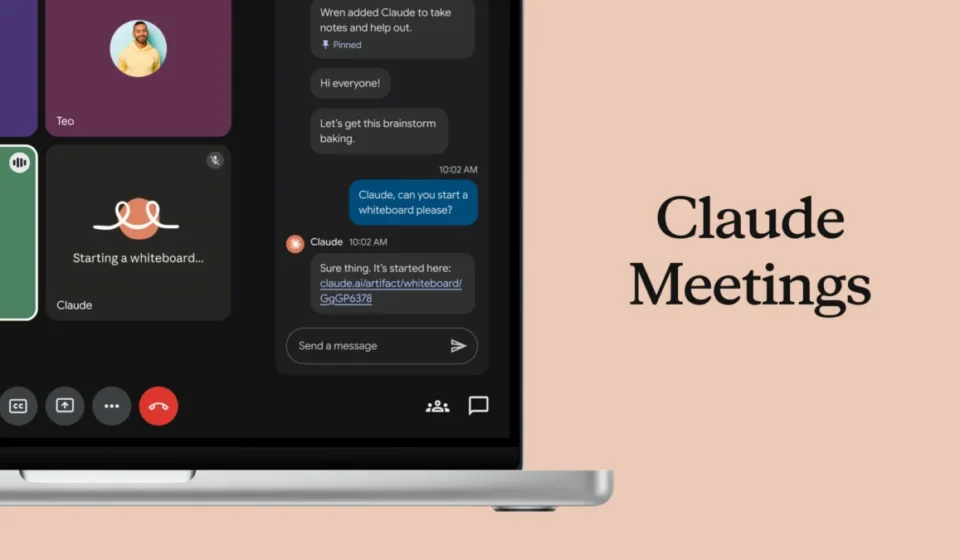
The most headline-grabbing addition is "Claude Meetings," an AI-driven assistant designed to join video conferences in real-time. Currently available for Google Meet, the tool serves as a high-functioning secretary. It transcribes conversations, answers queries directly in the meeting chat, retrieves relevant data from connected enterprise apps, and synthesizes discussion points into actionable project plans and timelines.
Once the call concludes, the metadata—including notes and assigned tasks—is automatically synced to the user’s claude.ai workspace. This eliminates the "copy-paste" friction that often plagues current AI workflows, allowing teams to move seamlessly from deliberation to execution.
Whiteboards and Sheets: Collaborative Visuals
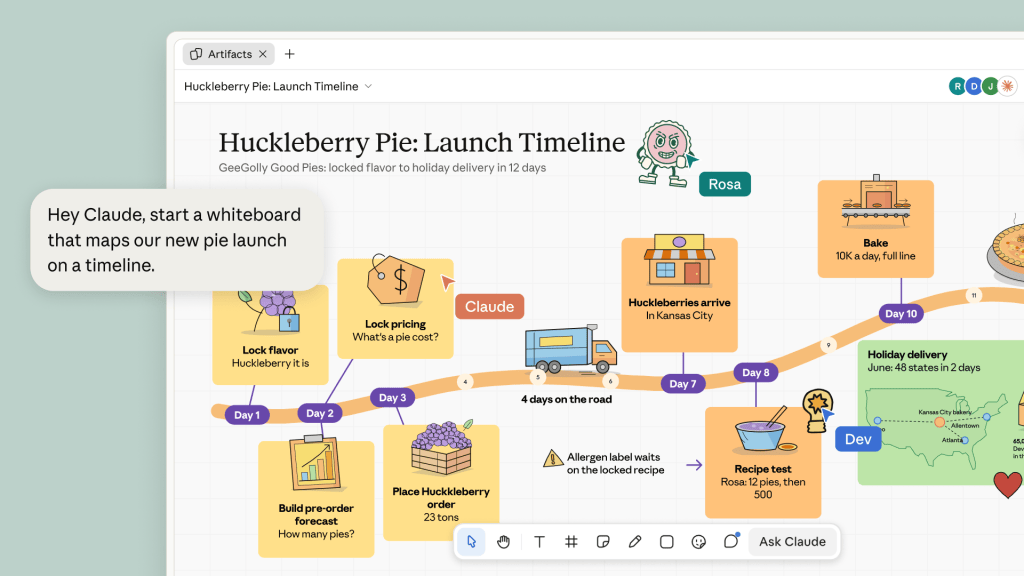
Anthropic is also tackling the collaborative brainstorming space with "Claude Whiteboard." This feature provides a shared, infinite canvas where team members can map out ideas. More than just a digital sketchpad, Claude can ingest the chaotic, non-linear flow of a brainstorming session and automatically structure it into a formal board complete with timelines, task ownership, and firm deadlines.
Furthermore, "Claude Sheets" has entered the beta phase, providing a collaborative spreadsheet environment that leverages AI to manipulate and analyze data, while "Claude Data" (formerly "Dashboards") has graduated to general availability, allowing users to create interactive, data-driven visual reports directly within the interface.

Interactive Connectors: Deep App Integration
Rounding out the updates are enhanced "interactive connectors." Initially launched in January, these tools allowed for basic app access. The latest iteration allows users to open full versions of third-party applications—such as Adobe, Box, and Notion—either in a side-by-side view with Claude or in a full-screen mode. Users can now direct Claude to make edits, such as modifying documents or retouching images, directly within these embedded environments.
A Chronology of Evolution: From Chat to Workflow
To understand the current trajectory, one must look at the rapid maturation of Claude over the last eighteen months:
- Early 2024: Anthropic introduces the first iteration of "interactive connectors," beginning the shift from text-only responses to tool-use capabilities.
- September 2024: The company launches Claude Docs and Slides, signaling its entry into the document creation and presentation space, directly challenging legacy office suites.
- November 2026: Anthropic debuts the "Productivity Trio"—Meetings, Whiteboards, and Sheets—moving from content creation to project management and team collaboration.
- Present Day: The platform now supports a persistent, multi-modal workspace that integrates live communication, data analysis, and long-term project planning.
The Market Landscape: Competitive Implications
The launch of Claude Meetings brings Anthropic into direct competition with entrenched incumbents. Companies like Microsoft, with its Copilot for Teams, and Zoom, with its native AI meeting agents, have already established a strong foothold in the enterprise. Similarly, specialized tools like Otter and Granola have cultivated loyal user bases through niche functionality.
However, industry analysts suggest that Anthropic’s advantage lies in its "unified context." By centralizing meeting notes, whiteboards, and spreadsheets within a single AI-driven ecosystem, Anthropic aims to minimize the "context switching" that drains productivity. Irwin Lazar, principal analyst at Metrigy, notes that as Claude becomes the central repository for work, the necessity for third-party plug-ins or manual data transfers diminishes. "It makes sense for Claude to have direct access to meeting notes without requiring cut/paste, or MCP access, which vendors like Zoom now charge for," Lazar remarked.
Governance and Implementation: The IT Perspective
While the promise of enhanced productivity is significant, the deployment of AI assistants into live meetings brings substantial governance challenges. IT teams must navigate a complex web of legal, privacy, and HR-related concerns.
The Consent Conundrum
Craig Durr, chief analyst at The Collab Collective, emphasizes that IT departments must treat the rollout of Claude Meetings with the same rigor as any sensitive enterprise software. "Claude identifies itself and posts a notice in the meeting chat, but recording and consent rules vary by jurisdiction and by company policy," Durr noted.
Anthropic has built in basic guardrails: the tool requires administrative approval to attend calls with external guests and will exit the meeting if such permissions are not granted. Nevertheless, experts advise that HR, Legal, and IT departments must establish a formal "AI policy" before enabling these tools, ensuring that participants have clear opt-out mechanisms and that recordings are stored in compliance with local data protection laws (such as GDPR or CCPA).
The "Proactive" Future
Perhaps the most significant concern for IT managers is the potential for AI to evolve from a reactive tool to an autonomous participant. Reports suggest that Anthropic is considering making Claude "more proactive"—meaning it could theoretically act on its own accord without a specific prompt from a human.
"A meeting participant that acts on its own is a different product, and it starts a different governance conversation," Durr warned. IT teams are advised to monitor the roadmap for these features closely, as they will fundamentally alter the risk profile of the application.
The Future of Enterprise Productivity
Despite the rapid expansion of capabilities, analysts remain cautious about Anthropic’s long-term ambitions. While the company is clearly encroaching on the territory of productivity suites, it is unlikely to build a complete communication stack—email, telephony, or video conferencing—from scratch. These require infrastructure, global regulatory compliance, and network stability that are vastly different from the capabilities of a Large Language Model.
Instead, Anthropic’s strategy appears to be one of "co-existence and integration." By positioning Claude as the "intelligence layer" on top of existing communication platforms, the company is effectively bypassing the need to build the "pipes" (the meeting software) while controlling the "water" (the insights generated from the meetings).
Conclusion: A New Standard for Work
The transition of Claude from a conversational agent to an active member of the project team marks a significant milestone in the AI-driven workplace. For businesses, the value proposition is compelling: a reduction in manual administrative tasks, better synthesis of disparate project data, and a more cohesive workflow.
However, the path forward is as much about policy as it is about technology. As Claude begins to sit in on meetings and orchestrate project whiteboards, the role of the knowledge worker is changing. The challenge for organizations will be to harness these powerful new capabilities while maintaining the security, privacy, and human oversight necessary for a healthy, functioning enterprise. With the beta rollout now underway for Team and Enterprise customers, the coming months will reveal whether Anthropic can successfully scale this ambition to meet the rigorous demands of the global corporate market.