

























































NEW ULM, Minn. – Two decades ago, an unassuming history teacher and football coach, new to the political arena, embarked on an improbable quest to unseat a seemingly entrenched Republican in Minnesota’s 1st Congressional District. That teacher, Tim Walz, defied expectations in 2006, successfully flipping the largely rural, southern district, which at the time leaned significantly towards the GOP. Walz’s victory over former Rep. Gil Gutknecht sent ripples through Minnesota politics, demonstrating that even in conservative strongholds, a compelling narrative and grassroots engagement could overcome formidable odds.
Now, as the 2026 election cycle heats up, history appears to be echoing in the 1st District. Another teacher, also a newcomer to the electoral fray, is running as a Democrat, aiming to replicate Walz’s stunning upset against a Republican incumbent. This time, the challenger is Jake Johnson, a 42-year-old high school math teacher whose nascent campaigning prowess and impressive fundraising capabilities have already captured the keen attention of the national Democratic Party. Johnson seeks to unseat Rep. Brad Finstad, the Republican who currently holds the congressional seat.
However, the political landscape of Minnesota’s 1st District, and indeed American politics as a whole, has undergone profound transformations since Walz’s groundbreaking win. While Johnson shares a striking number of similarities with his gubernatorial predecessor, each man navigates a distinctly different electoral terrain. The question looming large over this race is whether the echoes of 2006 signal a potential repeat, or if the altered political realities make such an outcome a historical anomaly rather than a blueprint for future success.
The Walz Blueprint: A Moderate’s Ascent and Its Modern Parallel
Tim Walz, a beloved history teacher and football coach from Mankato, crafted a political identity as a moderate Democrat, effectively appealing to a broad swath of voters in the predominantly rural 1st District. His campaign emphasized pragmatism and a deep understanding of local issues, leveraging his years in the classroom to build rapport and trust. This foundation of community engagement and a centrist appeal proved crucial in overcoming the district’s Republican lean. Though some 1st District voters now contend that Walz shifted more liberal after ascending to the governor’s office, his initial success was rooted in this moderate posture.
Fast forward to 2026, and Jake Johnson, a high school math teacher, is consciously treading a similar path. Like Walz, Johnson is running as a centrist, meticulously positioning himself as a fiscal conservative. He has publicly pledged to vote against any legislation that would permit the federal government to incur more debt until Congress achieves a balanced budget, a stance designed to resonate with fiscally conscious voters across the political spectrum. "Members of both parties are not taking this seriously," Johnson stated, referring to the nation’s nearly $40 trillion national debt, indicating a bipartisan critique of fiscal irresponsibility.
Yet, mirroring Walz’s blend of pragmatism and compassion, Johnson also aligns with mainstream Democrats in his commitment to fortifying the federal social safety net. Walz, as governor, notably championed the expansion of social welfare programs, dedicating significant political capital to initiatives like universal school breakfasts and lunches and a generous paid family leave program. This duality – fiscal responsibility coupled with a robust social safety net – forms a core tenet of Johnson’s platform, appealing to voters who value both economic prudence and social support.
A shared personal history further binds the two teachers. Both Walz and Johnson grew up in families that, at various points, relied on social welfare programs. Johnson, who grew up in Stewartville with ten siblings, recalls his father working as a garbage collector and his mother reading meters door-to-door. He openly shares that his family "often needed the help of their church and neighbors and the support of government programs." He vividly states, "I was a SNAP (food stamp) kid. We were a Medicaid family." Walz’s own youth was marked by hardship; after his father’s death, his mother and younger brother depended on Social Security survivor benefits for support. These formative experiences undoubtedly inform their shared dedication to protecting and expanding vital social programs, lending authenticity to their policy positions.

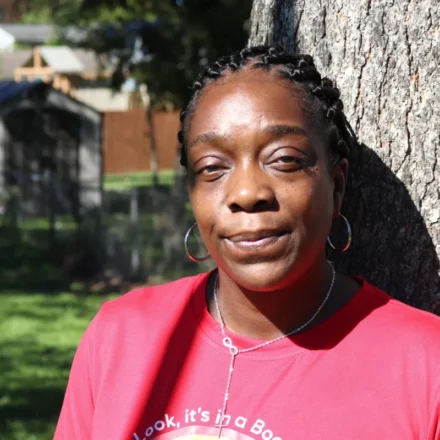
Pat Booker, a seasoned voter in New Ulm, who witnessed Walz’s rise and is now closely observing Johnson’s campaign, highlights a crucial commonality: their classroom-honed skills translate effectively to the campaign trail. " (Johnson) doesn’t hesitate to answer questions and doesn’t hesitate to meet with constituents, and that was the same way with Tim," Booker noted, drawing a direct parallel between the two challengers’ approaches to public engagement.
The Incumbent: Brad Finstad’s Fortress and Strategy
Rep. Brad Finstad, 50, a New Ulm resident, secured the 1st District seat in a 2022 special election and has since deftly fended off Democratic challengers. His political strategy reflects a deep understanding of his district’s conservative leanings and his close alignment with former President Donald Trump. Finstad’s campaign largely focuses on engaging his base through official business events, meeting with police officers, farm groups, and local companies, rather than engaging in direct, unscripted debates or town halls with his challenger.
Political science professor Kevin Parsneau of Minnesota State University in Mankato observes, "He’s certainly acting like internal (campaign) polls are telling him he has a wide lead. He’s speaking to his base. He does not want to be in an unscripted situation." This strategy, while potentially limiting direct engagement with critics, allows Finstad to project an image of a diligent representative focused on his constituents’ needs while avoiding potentially tricky confrontations.
Finstad, however, disputes the characterization of being inaccessible. "I travel all over southern Minnesota," he told MinnPost. "I’m always listening and communicating with constituents who agree and don’t agree with me. I’m having those conversations and I would say reach out to me, reach out to our office. I’m more than willing to have a conversation and answer questions." He frames his service as a profound honor, stating, "it is an honor of a lifetime to serve the 1st District’s 750,000 residents, but my goal is heaven, not Congress. When November comes, the voters of southern Minnesota will decide, but no one is going to outwork me."
Finstad’s home base of New Ulm itself is a testament to the district’s conservative identity. Steeped in German heritage, with a towering statue of the ancient Germanic hero Hermann, daily glockenspiel chimes, and popular Oktoberfest and Bock Fest events at August Schell’s brewery, the city proudly preserves its historical roots. Groups like the Junior Pioneers of New Ulm and Vicinity celebrate direct descendants of early settlers. While Pat Booker notes the community has grown more welcoming over time, locals acknowledge that newcomers can still feel like an "auslander" (outsider). New Ulm remains a deeply conservative, Republican-majority city, serving as the county seat of Brown County, which President Donald Trump handily won over former Vice President Kamala Harris in 2024. This cultural and political backdrop provides Finstad with a solid base of support.
An Underdog in Trump Territory: The Shifting Political Landscape
Jake Johnson undoubtedly faces an uphill battle. The 1st District awarded Trump 55% of its vote in 2024, and Finstad’s electoral history since 2022 demonstrates his ability to secure victories in this territory. The Cook Political Report, a respected non-partisan election analytical group, rates the district as "likely Republican," underscoring the formidable challenge Johnson faces.
However, Johnson’s campaign has received a significant boost from the national Democratic Party. Recognizing his campaigning skills – which include an ambitious plan to hold town halls in all 21 counties of the district – and especially his impressive fundraising abilities, the Democratic Congressional Campaign Committee (DCCC) has placed Johnson on its prestigious "Red to Blue" list. This designation is reserved for Democratic candidates who are actively working to flip Republican-held seats and are deemed worthy of substantial national party support, including access to fundraising assistance, strategic guidance, and campaign training.

Johnson has already proven his fundraising mettle, amassing nearly $1.9 million in campaign funds as of June 30, according to the latest Federal Election Commission reports. Finstad, meanwhile, has raised nearly $2 million, indicating a competitive financial race, an unusual feat for a challenger in such a red district.
Democrats are banking on several factors to wrest control of the U.S. House from the GOP: Trump’s fluctuating approval ratings, an energized Democratic base, and the historical advantage often enjoyed by the party out of power in general elections. To achieve their goal, Democrats must win in swing districts and ideally flip some Republican-held seats in places like the 1st District.
The district itself has undergone significant political shifts since Walz’s 2006 victory. Walz defeated Gil Gutknecht, a moderate Republican. Finstad, by contrast, has closely aligned himself with the more conservative wing of the GOP and former President Trump. This rightward shift, coupled with post-Census redistricting, has made the 1st District a much more challenging environment for Democrats.
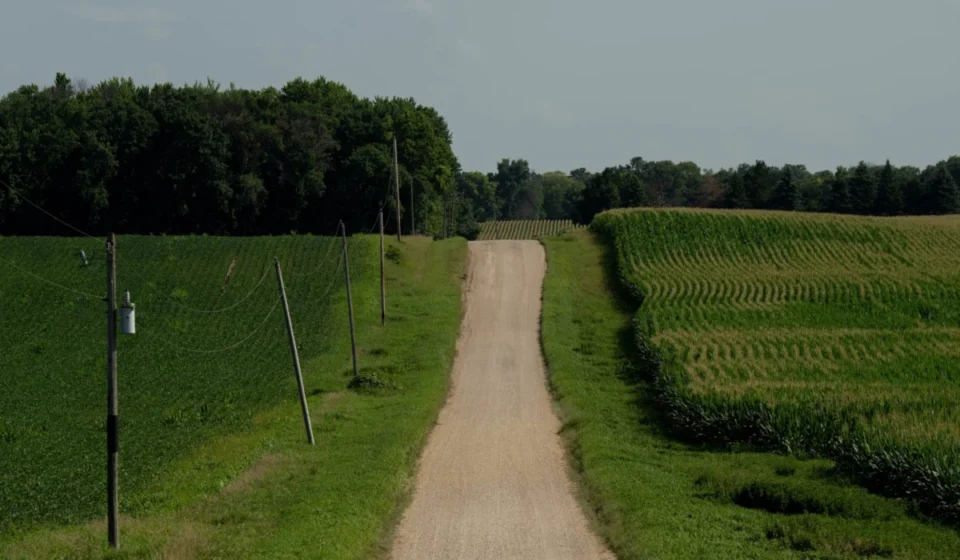
"It’s gotten a lot more conservative," confirms Kate Knutson, a political science professor at Gustavus Adolphus College. Redistricting played a role, with the district becoming even more rural after picking up new territory in the southern part of the state along the Mississippi River.
Beyond cartographic changes, the district mirrors a national trend: the increasing Republicanization of rural America. Social scientists suggest that many rural residents perceive their core cultural values – centered on church, family, and freedom from government interference – as threatened by a rapidly changing nation. Furthermore, a prevailing sentiment among many rural inhabitants is that the Democratic Party is increasingly composed of urban elites who look down upon rural lifestyles and prioritize the concerns of city or immigrant populations over the struggles of the rural working class. "The ‘farmer’ part of the Democratic-Farmer-Labor Party has peeled off," Knutson notes, highlighting a significant demographic and ideological realignment.
Cracks in the Red Wall? Farmers, Tariffs, and Global Events
Despite the district’s strong conservative lean, Johnson and the Democrats see potential vulnerabilities. Knutson suggests that Johnson might succeed in "depressing – at least a little bit – the enthusiasm among farmers for the GOP" by consistently highlighting how Trump-era policies have negatively impacted the agricultural sector.
"Farmers are frustrated by tariff and immigration sweeps that are hurting the meatpacking industry in southern Minnesota," Knutson explains. These policies, implemented under the Trump administration, created instability and economic hardship for many in the region’s vital agricultural sector. Additionally, recent global events, such as Iran’s shutdown of the Strait of Hormuz, have significantly impacted farm country by stalling crucial deliveries of oil and fertilizer, leading to increased input costs for farmers already operating on tight margins.

Finstad, however, has largely dismissed criticisms regarding Trump’s agricultural policies, instead attributing the current distress to the Biden administration. "We’re heading in the right direction," he told MinnPost after a roundtable on veterans’ issues in Mankato. "We have come out of some tough times where the inputs have been really crippling for the last six years, and then on top of that we’ve had that stale market because of that lack of trade." This narrative aligns with his base, deflecting blame from his party’s former leader and focusing on current administration critiques.
Johnson’s campaign strategy includes taking the fight directly to Finstad’s home turf. He actively participated in New Ulm’s Bavarian Blast festival parade in July and plans to hold a town hall in the city in August, demonstrating a commitment to engaging voters even in the most conservative pockets of the district. This direct, accessible approach contrasts sharply with Finstad’s more guarded strategy, potentially resonating with voters like Pat Booker, who expressed frustration over Finstad’s perceived unwillingness to meet with constituents about concerns like SNAP and Medicaid cuts. "I got one pat letter saying thank you for your concerns," said Booker, a military veteran and retired probation officer, after eight months of trying to get facetime with Finstad.
Implications: A Bellwether for Rural America?
The contest in Minnesota’s 1st Congressional District is more than just a local election; it’s a critical test case for the national Democratic Party’s ability to compete in increasingly conservative rural areas. Can a candidate with a compelling personal story, a moderate platform, and robust national support overcome the powerful forces of partisan realignment and incumbency?
Johnson’s challenge highlights the ongoing struggle for Democrats to regain traction with rural working-class voters. His emphasis on both fiscal conservatism and a strong social safety net is a deliberate attempt to bridge the ideological divides that have grown wider over the past two decades. His success, or even a strong showing, could provide a blueprint for future Democratic campaigns in similar districts across the country. Conversely, a decisive Finstad victory would reaffirm the entrenched conservative lean of such districts and perhaps necessitate a reevaluation of Democratic strategies in these areas.
While the echoes of Tim Walz’s 2006 upset are undeniable, the political landscape of 2026 presents a different, arguably more challenging, environment. Yet, the very act of a dedicated teacher, backed by national attention and a relatable narrative, daring to challenge a well-positioned incumbent in a "likely Republican" district, underscores the persistent belief in American politics that even the most formidable fortresses can, with enough effort and the right message, be breached. The voters of southern Minnesota will ultimately decide if history is indeed destined to repeat itself, or if the district has fundamentally charted a new course.