







































For more than a century, the city of Rochester, Minnesota, has enjoyed a seemingly bottomless bounty. Nestled above the Jordan aquifer—a massive, porous geological formation that stretches across seven states—the city has relied on this underground reservoir as its sole source of drinking water. It is a system that has supported the city’s steady climb from a modest settlement to a regional hub of healthcare and technology.
However, that era of unfettered expansion is drawing to a close. As Rochester’s population surges and industrial demands intensify, the city’s reliance on the Jordan aquifer has hit a critical bottleneck. State regulators have drawn a line in the sand, and for the first time, city officials are forced to confront a reality that many other major municipalities solved decades ago: their current water model is not sustainable.
The Limits of a Century-Old Strategy
Rochester’s municipal utility currently maintains approximately 30 groundwater wells, bored deep into the earth—anywhere from 400 to 1,000 feet—to tap into the Jordan aquifer. With a current population of 125,000, the city consumes 4.8 billion gallons of water annually. Projections suggest that if current growth trends hold, that demand will nearly double by 2065.

The problem, however, is not just the volume of water, but the health of the ecosystem above it. In 2024, the Minnesota Department of Natural Resources (DNR) issued a formal notification to Rochester Public Utilities (RPU): the city can no longer add new wells within its municipal limits. The reason is environmental preservation. The DNR’s mandate is to protect surface waters, including regional streams cherished by anglers and rare “fens”—wetlands that act as critical habitats for endangered species. Excessive pumping from the aquifer, the state warns, would effectively “steal” water from these surface features, drying out the landscape and destabilizing local ecology.
A Chronology of Constraint
The warning from the DNR was not a sudden bolt from the blue, but rather the culmination of years of geological observation.
- 1900s–2020: Rochester experiences steady growth, expanding its well network in tandem with population increases, assuming the Jordan aquifer’s capacity was effectively infinite.
- 2013: The crisis at White Bear Lake serves as a wake-up call for the state. A suburban lake reaches record lows due to over-pumping, leading to years of litigation and heightened DNR scrutiny of groundwater usage.
- 2020–2023: As data centers and industrial development projects ramp up in the Rochester area, RPU observes the rising pressure on the aquifer and begins long-term resource planning.
- 2024: The Minnesota DNR officially caps Rochester’s expansion, informing the city that it has reached the threshold of its appropriation limit—5.7 billion gallons annually—which the city is expected to hit within five years.
- 2026: RPU initiates a comprehensive 40-year water supply study to identify alternative sources and conservation methods.
- October 2026 (Forthcoming): The city expects to receive the preliminary results of its water study, which will outline the viability of surface water, deeper aquifer tapping, or a hybrid system.
- Early 2027 (Projected): A formal decision is expected on the city’s long-term water management strategy.
The "Surface Water" Dilemma
In most of the United States, large cities do not rely solely on groundwater. The Twin Cities, for example, transitioned to the Mississippi River as their primary source decades ago as their population density made groundwater extraction insufficient. Surface water, while requiring significant filtration and treatment, replenishes relatively quickly through rainfall. Groundwater, by contrast, can take centuries or even millennia to recharge.

For Rochester, the prospect of switching to surface water is fraught with logistical and financial hurdles. The city has identified potential sources in the Zumbro River, but some council members, like Patrick Keane, remain skeptical. "I know there are people in the community who would say you’re the only large municipality that doesn’t use any surface water, you’re the only one that doesn’t do any sort of major treatment center," Keane noted. "I take those as almost bragging things that we’ve got good quality water without all that treatment."
Beyond the loss of "pristine" well water, the cost is prohibitive. A new surface water treatment plant would represent a massive capital investment, potentially costing millions of dollars and requiring a total overhaul of the city’s water infrastructure. Furthermore, if the city were to look to the Mississippi River, it would face a 40-mile transportation challenge, necessitating massive pipeline infrastructure that would disrupt rural land and incur astronomical maintenance costs.
Official Responses and the "Fossil Water" Debate
The reluctance to abandon the groundwater model is not just a matter of civic pride; it is a matter of administrative simplicity. RPU officials are currently exploring the feasibility of mixing groundwater from different sources.

"I am still optimistic that we will find a groundwater solution because blending different sources of groundwater is a more manageable process than trying to blend surface water and groundwater," said Todd Blomstrom, assistant general manager of RPU.
However, the "groundwater solution" involves a controversial path: drilling deeper into the Wonewoc and Mt. Simon aquifers. Geologists warn that this is essentially "water mining." The water found in the Mt. Simon aquifer is roughly 60,000 years old. It is "fossil water"—a non-renewable resource.
"It’s not coming into the ground very easily, and once it’s gone, it’s gone," says Carrie Jennings, a geologist and policy director for the nonprofit Freshwater. Her organization, among others, argues that relying on finite, ancient water is a dangerous stopgap that ignores the reality of climate change and shifting precipitation patterns.

Local Perspectives: The View from the Field
The debate over water in Rochester extends far beyond City Hall. For local farmers like John Meyer, who operates the Rock Dell Forage Farms in nearby Stewartville, the conversation is about stewardship. Meyer, who relies on private wells, uses regenerative agriculture practices—such as cover cropping—to improve soil health. He argues that better land management can increase water filtration and retention, mitigating some of the pressure on the aquifer.
"It takes a long time for what we do up here to affect that area we’re pulling from," Meyer said, referring to the slow recharge rates of the deep aquifers. "If we go deeper, we’re just delaying that process but not fixing it. The smart thing to do is correct what we’re doing up here on top."
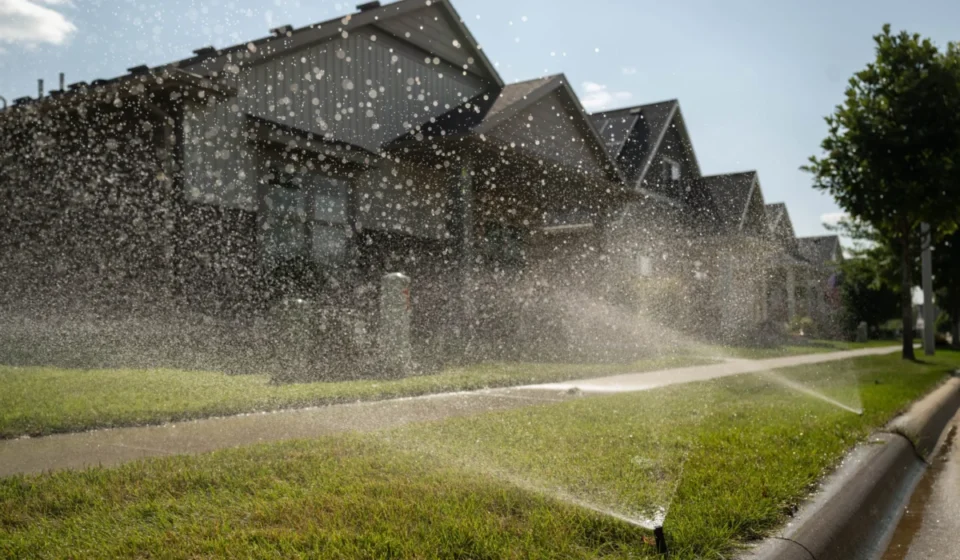
Meyer’s critique highlights a growing tension between urban expansion and rural water sustainability. While the city debates the technical merits of deep-well drilling versus surface treatment, there is a lack of mandatory, city-wide conservation measures. Currently, RPU’s conservation programs—such as promoting high-efficiency appliances and smaller lawns—are entirely voluntary.

Implications for a Changing State
Rochester’s struggle is a bellwether for the rest of Minnesota. Often characterized by its abundance of lakes and rivers, the state is beginning to realize that its water is not immune to the pressures of the 21st century.
"We’re a little spoiled in Minnesota when it comes to water," says Jennings. "But things are changing and there’s going to be more climate stress, different styles of rain events, and different needs for water use."
The state’s Management and Budget office is already looking ahead, conducting a statewide study on water stressors through the year 2100. This study acknowledges that the era of treating water as a bottomless resource is over. Policymakers are being urged to consider the impact of industrial development—specifically data centers, which are notorious for their high water consumption for cooling—and the long-term impact of land-use changes on aquifer recharge rates.

Conclusion: A Proactive Path Forward
Rochester stands at a crossroads. By choosing to confront the limits of the Jordan aquifer today rather than waiting for a crisis to force their hand, the city is exercising a level of foresight that is commendable.
"We’re not dealing with it under duress," Councilmember Keane said. "We’re dealing with it as just good stewards of our natural resources, but also looking forward into the future."
Whether the city ultimately invests in a high-tech surface water treatment facility, continues to rely on increasingly deep and potentially finite groundwater, or mandates a culture of extreme water conservation, the outcome will likely set a precedent for other municipalities across the Upper Midwest. The water of the Jordan aquifer has sustained Rochester for a century, but the next century will require more than just a drill and a pump; it will require a fundamental shift in how the city values and protects its most essential resource.