


























































The traditional American weekend has long been punctuated by the drone of lawnmowers and the scent of freshly cut grass. For decades, homeowners and property managers have adhered to a rigid, calendar-driven routine: mowing every Saturday, pruning on a set spring weekend, and stripping garden beds bare every autumn.
However, a growing body of agronomic research and horticultural expertise suggests that this calendar-centric approach is not only inefficient but can also actively harm residential ecosystems.
Modern landscape management is shifting toward a "condition-based" or "cue-based" maintenance framework. By replacing arbitrary dates with observable biological and environmental triggers, property owners can cultivate healthier turf, promote biodiversity, and significantly reduce unnecessary labor.
Main Facts: The Shift to Cue-Based Landscaping
The core principle of cue-based landscaping is simple: a yard rarely requires every maintenance task to be performed simultaneously. Plant growth is highly dynamic, dictated by fluctuating weather patterns, soil temperatures, and species-specific biological clocks. A rainy, warm spring can cause turfgrass to grow at double its average rate, while a hot, dry late summer can trigger semi-dormancy, rendering weekly mowing redundant and potentially damaging.
To help homeowners navigate this shift, horticultural specialists have established a baseline of starting frequencies paired with specific environmental indicators. Rather than relying on a calendar, successful property management relies on observing these critical thresholds.
The Practical Yard Maintenance Framework
| Area or Task | Useful Starting Frequency | Best Cue to Watch (The Trigger) |
|---|---|---|
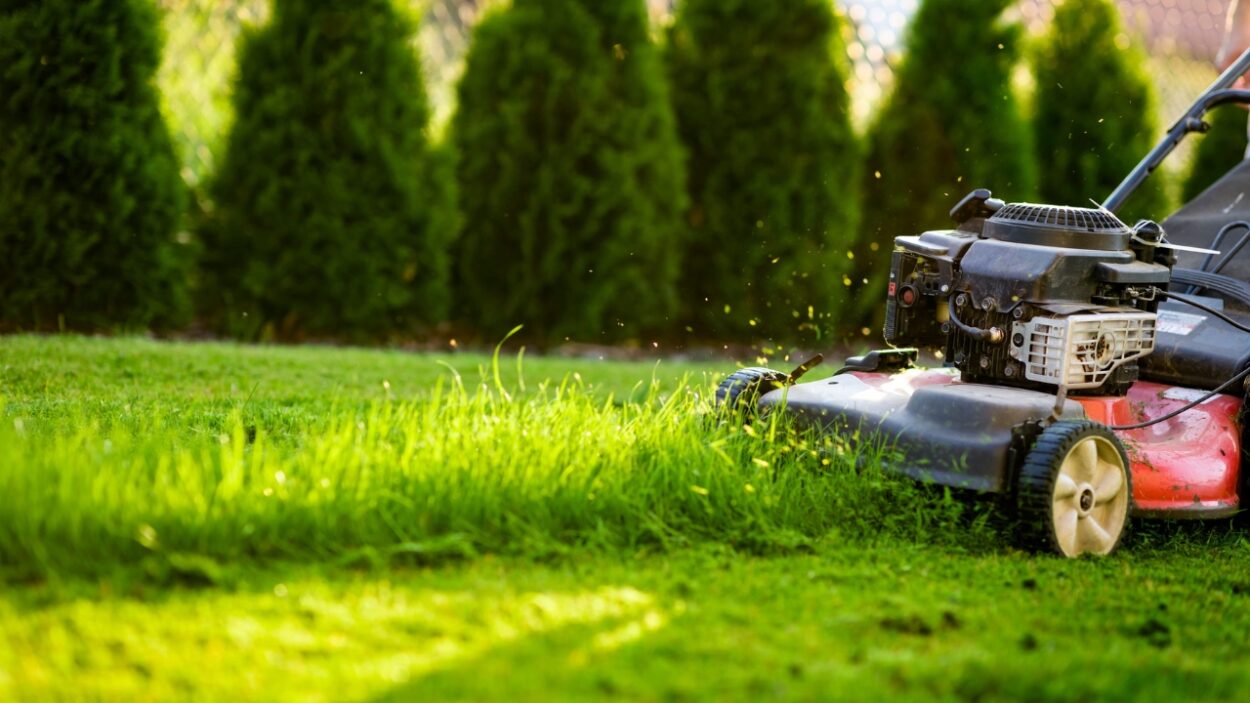
| Lawn Mowing | Every 5 to 10 days during active growth | Grass reaches approximately 1.5 times its target height |
| String Trimming | Every mow or every other mow | Vegetative growth becomes noticeable around hard obstacles |
| Lawn Edging | Every 2 to 4 weeks | Turfgrass stolons or rhizomes begin creeping over paths or beds |
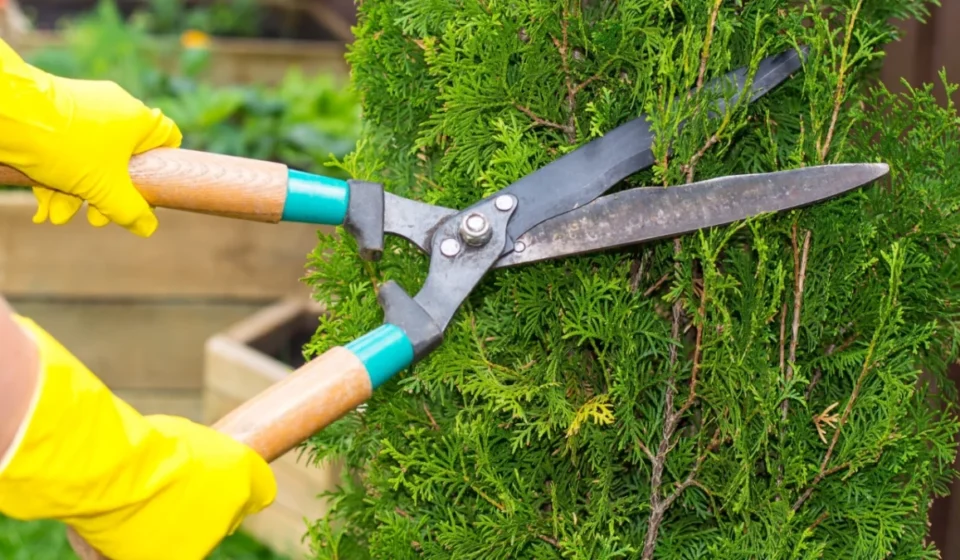
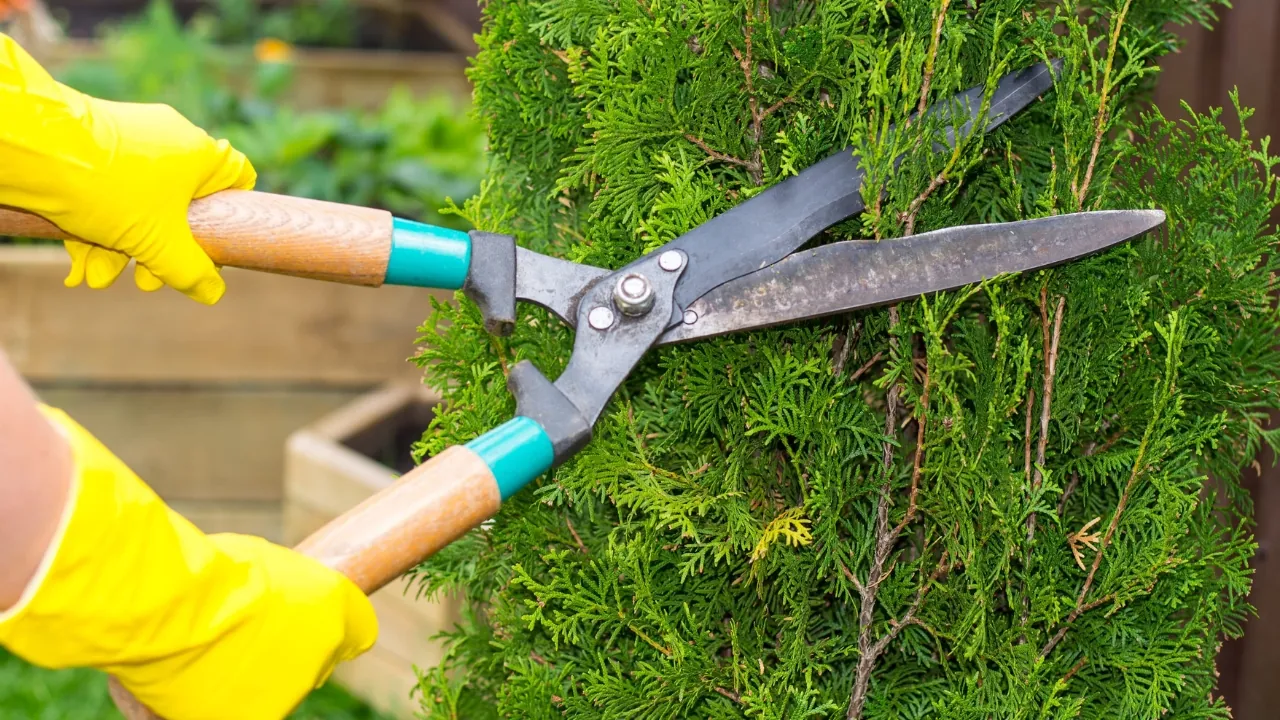
| Formal Hedges | 3 to 5 times per growing season | New, soft shoots begin to obscure the defined architectural shape |
| Informal Shrubs | One primary annual pruning session | Completion of flowering cycle; appearance of dead, damaged, or crossing wood |
| Young Trees | Inspect annually; prune every 1 to 3 years | Presence of crossing branches, co-dominant stems, or poor structural attachments |
| Mature Trees | Inspect annually; prune only when strictly necessary | Structural safety hazards, clearance issues, or deadwood removal |
| Flower Beds | Quick inspection every 1 to 2 weeks | Emergence of young weeds, spent blooms (deadheading), or signs of foliar disease |
| Fallen Leaves | Regularly during the autumn leaf-drop period | Leaf accumulation begins to cover more than 50% of the grass blades |
| Patios & Paths | Sweep weekly or immediately following major storms | Accumulation of organic debris, sediment, moss, or slippery algal growth |
Chronology and Seasonal Workflow: Adapting to the Landscape’s Lifecycle
To successfully implement a cue-based schedule, property owners must understand how these maintenance tasks sequence throughout the year. The workflow does not follow a linear path; instead, it expands and contracts in response to seasonal transitions.
[Late Winter / Early Spring] ──> [Spring Growth Spurt] ──> [Summer Heat/Dry Spells] ──> [Autumn Leaf Fall] ──> [Winter Dormancy]
         │                               │                           │                        │                     │
  Prune summer-                    Mow frequently               Slow mowing;               Mulch/collect            Annual tree
  bloomers; inspect                (one-third rule);            focus on weed             leaves; selective         inspections &
  structural damage                prune spring-bloomers        control & edging          cleanup for habitat       safety pruning
1. Late Winter to Early Spring: The Structural Foundation
Before the vegetative growth spurt begins, the primary focus is on structural evaluation and dormant pruning.
- The Cue: Deciduous trees and summer-blooming shrubs are bare, revealing their underlying branch architecture.
- The Action: Property owners should inspect mature trees for winter storm damage and prune summer-blooming shrubs (such as certain hydrangeas and abelias) before sap flow increases. This is also the ideal window for corrective structural pruning on young trees.
2. The Spring Growth Spurt: High-Frequency Management
As soil temperatures rise, turfgrass and formal hedges enter their most rapid growth phase of the year.
- The Cue: Consistent rainfall and mild temperatures trigger rapid elongation of grass blades and hedge shoots.
- The Action: Mowing frequencies compress to every 5 to 7 days to respect the biological limits of the turf. Formal hedges receive their first shearing of the season as soon as new growth softens their clean lines. Spring-blooming shrubs (such as lilacs and forsythia) are pruned immediately after their blossoms fade.
3. Mid-to-Late Summer: Conservation and Mitigation
High heat and reduced rainfall slow down cool-season grass growth, shifting the focus from containment to preservation.
- The Cue: Soil moisture depletes, and grass growth visibly decelerates.
- The Action: Mowing intervals stretch to 10 days or longer. Mowing heights are raised to shade the soil and conserve moisture. String trimming is scaled back to prevent damaging heat-stressed plants, while flower beds receive targeted weeding to prevent resource competition.
4. Autumn: Leaf Management and Strategic Neglect
The arrival of autumn introduces a rapid accumulation of organic matter and requires a dual approach of active management and deliberate restraint.
- The Cue: Deciduous canopies thin, and leaves begin blanketing the lawn.
- The Action: Leaf mulching or collection occurs weekly to protect the turf from smothering. However, garden beds undergo a transition of "strategic neglect," where healthy standing stems and leaf litter are left intact to preserve overwintering habitats for beneficial pollinators.
Supporting Data and Science-Backed Metrics
The effectiveness of cue-based landscaping is supported by a wealth of agricultural and biological data. Understanding the science behind these metrics allows property owners to optimize their routines for maximum ecological and structural benefit.
The Physiology of the "One-Third Rule"
The standard recommendation to never remove more than one-third of the grass blade in a single cutting is rooted in plant physiology.
When a grass blade is cut, the plant temporarily halts root growth to redirect its energy reserves (carbohydrates) toward regenerating photosynthetic leaf tissue.
[Mowing Action] ──> Removes > 33% of blade ──> Photosynthesis plummets ──> Root development halts (up to 14 days) ──> Vulnerability to drought & disease
         │
         └──> Removes < 33% of blade ──> Minimal stress ──> Root development continues uninterrupted ──> Robust, drought-tolerant turf
According to data compiled by the University of Illinois Extension, removing more than 33% of the leaf surface at once severely shocks the plant, causing root development to cease for up to two weeks. This weakens the turf’s ability to access deep soil moisture, making it highly susceptible to drought and disease.
Conversely, keeping mowing heights higher—such as maintaining a lawn at 3 inches and cutting it when it reaches 4.5 inches—leaves a larger photosynthetic surface area, fostering a deeper, more resilient root system.
The Nutritional Value of Grass Clippings
Many homeowners routinely bag and discard grass clippings, viewing them as waste. However, analysis by agricultural extension services reveals that grass clippings are highly valuable organic fertilizer.
Clippings consist of approximately 75% to 80% water and break down rapidly when left on the lawn. According to agronomic data, leaving clippings on the lawn can return up to 25% of the lawn’s total nitrogen requirement back to the soil, significantly reducing the need for synthetic chemical fertilizers.
The Threshold for Leaf Accumulation
While leaves are a natural resource, their accumulation on manicured turfgrass must be carefully managed.
Research from the University of Minnesota indicates that a light covering of leaves—where at least 50% of the grass blades remain visible—can be easily mulched directly into the lawn using a standard rotary mower. The shredded organic matter improves soil structure and microbial activity without harming the turf.
However, once leaf cover exceeds this 50% threshold, the leaves form an impermeable mat that blocks sunlight and traps excessive moisture. This environment encourages devastating fungal pathogens, such as snow mold, and can smother the grass by late winter.
Official Responses and Expert Perspectives
Agricultural extension offices and professional horticultural societies across the United States have long advocated for a departure from rigid calendar schedules, emphasizing biological indicators instead.
On Lawn Care and Clippings
The University of Illinois Extension emphasizes the ecological and practical benefits of recycling grass clippings:
"Because grass clippings are high in nutrients, they should be left on the lawn. Leaving clippings on the lawn does not contribute to thatch buildup. Mulching mowers shred clippings into small pieces, allowing them to fall easily into the turf canopy and decompose quickly."
On Shrub and Hedge Management
When it comes to maintaining woody ornamentals, the University of Georgia Cooperative Extension advises that pruning schedules must align with the growth habits of the specific plant species:
"Formal hedges require frequent shearing during the active growing season to keep their crisp, geometric shapes. In contrast, informal shrubs should be pruned selectively, respecting their natural growth habit and flowering cycle. Pruning spring-flowering shrubs late in the year will remove next year’s flower buds, resulting in a disappointing spring display."
On Tree Care and Longevity
For long-term canopy health, the Pennsylvania State University Agricultural Extension highlights the difference between young and mature tree care, warning against over-pruning established trees:
"Young trees require regular structural pruning to establish a strong central leader and sound branch spacing. However, mature, well-structured trees require very little pruning. In fact, over-pruning mature trees can stimulate excessive water-sprout growth and deplete the tree’s energy reserves. A mature tree may only need structural or safety pruning every five to ten years, though annual hazard inspections are critical."
Environmental and Economic Implications
Adopting a cue-based yard maintenance schedule has profound implications that extend far beyond aesthetics. It offers tangible economic savings for homeowners and crucial ecological benefits for local ecosystems.
                  ┌──> Reduced fuel, water, and fertilizer consumption (Economic Savings)
                  │
Cue-Based Care ───┼──> Preserved pollinator habitats & winter cover (Biodiversity Boost)
                  │
                  └──> Decreased green waste & lower chemical runoff (Environmental Protection)
Economic Benefits: Resource and Labor Optimization
- Reduced Fuel and Energy Consumption: Mowing only when the grass demands it prevents unnecessary equipment operation. This directly translates to lower fuel costs and reduced wear-and-tear on machinery, while also decreasing the homeowner’s carbon footprint.
- Lower Fertilizer and Chemical Inputs: By leaving nutrient-rich grass clippings on the lawn and mulching fallen leaves into the soil, property owners can drastically reduce their reliance on commercial fertilizers. This saves money and prevents the over-application of chemicals that can damage soil biology.
- Mitigation of Costly Tree Failures: Annual visual inspections of mature trees allow property owners to identify structural defects, dead wood, or disease symptoms early. Addressing these issues proactively is significantly cheaper than paying for emergency tree removal or repairing property damage after a major storm.
Environmental Implications: Biodiversity and Ecosystem Health
- Pollinator Habitat Preservation: Traditional fall cleanups involve stripping beds bare, removing dead flower stalks, and leaf blowing every corner of the property. The University of Illinois Extension warns that this practice destroys vital overwintering habitats for native bees, butterflies, and other beneficial insects. Leaving healthy plant stems and leaf litter in garden beds until spring provides essential shelter for these species, bolstering local biodiversity.
- Reduction in Runoff and Erosion: A lawn maintained at a higher cut develops a deeper, more robust root system. This dense root network improves the soil’s water infiltration capacity, significantly reducing stormwater runoff and soil erosion during heavy rains. It also prevents excess nutrients and fertilizers from washing into local waterways, helping to protect aquatic ecosystems from harmful algae blooms.
- Diversion of Green Waste from Landfills: According to environmental protection agencies, yard trim and leaves make up a significant portion of municipal solid waste. By mulching leaves and grass clippings directly on-site, homeowners can divert tons of organic matter from landfills, returning those valuable nutrients directly to the local soil food web.
Ultimately, a yard managed by visible environmental cues rather than a rigid calendar is more resilient, ecologically diverse, and economical to maintain. By listening to the landscape and responding to its biological triggers, homeowners can enjoy a beautiful, healthy outdoor space while reclaiming their weekends from unnecessary chores.