














































A Stage in Limbo: The Cowles Center’s Uncertain Future Amid a Shifting Arts Landscape

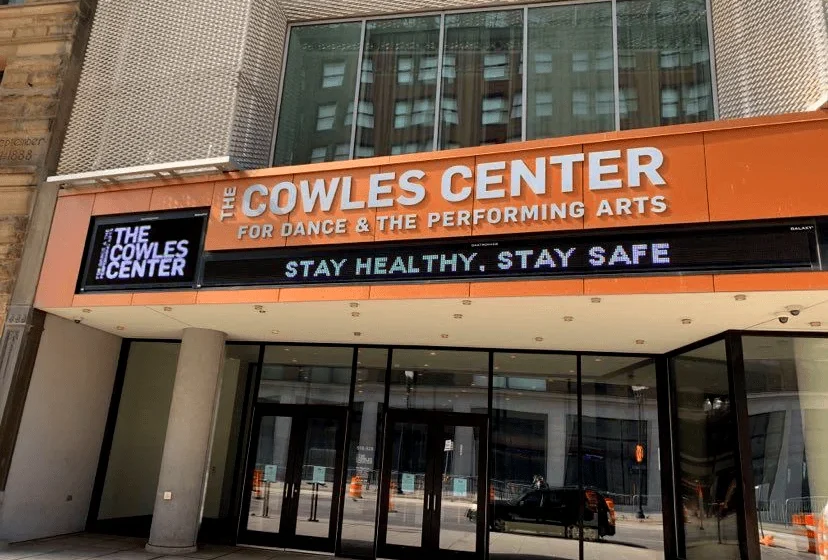
The grand, historic halls of the Cowles Center in downtown Minneapolis echoed with a rare, vibrant energy this past weekend. As the South Asian Arts and Theater House (SAATH) debuted its production of "Made in INDIA," the venue—shuttered since 2024—felt less like a dormant municipal asset and more like a beating heart returning to life. For a few nights, the 500-seat theater shed its air of abandonment, offering a glimpse of what the iconic space could become if the gears of bureaucracy finally turn.
However, the success of the production stands in stark contrast to the administrative purgatory surrounding the venue. More than a year after the city of Minneapolis selected Arts’ Nest, in partnership with Zenon Dance, to manage the facility, the lease remains unsigned. As the Twin Cities arts community grapples with a wave of closures and economic contraction, the Cowles Center sits in a state of suspended animation—a symbol of both the resilience of local performers and the fragility of the city’s cultural infrastructure.
A Legacy in Motion: From the Shubert to the Cowles
The history of the building at 528 Hennepin Avenue is a testament to the sheer physical and cultural weight of Minneapolis’s theatrical tradition. Originally opened in 1910 as the Shubert Theatre, the structure was a masterpiece of early 20th-century design by William Albert Swasey. Interior designer John S. Bradstreet graced the space with dual balconies and a stage-wide trap door, features that have defined its aesthetic and technical capacity for over a century.
The building’s endurance is legendary, perhaps best exemplified by the "Great Move" of 1999. In a feat of engineering that captured the public imagination, the 5.8-million-pound structure was physically rolled across downtown, moving from its original 7th Street location to its current site on Hennepin Avenue. In 2011, the building was reimagined as the Cowles Center, bolstered by $12 million in state funding. Yet, the momentum generated by that renovation proved unsustainable. The economic pressures brought on by the pandemic, compounded by shifting donor priorities and rising operational costs, forced the venue to abruptly close its doors in 2024, leaving a cavernous hole in the city’s cultural district.
The Production: A Story of Resilient Identity
"Made in INDIA," the production that briefly brought the Cowles back to life, is a poignant reflection of the resilience required to thrive in the current arts climate. Written by Kristen Marx, the play draws directly from her own experiences as a transracial adoptee. The narrative follows two sisters of Indian descent raised by a white, single adoptive mother in the United States.
The show is a multidisciplinary tour de force, blending South Asian martial arts, classical Indian dance, Bollywood, and hip-hop to map the sisters’ complex, often divergent journeys of self-discovery. While the cast is primarily composed of non-professional performers, the sincerity of the storytelling and the technical prowess facilitated by the Cowles’ stage equipment created an atmosphere of infectious joy. Lighting designer Surya Saathi utilized the venue’s expansive technical capabilities to elevate the performance, proving that even in its current, uncertain state, the Cowles remains a vital tool for artists who have outgrown smaller black-box spaces.
"It was very exciting to have that access to so much more tech and staging and options," said Divya Maiya, executive director of SAATH. For Maiya, who had long targeted the Cowles for the group’s increasingly ambitious works, the closure of the venue in 2024 felt like a personal and professional blow. "It almost felt like a big growth for us, so we were pretty sad that went away."
The Administrative Labyrinth: Why the Lease Remains Unsigned
Despite the enthusiasm surrounding the weekend performances, the underlying reality for the Cowles Center is grimly bureaucratic. Arts’ Nest, the organization designated by the city to manage the facility, currently operates in a state of precarious limbo. They are not yet the official lessees; instead, they serve as a logistical bridge between the city—which retains control of the building—and independent renters like SAATH.
This arrangement means that while Arts’ Nest handles bookings and covers the costs of technical staff, the path to a sustainable, long-term operation remains blocked by state approvals and pending contract finalizations. Earlier this year, the prospect of a "grand opening" was floated, only to be quietly scrubbed from the venue’s website.
Jenny Moeller, acting executive director of Arts’ Nest, describes the current status as a "very soft opening." She acknowledges the frustration of the slow timeline, noting that the delay is largely a product of navigating state-level requirements and the inevitable friction of transitioning a public asset back into private-nonprofit management. "We probably won’t have a grand opening," Moeller said. "Everything’s been taking longer. It’s like we’re having a very soft opening."
The challenge ahead is not merely legal; it is financial. While the city oversees structural improvements, the responsibility for operational viability rests on Arts’ Nest. "We need a few more backers behind us," Moeller admitted, emphasizing that the organization is still in a critical fundraising phase.
The Broader Crisis: A City’s Cultural Landscape at Risk
The Cowles Center’s instability is not an isolated incident; it is a symptom of a broader malaise affecting the Twin Cities’ arts sector. The recent closure of the renowned Jungle Theater, which canceled its entire season and placed its Lyndale Avenue building up for sale, has sent shockwaves through the local community. The theater’s decision to auction off everything from set-shop tools to dressing-room furniture serves as a sobering reminder that even established, beloved institutions are not immune to the current economic environment.
The optics of the Cowles are equally telling. During the intermission of "Made in INDIA," as audiences enjoyed chai and samosas in the lobby, the names of former major corporate sponsors remained etched on the walls—a ghost of an era when robust corporate patronage provided a safety net for the arts. That net has largely evaporated, leaving organizations to rely on leaner budgets, individual donors, and "pay-what-you-can" ticketing models to survive.
Implications: The High Cost of Stagnation
The implications of leaving a venue like the Cowles Center in limbo are profound. For mid-sized organizations like SAATH, the lack of a permanent, reliable home prevents long-term artistic planning. Every show becomes a gamble, dependent on whether the facility will remain open, who is managing the booking, and whether the technical staff will be available.
"I think it’s also really fun for [the cast] to see a big production being staged here after such a long time," Maiya noted. "And just going down to the basement and finding all those things that they haven’t used in a while."
This sentiment captures the essence of the current moment: a mixture of nostalgia for what the space once was and a desperate hope for what it could become. However, the energy of a weekend performance cannot substitute for a signed lease, stable funding, and a clear vision for the future. As Minneapolis looks toward a post-pandemic cultural recovery, the Cowles Center stands as a critical test case. If the city and its partners cannot bridge the gap between intent and action, the venue risks becoming just another cautionary tale in a city that is struggling to preserve its most valuable creative assets.
For now, the show goes on at 528 Hennepin, but it does so on borrowed time. The remaining performances of "Made in INDIA" offer a fleeting, triumphant reminder of the city’s creative spirit—a spirit that is currently waiting, with bated breath, for the doors to officially stay open.
“Made in INDIA” runs August 26, 28, and 29 at 7 p.m. at the Cowles Center. Tickets are priced between $25 and $40, with $15 student tickets and free admission for children under 5. The performance on Wednesday, August 26, is offered on a "pay-what-you-like" basis.