




















































The Fraud Front: How Healthcare Integrity Became a Political Battlefield Ahead of the Midterms

As the 2026 midterm elections approach, the political landscape is being reshaped by a high-stakes battle over the integrity of federal health programs. While rising healthcare costs remain the primary concern for the average American voter, the Trump administration has successfully pivoted the national conversation toward a new, polarizing focal point: the systematic crackdown on fraud, waste, and abuse within Medicare, Medicaid, and the Affordable Care Act (ACA).
What began as an administrative push to secure taxpayer dollars has evolved into a full-scale political weaponization of federal oversight. By alleging widespread systemic corruption, the administration has moved to withhold billions in state funding and terminate hundreds of thousands of ACA enrollments. For the GOP, this "fraud-first" strategy offers a potent alternative to the defensive posture usually required when discussing cuts to safety-net programs. For Democrats, however, these actions represent a calculated, bad-faith effort to dismantle the social safety net under the guise of fiscal responsibility.
The Strategy: Reframing the Healthcare Debate
Historically, healthcare has been a reliable stronghold for the Democratic platform, with voters consistently expressing higher levels of trust in the party’s ability to manage insurance affordability and access. Facing a potential electoral disadvantage, Republican candidates have adopted a messaging shift: rather than defending legislative cuts to the ACA or Medicaid, they are positioning themselves as the sole guardians of taxpayer integrity.
"Going after fraud gives Republicans a healthcare message when they would otherwise just be defending cuts to Medicaid and the Affordable Care Act," says Larry Levitt, executive vice president for health policy at KFF. According to Levitt, the strategy serves to "blunt" Democratic attacks, shifting the discourse from who loses coverage to why the system must be purged of bad actors.
This messaging appears to be gaining traction with the GOP base. KFF polling from mid-September indicates that 54% of Republican voters view fraud in government programs as an "extremely important" issue for candidates to address. Among rural Republican voters, the topic frequently rises to the top of their political priority list.
A Chronology of Escalation
The current administration’s anti-fraud campaign has unfolded in several high-profile phases over the past two years:
- 2024–2025: Following a series of reports from the Government Accountability Office (GAO) highlighting systemic risks—including a 2026 report where investigators successfully obtained subsidized insurance for fake enrollees—the Trump administration began to ramp up audits of state Medicaid programs.
- Early 2026: The administration intensified its scrutiny, targeting "blue state" Medicaid units. Notably, the Department of Health and Human Services (HHS) leveled explosive allegations against New York, claiming the state provided personal care services to 5 million people—a figure that would have encompassed the vast majority of its Medicaid population.
- March 2026: CMS Administrator Mehmet Oz publicly defended the crackdown, even as federal agencies were forced to walk back the New York statistics, admitting a "glaring error" in billing code interpretation.
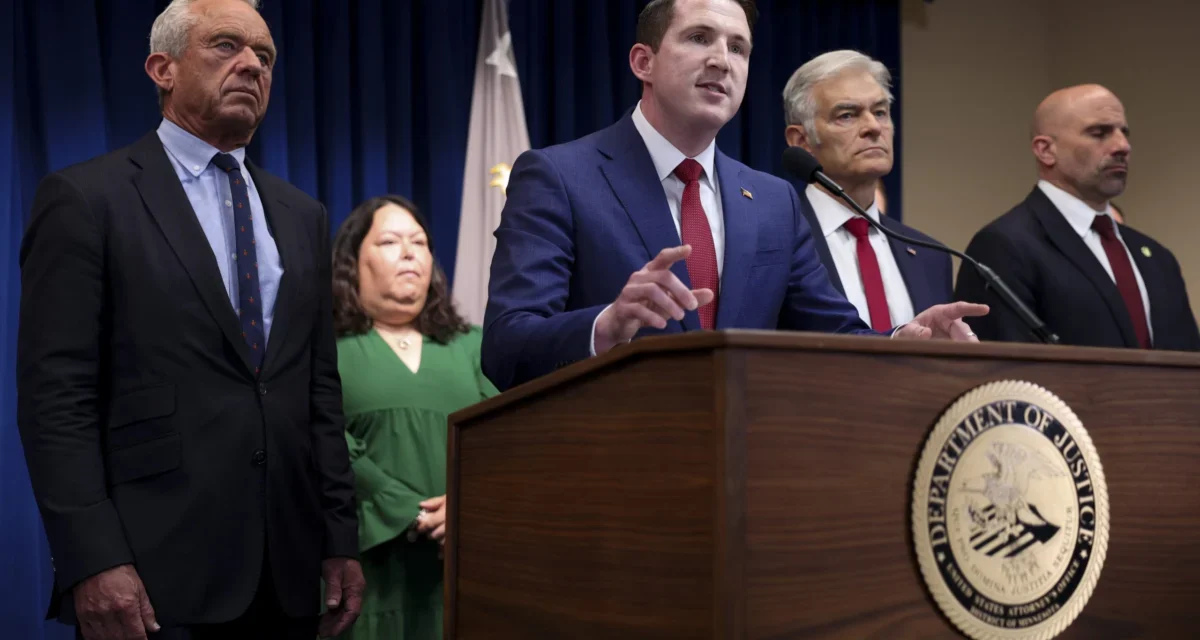
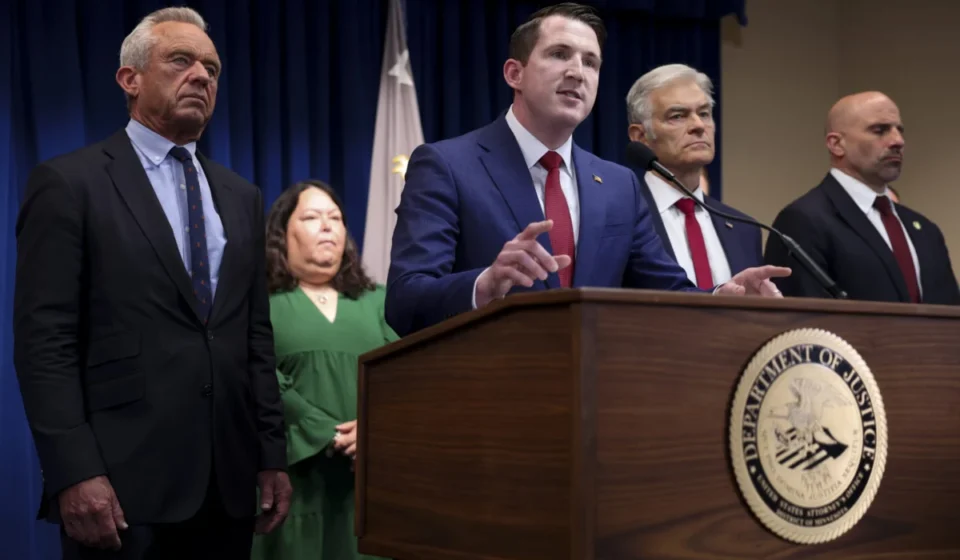
- Mid-2026: The administration moved to withhold roughly $2 billion from California and $500 million from Minnesota, citing "program integrity" concerns.
- Late 2026: The Centers for Medicare & Medicaid Services (CMS) finalized the cancellation of 760,000 ACA enrollments, citing the presence of "phantom" consumers and applications lacking valid Social Security numbers.
Data and Discrepancies: The Case of the "Phantom" Enrollees
The administration’s decision to cancel 760,000 marketplace enrollments stands as the centerpiece of their recent efforts. CMS Administrator Mehmet Oz justified the move by noting that approximately 35% of those flagged had never utilized their insurance to purchase prescriptions or visit a physician.
"They haven’t bought a prescription medication. They haven’t seen a doctor. That just is not possible," Oz stated during an August press event. "So we know there is fraud."
Independent health policy analysts and Democratic lawmakers have countered this logic with significant pushback. They point out that a lack of healthcare utilization is common among younger, healthier populations who use insurance primarily as a safety net for catastrophic events. Furthermore, the reliance on Social Security number verification as a litmus test for fraud has been criticized as technically flawed, noting that newborns and certain legal residents may not immediately possess or provide these numbers during the enrollment process.
Critics argue that the administration’s methods are not only inaccurate but also discriminatory. By focusing heavily on states with high enrollment numbers—such as California and New York—the administration is accused of using the "fraud" label to achieve ideological goals, specifically the reduction of federal spending on social programs.
Official Responses and Political Implications
The political fallout of this strategy has been intense. In Minnesota, the state government has initiated legal action against the federal government to challenge the $500 million funding freeze. Meanwhile, in New York, the debate has trickled down into local campaigns, where candidates for Attorney General are trading barbs over the efficacy of state-level fraud prosecution.
The administration’s consistency, however, has been questioned by legal observers. While the White House advocates for mandatory prison terms for those who defraud Medicare, it has also issued presidential pardons to high-profile healthcare executives convicted of significant fraud schemes. This duality has drawn sharp criticism from groups like the National Health Care Anti-Fraud Association, which argues that the administration is "exonerating criminals who have engaged in some of the biggest schemes" while simultaneously punishing states for administrative or oversight disagreements.
Brian Blase, president of the Paragon Health Institute and a former Trump health policy adviser, remains a staunch defender of the administration’s actions. He maintains that the critics of the fraud crackdown are either failing to grasp the complexity of the oversight or are intentionally mischaracterizing necessary protective measures for political gain.
Long-Term Implications for the Healthcare Landscape
The broader context of these actions is a legislative environment where federal spending on health programs is shrinking. Congressional Republicans successfully allowed enhanced ACA premium subsidies to expire at the end of 2025, leading to a measurable decline in enrollment. An analysis by the Congressional Budget Office (CBO) suggests that these cumulative policy shifts—combined with aggressive disenrollment campaigns—could leave an additional 16 million Americans uninsured by 2034.
For the upcoming election, the "fraud" narrative acts as a crucial buffer for the GOP. By characterizing the reduction of coverage as "cleansing" the system of waste, the administration successfully shifts the focus away from the human cost of these policies.
"Fighting fraud shouldn’t result in people losing coverage," says Anthony Wright of Families USA. "It’s really a way to distract and reframe the cuts in a different way, to say it’s part of an anti-fraud effort."
As the midterms approach, the effectiveness of this messaging remains the central question. Voters are caught between two distinct realities: one where the federal government is protecting their tax dollars from criminal exploitation, and another where the government is systematically eroding the healthcare safety net.
Whether the electorate views the administration’s actions as a necessary audit of a bloated system or a political dismantling of essential services will likely determine the outcome of several key races. Regardless of the election results, the precedent set by using "program integrity" as a tool for large-scale administrative and political maneuvering is likely to haunt the healthcare policy debate for years to come.