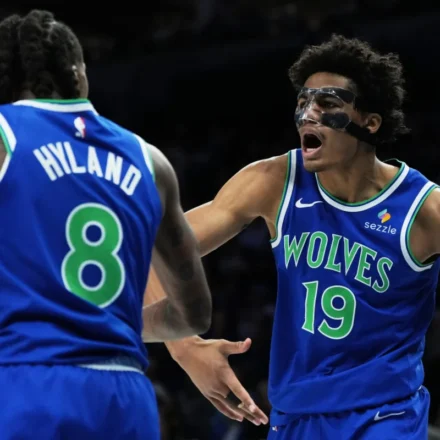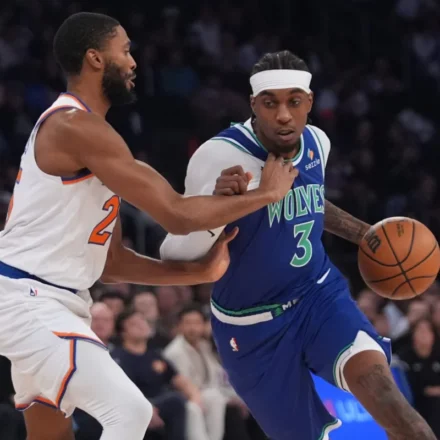













































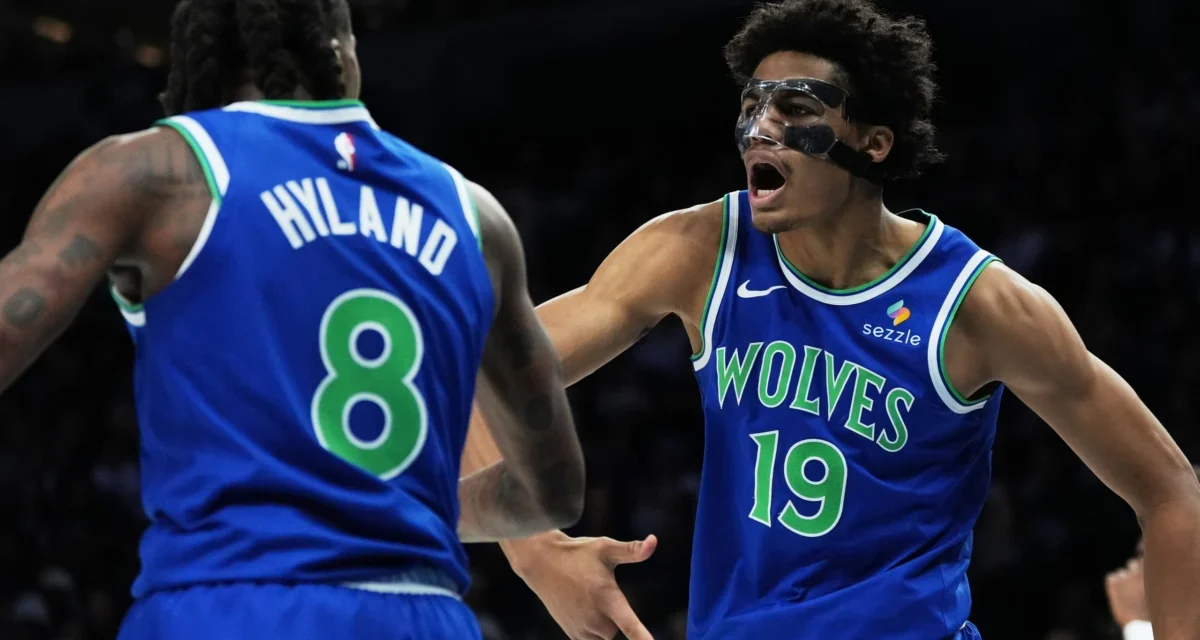




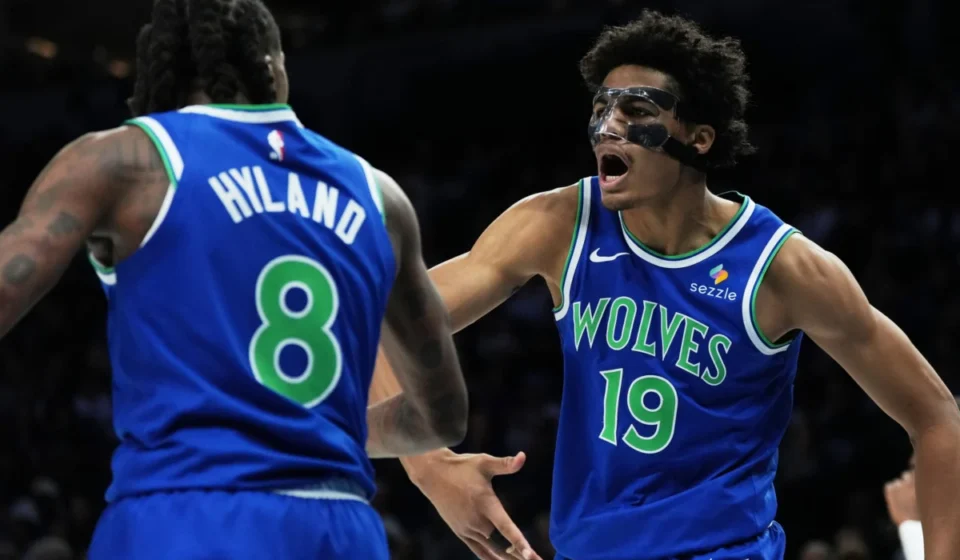

For the second time in four seasons, the Minnesota Timberwolves have captured the basketball world’s imagination. But this is not a sequel to past iterations; it is an evolution. The current squad is engaged in a daily, high-stakes investigation into the limits of synergy, playing with a puckish resolve that suggests they are far more than the sum of their individual parts.
In an era of the NBA defined by explosive individual ego, the Timberwolves have pivoted toward a more cerebral, visceral approach. They have embraced the "engine room" philosophy—a commitment to the grunt work, the defensive rotations, and the selfless sacrifices that allow a team to function as a singular organism. The 2026-27 Timberwolves are not just winning; they are nourishing a culture that values the collective over the marquee.
A Tale of Two Bigs: The Portland Pivot
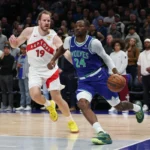
The centerpiece of the recent two-game set at Target Center against the Portland Trail Blazers was the fascinating clash of generations between Rudy Gobert and the Blazers’ rising phenom, Donovan Clingan.
Gobert, the 34-year-old defensive anchor, remains an anomaly in modern basketball—a player of fading traditional athleticism who relies on inexorable dedication and a lifetime of spatial awareness. Conversely, Clingan, at 22 years old, stands a towering 7-foot-2 and 280 pounds, bringing a raw, youthful power that threatened to overwhelm Minnesota early in the series.
In their previous four encounters, the two centers had traded blows with statistical ferocity. Last season, a single game saw Gobert record 28 points and 34 rebounds, only for Clingan to counter with a 32-point, 28-rebound masterpiece. This week, the narrative shifted. Monday night began as a nightmare for Minnesota; Clingan bullied Gobert in the paint, blockading the lane and fueling a 12-2 Portland lead. Gobert looked stagnant, his team outscored by six during his opening 6:20.
However, the Wolves’ response was not to panic, but to adapt. As the game progressed, the coaching staff challenged Gobert to reclaim his identity as a rim-protector. By the second half, the veteran had regained his composure, finishing with 12 points and eight rebounds, while holding Clingan scoreless during his final six-plus minutes of action.
Chronology of a Comeback: The Monday and Tuesday Grind
The arc of the two-game stand at Target Center was defined by a resilience that has become the hallmark of this roster. On Monday, after the initial Clingan-led onslaught, Minnesota’s bench unit shifted the game’s momentum. Led by TJ Shannon, the second unit turned the tide with frantic, efficient ball movement. Shannon, acting as the team’s offensive spark plug, orchestrated a balanced attack, assisting on triples by Ayo Dosunmu and Trey Lyles before taking over the scoring load himself. By the end of the second quarter, the Wolves had flipped an early deficit into a 59-51 halftime lead.
The second half was a clinical exercise in containment. Head coach Micah Nori’s Portland squad found no answers for Minnesota’s pressure, and by the time the final whistle blew, the Timberwolves had dominated the transition game, holding an 18-7 advantage in fast-break points.

Tuesday’s encore was a different beast entirely. With key contributors like Jonathan Kuminga, Jaylen Clark, Anthony Edwards, and Donte DiVincenzo sidelined, the depth of the roster was pushed to its breaking point. The game remained a claustrophobic, low-scoring affair until the final two minutes. Down 102-95, the Wolves looked poised to falter. Yet, in a sequence that will likely be replayed in coaching clinics for years, the team’s "shoveling"—the term used to describe their relentless hustle—paid off.
A critical three-pointer from Trey Lyles cut the lead to one. Moments later, after a defensive stand, LaMelo Ball’s high-IQ play saw him poke the ball away on an inbound pass, setting up Jaden McDaniels for the go-ahead bucket with 2.6 seconds remaining. Lyles then punctuated the victory with a clean, emphatic block on Damian Lillard to seal the win.
The Metrics of Success: Why Depth Matters
While casual observers focus on the highlight-reel dunks, the numbers tell a more profound story about the 2026-27 Timberwolves. The team is currently producing the most efficient defense in the NBA, allowing just 104 points per 100 possessions.
The emergence of backup center Joan Beringer has been a revelation. Only 20 years old, Beringer has transitioned from a defensive liability prone to foul trouble to a vital frontcourt piece. His synergy with veteran Trey Lyles is statistically undeniable. When the pair shares the floor, the Wolves boast a net rating that exceeds their season average significantly—scoring 119.1 points per 100 possessions while conceding only 99.4.
This partnership is a masterclass in mentorship. Lyles, a journeyman who lacks elite verticality but possesses a profound "basketball IQ," has essentially acted as an on-court tutor for Beringer. Their ability to cover for one another’s defensive lapses has transformed a previously precarious position into a strategic advantage.
Official Perspectives: The Value of Pride
Following the comeback victory on Monday, Head Coach Chris Finch spoke candidly about the team’s ability to weather poor stretches—particularly regarding Gobert’s early-game struggles.
"We challenged Rudy," Finch noted in the post-game press conference. "We needed to get back to his being stronger around the rim, back to dominating like he can do." When asked how a veteran of Gobert’s stature maintains such high performance despite being "punked" on occasion, Finch pointed to the player’s internal compass. "Two things. First, he is an incredible player. The second thing is he has incredible pride. He knows when he doesn’t play well and takes incredible ownership of that, getting back to the guy that we need him to be."
This sentiment of "ownership" permeates the locker room. Whether it is Kuminga embracing a secondary role, or the bench unit buying into a high-octane transition philosophy, the organization has fostered an environment where the players hold themselves and each other accountable.

Implications: A New Defensive Identity
The most surprising element of this season has been the defensive commitment of LaMelo Ball. Often criticized for his flamboyant offensive style and aesthetic choices, Ball has quietly become the defensive heartbeat of the team.
The statistics reflect a jarring shift: the Timberwolves are currently allowing 2.1 fewer points per 100 possessions than the next-best defensive team in the league. Ball sits at the center of this, trailing only Gobert in individual defensive impact metrics. In the 301 minutes they have played together, the team’s defensive rating sits at a staggering 92.5.
For Ball, this is more than just a statistical improvement; it is a fundamental shift in his professional identity. By embracing the unglamorous aspects of the game—the deflections, the rotations, the physical grind—he has elevated his status from a dynamic playmaker to a winning basketball player.
The Road Ahead
As the Timberwolves navigate a season defined by injury, adversity, and constant lineup adjustments, their success remains rooted in their identity. The fact that the team has thrived without Anthony Edwards for stretches—maintaining an 8-3 record in his absence—proves that the "system" is not dependent on one singular superstar.
Furthermore, the team’s best player thus far, Jaden McDaniels, has operated with a quiet, efficient consistency that has largely avoided the media spotlight. In a league that craves individual narratives, the Timberwolves are offering something different: a cohesive unit that finds beauty in the struggle.
The 2026-27 Timberwolves are a team built on the understanding that individual accolades are fleeting, but the "shoveling" required to secure a one-point win in November is the foundation of a championship culture. Whether this team sustains this level of play remains to be seen, but for now, they are arguably the most compelling watch in the NBA. They have mastered the alchemy of transforming individual talent into a collective force, and in doing so, they have reminded us that the best basketball is often played in the gaps between the stats.